The Product Backlog is an ordered list of everything known to be needed in the product. It is the single source of truth for any changes to the product. The Product Owner is responsible for the Product Backlog, including its content, visibility, and ordering.
The Product Backlog is never final. Changes in business needs, market conditions, or technology may lead to changes in the Product Backlog. It evolves as the product and project environment develop. Requirements never stop changing, so the Product Backlog remains a living Scrum artifact.
Higher-priority items in the Product Backlog are more granular and contain more detail — due to having more information available — along with more accurate estimates. Lower-priority items are higher-level, larger items with rougher estimates. As the team gains more information about lower-priority items, they are further broken down into smaller, more manageable pieces. The development team is responsible for estimating items in the Product Backlog.
Understanding Product Backlog Management
The Product Backlog lists all features, features, requirements, enhancements, and fixes that need to be developed for the product. Product Backlog items have attributes such as: Detailed (appropriate level of detail), Estimated (in story points), Prioritized, and Emerged (continuously added, removed, and updated) to reflect timely and appropriate adjustments to the backlog.
Roman Pichler, author of Agile Product Management with Scrum
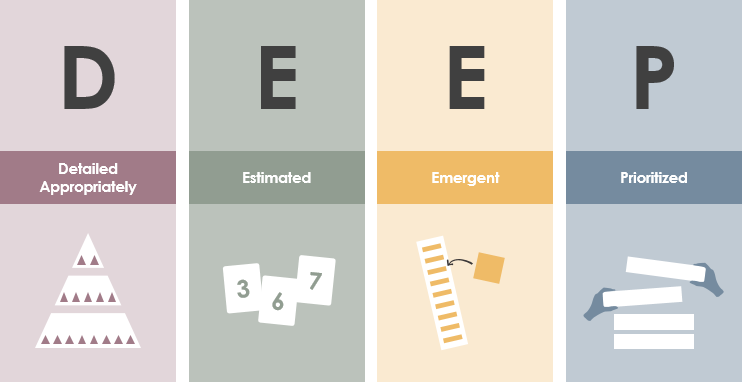
“Create a product that customers love.” We use the acronym DEEP to describe the characteristics of a well-managed Product Backlog. Thus, DEEP is an acronym describing the quality of the Product Backlog in Scrum, consisting of: Detailed, Estimated, Emerged, and Prioritized.
Detailed
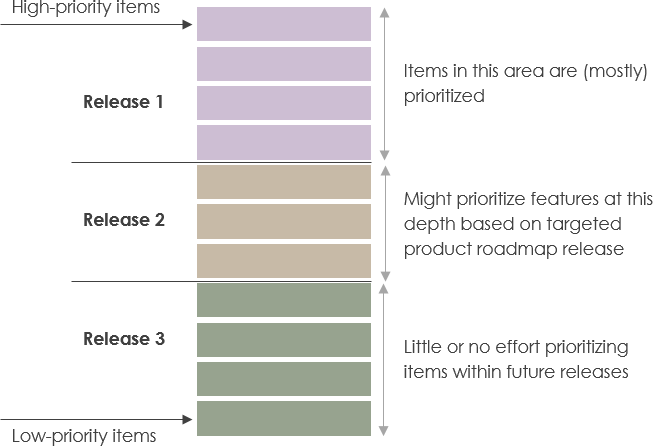
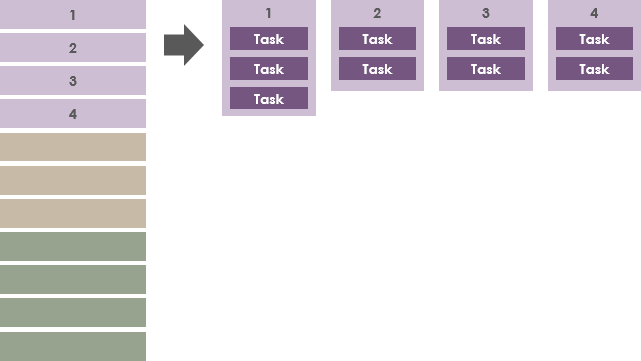
Stories near the top of the Product Backlog are expected to run in the next Sprint, so they need to be well-defined to allow the team to handle them effectively. Typically, items near the top are smaller and more granular, while items lower down become larger and less specific, as shown in the figure below:
Estimated
Items in the Product Backlog are estimated. Items at the top of the backlog have more accurate estimates. Lower-priority items are estimated at a higher level and can be re-estimated as the team gains more information.
Emergent
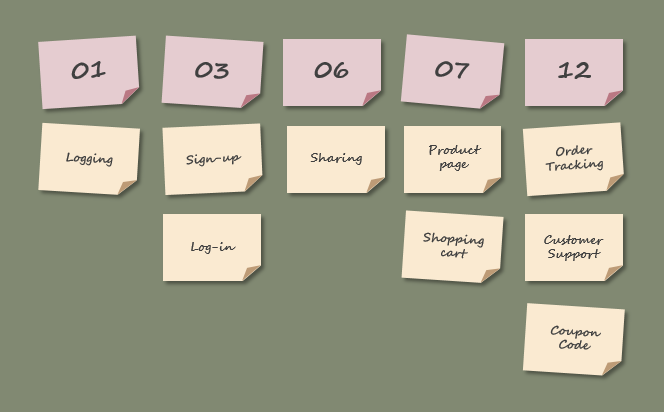
The Product Backlog is not static — it is constantly evolving. As the project progresses, more information and knowledge are gained, and user stories in the Product Backlog are added, removed, or reordered.
Prioritized
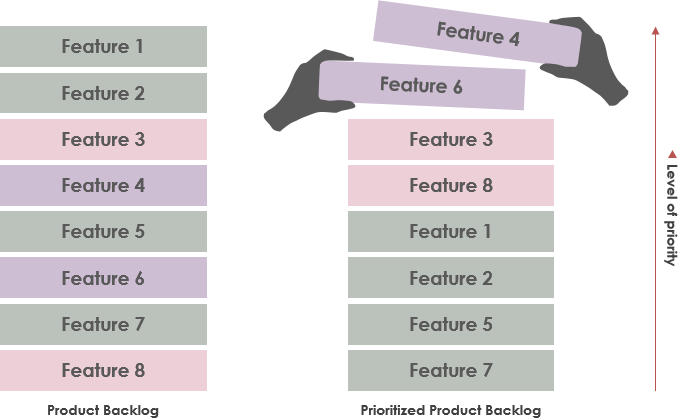
In the Product Backlog, higher-priority items are more valuable. Lower-priority items are listed later. The team always works on high-priority items to ensure maximum value is delivered in the product or system under development.
Summary
DEEP is a useful concept applied to the Product Backlog Refinement process — the ongoing activity of adding detail, estimation, and ordering to items in the Product Backlog to keep it in shape.
During Product Backlog Refinement, items are reviewed and modified. The Scrum team decides how and when refinement is done. Refinement typically takes no more than 10% of the development team’s capacity. However, Product Backlog items can be updated at any time by the Product Owner, or as needed.

 English
 Arabic
 Chinese (Simplified)
 Dutch
Dutch French
 German
 Italian
 Japanese
 Korean
 Portuguese
 Russian
 Spanish