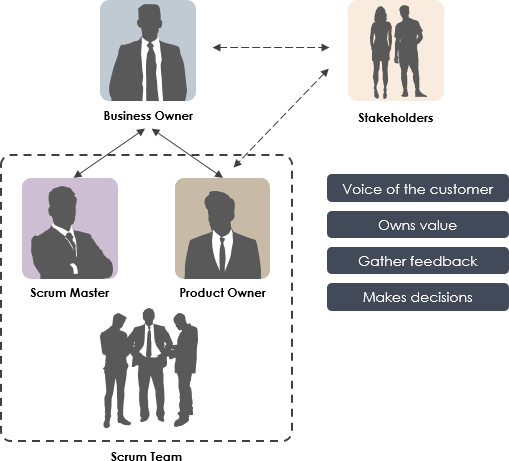
Scrum Master and Product Owner are two key roles in Scrum software development. Their shared goal is to deliver a viable product by applying Scrum best practices. While they operate in different areas of a project, their skill sets often overlap. Therefore, both the Product Owner and Scrum Master should collaborate closely across various aspects of the project.
Every project needs the best Scrum software
A powerful Scrum software that supports Scrum project management. It includes Scrum tools such as user story mapping, product backlog management, sprint backlog management, task management, daily Scrum meetings, sprint planning tools, sprint review tools, sprint retrospective tools, burndown charts, impediment tracking, stakeholder management, and team management.
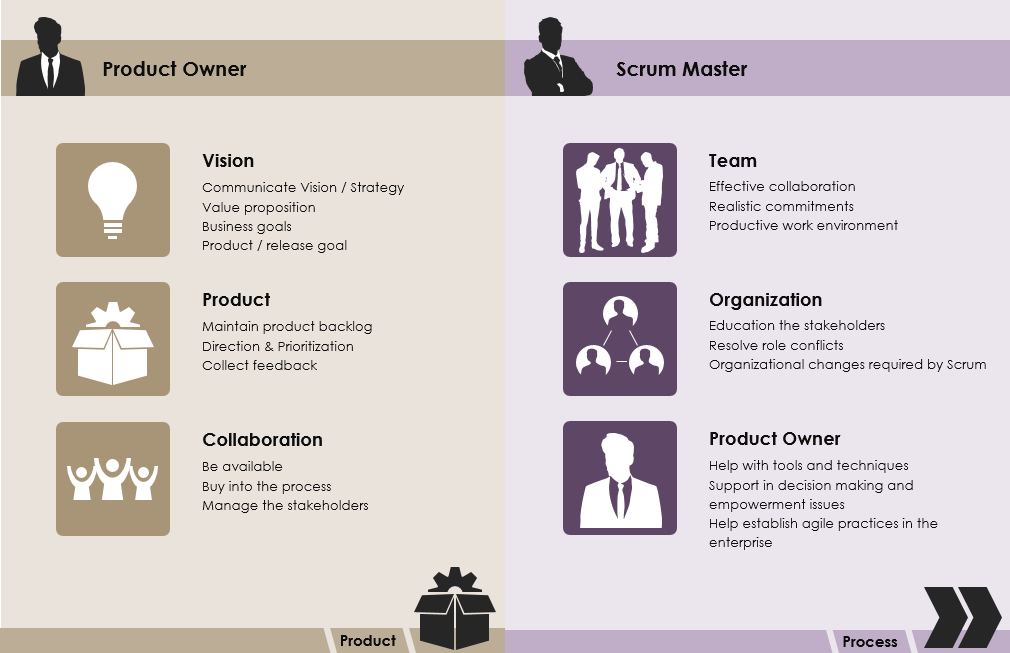
Product Owner vs Scrum Master
Without clear role definitions, conflicts may arise between them. Let’s examine the differences between the Product Owner and Scrum Master roles.
The Scrum Product Owner is responsible for maximizing the value delivered by the development team’s work. How this is achieved may vary depending on the organization, Scrum team, and individual.
The Scrum Master helps the Product Owner and the team follow the right processes to achieve successful outcomes and promotes Agile principles to focus on project success.
Collaboration Checklist for Scrum Master and Product Owner
To achieve this goal, the Scrum Master should work closely with the Product Owner in the following areas:
- Help the Product Owner maintain the product backlog and release plan list to improve efficiency. (Note: Only the Product Owner can prioritize items in the product backlog.)
- Is the product backlog prioritized based on the Product Owner’s latest ideas? Are backlog items covering all stakeholder requirements? Remember, new backlog items are constantly emerging.
- Is the product backlog still maintainable in size? To make backlog maintenance easier, place fine-grained items at the top and coarse-grained items at the bottom. However, be careful not to spend too much time analyzing requirements, as your needs may change through continuous dialogue between the team and customers/stakeholders.
- Can requirements (especially those at the top of the product backlog) be presented as: Independent, Negotiable, Valuable, Estimable, Small, and Testable (INVEST)?
- Is the product backlog transparent and accessible to all stakeholders?
- Do all parties (including stakeholders and the team) understand whether the current team velocity can meet the published release plan?
- Has the Product Owner adjusted the release plan based on the previous Sprint review and retrospective? Typically, the Product Owner should update the release plan at least after each Sprint. Generally, some work items may be moved to a higher version as more critical tasks are completed.

 English
 Arabic
 Chinese (Simplified)
 Dutch
Dutch French
 German
 Italian
 Japanese
 Korean
 Portuguese
 Russian
 Spanish