How to Become an Excellent Product Owner in a Scrum Project?
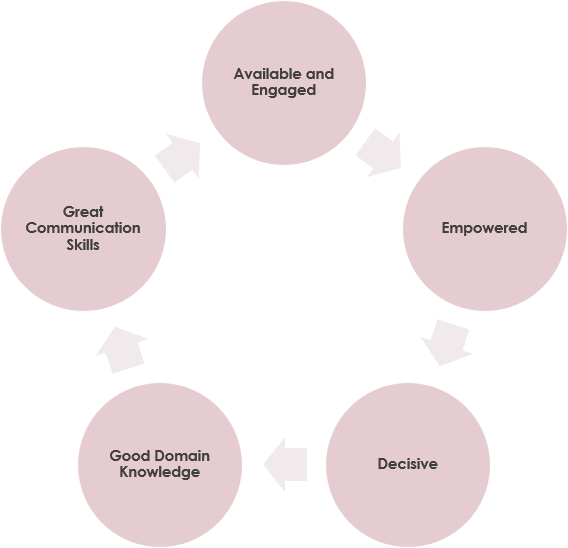
A Product Owner is the guardian of the product vision and goals, as they are ultimately responsible for delivering business outcomes and value through the Scrum project. So the question is: how can you become the best Product Owner? Based on our experience, we believe a great Product Owner should possess the following key qualities. These qualities are illustrated in the diagram below.
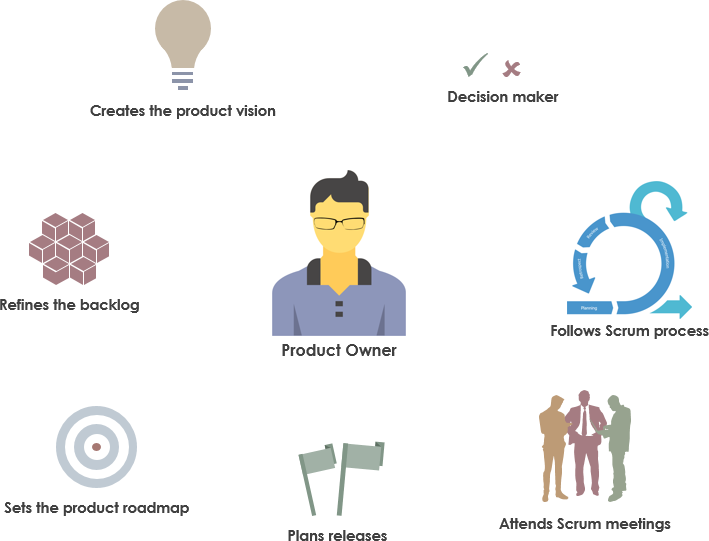
Responsibilities of the Product Owner
The Product Owner’s role is to represent the customer to the Development Team, being readily available to answer questions about how customer-desired functionality should be implemented. One of the Product Owner’s key activities is managing the Product Backlog and making it visible — i.e., maintaining a prioritized list of what should be developed next in the product. The Product Owner is responsible for the following key activities:
- Creating the Product Vision
The Product Owner creates, manages, and owns the product vision. The product vision describes the purpose of the product, the intent behind its creation, and the goals it aims to achieve for customers and users. - Refining the Product Backlog
As Product Owner, you are responsible for Product Backlog management to maximize product value. The Product Backlog is the single source of truth containing all work to be done on the product. - Setting the Product Roadmap
The Product Owner is responsible for managing the product roadmap. A product roadmap is a high-level strategic plan that outlines the likely evolution of the product over the coming period. The roadmap should support the product’s purpose and vision and help the Product Owner maintain stakeholder alignment. It also makes it easier to coordinate development across different products and increases transparency to manage customer expectations. - Release Planning
Like the Scrum Product Backlog, the release plan is not static. As new knowledge emerges, entries in the Product Backlog need to be adjusted and re-estimated by the Product Owner accordingly. Therefore, the team should regularly review and update the release plan — for example, after each Sprint. - Participating in Scrum Events
- Following the Scrum Process
- Being available for Scrum events and ensuring development decisions align with business goals and value
Summary
Without a good Product Owner, a Scrum project will not succeed. They must be decisive — not only fulfilling the responsibilities mentioned above, but also embodying the following mindset:
- Continuously protect the customer’s best interests in terms of delivered functionality,
- Protect the overall organization in terms of strategic direction and return on investment.

 English
 Arabic
 Chinese (Simplified)
 Dutch
Dutch French
 German
 Italian
 Japanese
 Korean
 Portuguese
 Russian
 Spanish