The ArchiMate specification is an open standard, an open and independent enterprise architecture modeling language supported by various tool vendors and consulting firms. ArchiMate enables enterprise architects to clearly describe, analyze, and visualize relationships between architecture domains.
Just as architectural blueprints in classical construction describe various aspects of building design and usage, the ArchiMate specification provides a common language for describing business processes, organizational structures, information flows, IT systems, and technical and physical infrastructures. ArchiMate models enable stakeholders to design, evaluate, and communicate the implications of decisions and changes within and across these architecture domains.
This whitepaper outlines the ArchiMate 3.0 specification. The ArchiMate 3.0 specification is a major update to the ArchiMate 2.1 specification, released in June 2016 as an Open Group standard. New features in version 3.0 include elements for modeling at the strategic level, such as capabilities, resources, and strategies. It also includes support for modeling the physical world, including materials and equipment. Additionally, language consistency and structure have been improved, definitions have been aligned with other standards, and usability has been enhanced in various ways.
Evolution of the ArchiMate Language
The ArchiMate language was developed between 2002 and 2004 in the Netherlands by a project team at the Institute for Remote Information Processing, in collaboration with multiple partners from government, industry, and academia, including Ordina, Radboud University Nijmegen, and the Leiden Institute of Advanced Computer Science (LIACS). The development included testing at institutions such as ABN AMRO, the Dutch Tax and Customs Administration, and Stichting Pensionfonds ABP.
In 2008, ownership and management of the ArchiMate language were transferred from the ArchiMate Foundation to The Open Group. Since 2009, The Open Group ArchiMate Forum has been developing and publishing ArchiMate specifications on its public website.
ArchiMate Language and Enterprise Architecture
The ArchiMate specification serves to provide a graphical language for representing enterprise architecture over time (i.e., including strategic, transformation, and migration planning) as well as the rationale and foundational principles behind the architecture. The ArchiMate modeling language provides a unified representation for diagrams describing enterprise architecture and offers an integrated approach to describing and visualizing different architecture domains and their underlying relationships and dependencies.
The design of the ArchiMate language begins with a set of relatively generic concepts (objects and relationships), specifically tailored for different layers of enterprise architecture. The most important design constraint of ArchiMate is that it was explicitly designed to be as concise as possible while still being applicable to most enterprise architecture modeling tasks. In terms of learning and usage, the language is limited to concepts sufficient for modeling approximately 80% of real-world cases.
What’s New in the ArchiMate 3.0 Specification?
Why a New Version of the Language?
The new version of the language was created in response to numerous requests:
- Increasing demand to link business strategy with business and IT operations
- Convergence of IT and physical-world innovations
- Use in new domains; for example, manufacturing, logistics
- Improved consistency and comprehensibility
- Enhanced alignment with other Open Group standards, especially the TOGAF framework
Enhanced Support for Strategic and Physical Modeling
The ArchiMate framework has been extended to include strategic and physical elements, as shown in Figure 1.
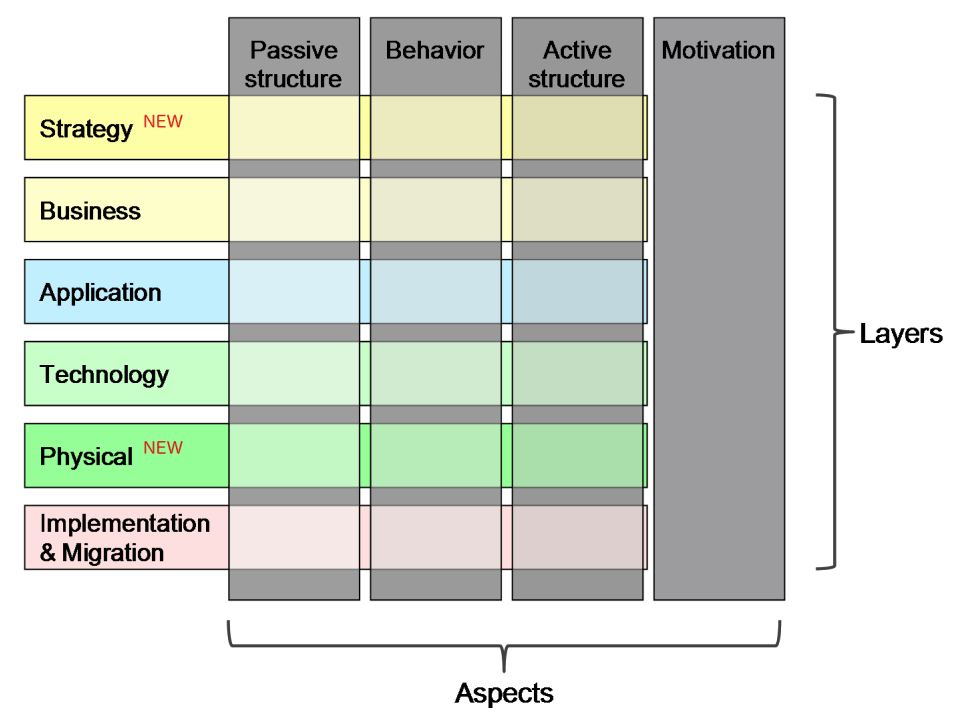
Figure 1: ArchiMate Framework
Strategic elements include capabilities, resources, and action plans. Physical elements are built on top of the technical layer and include elements for modeling physical facilities and equipment, distribution networks, and materials.
Strategic Elements
Elements have been added to support modeling strategy, capability-based planning, and related domains. This supports greater use of enterprise architecture to support strategic execution and aligns with methodologies used in related standards, such as the TOGAF framework [1] and the Business Motivation Model [2].
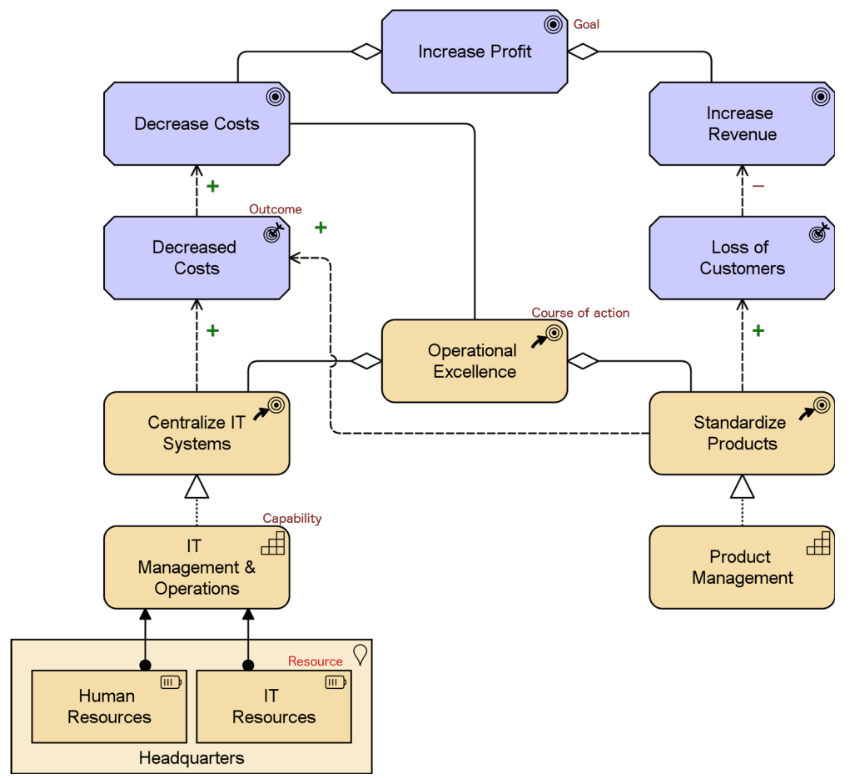
Figure 2: Example of Motivation and Strategic Elements
Figure 2 shows an example that uses both motivation and strategic elements. Note that outcomes, action plans, capabilities, and resources are new elements introduced in the ArchiMate 3.0 specification. Increasing profit is a goal that can be decomposed into many other objectives: reducing costs and increasing revenue. The former is related to the company’s operational excellence strategy and is modeled as an action plan. This is further broken down into two other action plans: centralizing IT systems and standardizing products. This leads to two outcomes: reduced costs and customer churn, both of which affect the goal—positively and negatively. This illustrates the important distinction between goals and outcomes: not all outcomes lead to intended results.
Action plans are enabled by multiple capabilities: IT management and operations, and product management. Appropriate human and IT resources are allocated to the former. The model fragment also shows that these resources are located at the organization’s headquarters, consistent with the action plan for centralizing IT systems.
Physical Elements
The technical layer has been extended to include elements for modeling the physical world—such as manufacturing, logistics, and other physical environments.
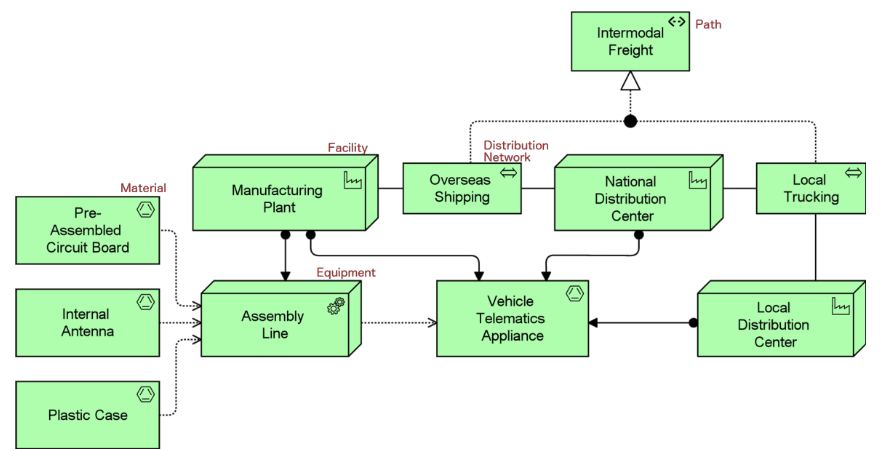
Figure 3: Example of Physical Elements
Figure 3 shows an example of physical elements. Note that all elements in the example are new in the ArchiMate 3.0 specification except for Path, which has been renamed from Communication Path and its meaning expanded to allow integration with physical elements.
A device is modeled and installed at a manufacturing facility, using pre-assembled circuit boards, internal antennas, and plastic casings to produce material for vehicle telematics devices. The device is initially located at the manufacturing facility, then transported to a national distribution center and a local distribution center via a distribution network using overseas shipping and local trucking. These distribution networks collectively form a multimodal path.
ArchiMate 3.0 does not introduce a separate physical behavior element. Instead, the behavioral elements from the technical layer (technical functions, processes, interactions, services, and events) are used to model behavior for all nodes, including physical devices. Since devices are typically computer-controlled or otherwise closely tied to IT, their behavior can be described using existing technical behavior concepts in a complete and consistent way. These concepts can also be used to describe the behavior of sensors and connected devices that constitute the Internet of Things (IoT).
Enhanced Availability and Consistency
Numerous changes have been made to improve the language’s usability and consistency. These are summarized below.
General Metamodel
A top-level general metamodel has been introduced to document the complete structure of the language.
Composite Elements
Groups are no longer classified as relationships; they are now composite elements. Groups now have aggregation or composition relationships with their contents, making them more useful. Relationships can now be drawn from or to a group. One useful application of grouping is modeling architecture and solution building blocks; another is modeling domains within an architecture. Location elements have been moved from the business layer to the general metamodel and defined as composite elements.
The improved use of nesting as a notation allows for better representation of related items in modeling.
Updated Symbols for Views and Contracts
The notation for views and contracts has been updated to clearly distinguish them from deliverables and business objects, respectively.
Optional Layer Symbols
An optional symbol has been introduced to explicitly indicate the layer of an element. The letters “M,” “S,” “B,” “A,” “T,” “P,” or “I” in the top-left corner of an element can indicate motivation, strategy, business, application, technology, physical, or implementation and migration elements, respectively. Figure 4 is an example model showing application and technology elements.
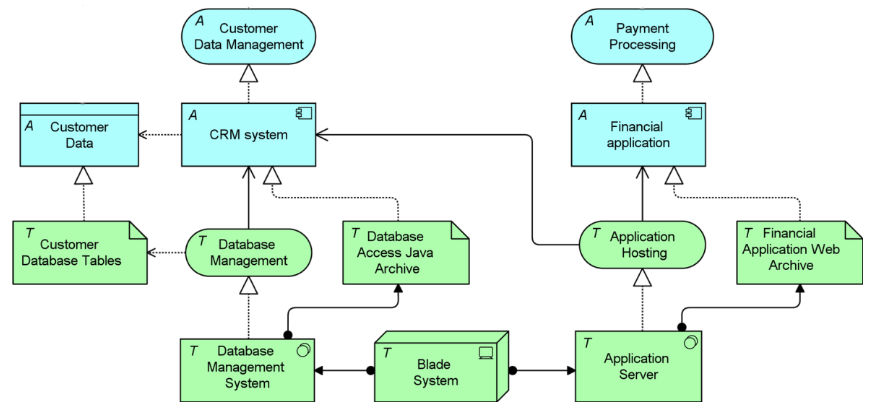
Figure 4: Example of Element Symbols
Relationships
In some cases, it is now allowed to have relationships with other relationships—for example, associating an object with a group or a flow or aggregation relationship within a platform.
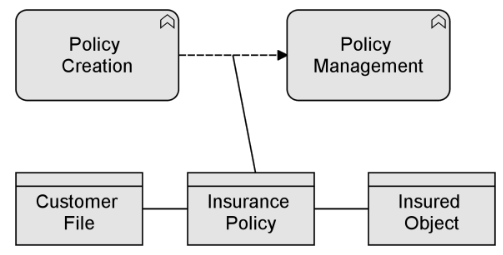
Figure 5: Example of Relationship with Relationship
The “used by” relationship has been renamed to “service” to better reflect its direction with an active verb: service serves users. The meaning of the relationship has not changed. The “used by” name is still allowed but deprecated and will be removed in future versions of the standard.
To align with other dependency relationships (access and service), the symbol for the impact relationship has been updated.
To align with other dependency relationships (access and service), the symbol for the impact relationship has been updated.
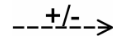
Figure 6: Symbol for Impact Relationship
A directional symbol has been introduced for the assignment relationship by replacing the black circle at the target end with an arrow.
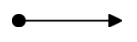
Figure 7: Symbol for Assignment Relationship
Links are no longer classified as relationships but as relationship connectors. Links are now explicitly “or” links or general “and” links.
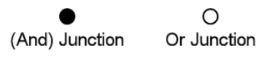
Figure 8: Link Symbol
Motivation Elements
The outcome element has been added. Elements for meaning and value have been moved from the business layer.
Added Events
Event elements with time attributes have been added to all layers of the ArchiMate core language, as well as for implementation and migration elements. The new elements are application events, technical events, and implementation events, corresponding to the existing business events.
Improved Layer Consistency
New elements such as application processes, technical processes, technical interactions, and technical collaborations have been added to enhance consistency across layers.
Business Layer
Location, value, and meaning elements are no longer specified in the business layer. The symbols for views and contracts have been updated to distinguish them from deliverables and business objects, respectively.
Technical Layer
Elements in the technical layer have been renamed from “Infrastructure [Element Name]” to “Technology [Element Name].” The “Communication Path” element has been renamed to “Path” and its meaning has been extended to support physical elements. The “Network” element has been renamed to “Communication Network” to differentiate it from the physical element “Distribution Network.”
Cross-Layer Relationships
Cross-layer relationships have now been defined to connect motivation and strategy with core concepts (business, application, technology, physical) and to link strategy with its implementation. Cross-layer relationships have also been revised to support better alignment between elements of different layers (e.g., business layer aligned with lower layers).
View Mechanism
Previous versions of the standard included a comprehensive list of views within the main specification body, along with the ability to define custom views for specific situations. In version 3.0, the view mechanism has been improved, and the list of views has been moved to an informative appendix to clearly indicate that these are example views.
ArchiMate Language and TOGAF ADM
The ArchiMate language consists of the ArchiMate core language, which includes the business, application, and technology layers, along with elements for modeling strategy and motivation, as well as implementation and migration. Figure 9 shows a simplified mapping of how the ArchiMate language relates to the various phases of the TOGAF Architecture Development Method (ADM).
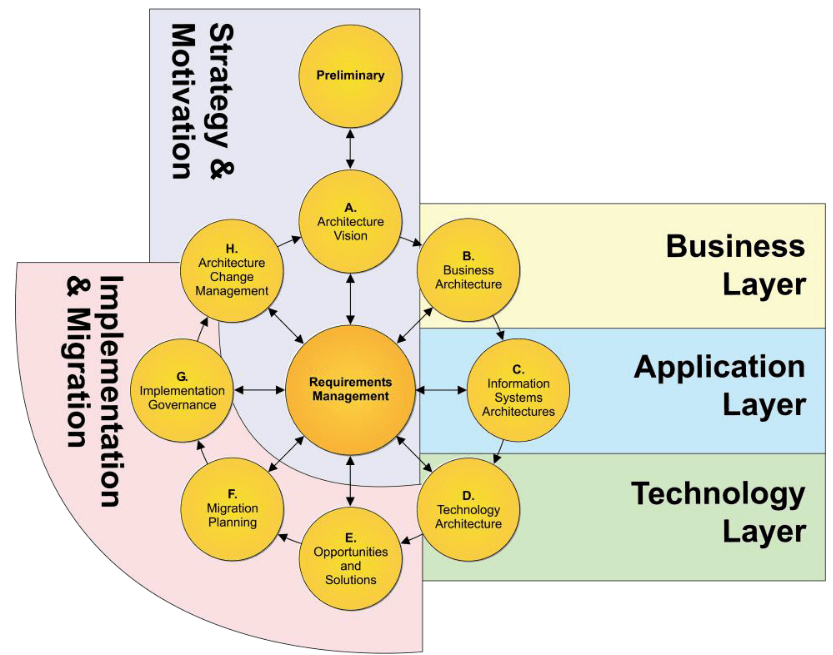
Figure 9: Simplified Mapping between ArchiMate Language and TOGAF ADM
The business, application, and technology layers support the description of the business, information systems, and technology architecture domains defined in the TOGAF framework, as well as their interrelationships. The strategic and motivational elements in ArchiMate can support the requirements management, preliminary, and architecture vision phases of TOGAF ADM, which establish high-level business goals, architecture principles, and initial business requirements. They are also related to the architecture change management phase of TOGAF ADM, as this phase deals with evolving requirements. Although not shown in Figure 9, it should be noted that these elements can also be used in other ADM phases, such as phases B, C, and D.
The implementation and migration elements in ArchiMate support the implementation and migration of architecture through the TOGAF ADM phases of opportunity and solution, migration planning, and implementation governance.
The implementation and migration elements in ArchiMate support the implementation and migration of architecture through the TOGAF ADM phases of opportunity and solution, migration planning, and implementation governance.

 English
 Arabic
 Chinese (Simplified)
 Dutch
Dutch French
 German
 Italian
 Japanese
 Korean
 Portuguese
 Russian
 Spanish