The Product Owner is a member of the Scrum Team who represents the company’s ownership of the product. However, the Product Owner does not have authority over other team members, just like the Scrum Master. The Product Owner is responsible for the long-term care of the product and ensuring its success. As a Product Owner, you should interact directly with customers and users, the development team, and other key stakeholders, as shown in the diagram below.
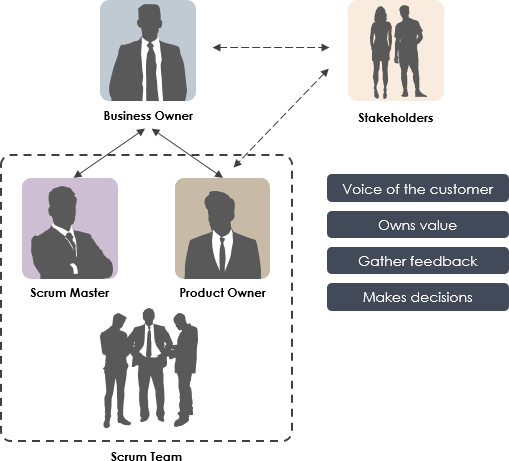
Product Owner – Bridge Between the Development Team and Stakeholders
The Product Owner plays a crucial decision-making role, but their primary function lies in bridging the gap between the Scrum team and the customers. Therefore, the Product Owner must be able to communicate effectively with stakeholders to guide the team in discovering the product and gathering requirements.
- The Product Owner should understand the product vision and be able to convey it clearly to the Scrum team.
- The Product Owner should understand business goals within a broader market context, customer needs, competitors, and digital trends.
The organization and stakeholders can view the Product Owner as the one who owns the value, while the Scrum Master represents the team’s process ownership.
Product Owner and Product Backlog
The Product Owner is responsible for managing the Product Backlog by communicating the product vision with the Scrum team. The Product Owner not only determines the content of the Product Backlog but also decides the priority of each item. As shown in the figure below.
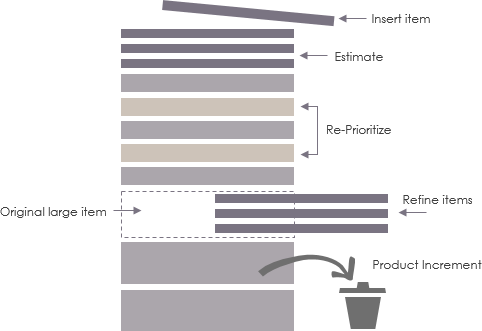
Product Owner and Backlog Refinement
As mentioned above, the Product Owner is responsible for managing the Product Backlog to maximize product value. The Product Backlog is the single source of truth, containing all tasks to be performed on the product. As the Product Owner, you must make decisions about what to build first. The Product Owner can also decide what to build and what not to build by periodically adding or removing items from the backlog—this process is also known as backlog refinement. This can be done during meetings or, more commonly, as an ongoing process to help prepare the Product Backlog for the Sprint Planning meeting.
Backlog Refinement
Backlog Refinement is a pre-sprint planning process that helps the Scrum Master conduct the upcoming Sprint Planning meeting more effectively:
- Helps the team estimate the size of user stories;
- Helps break down large stories into smaller, more manageable ones (or combine small ones into larger ones);
- Highlights additional details needed within the user stories.
The Product Owner must also ensure that the user stories in the Product Backlog are detailed enough for the team to fully understand. This ensures the team can effectively plan the Sprint and knows exactly what is required to complete each story.
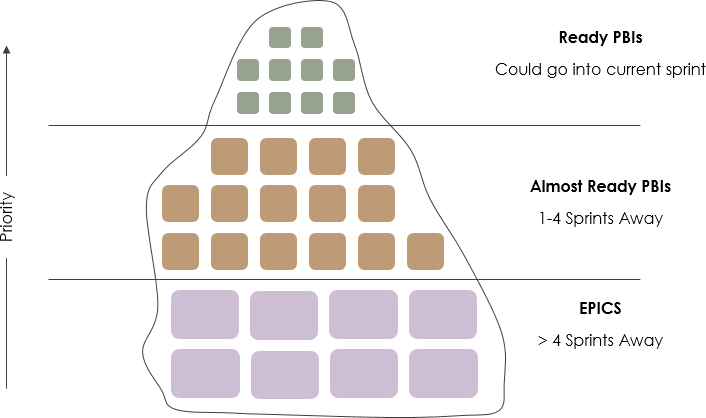
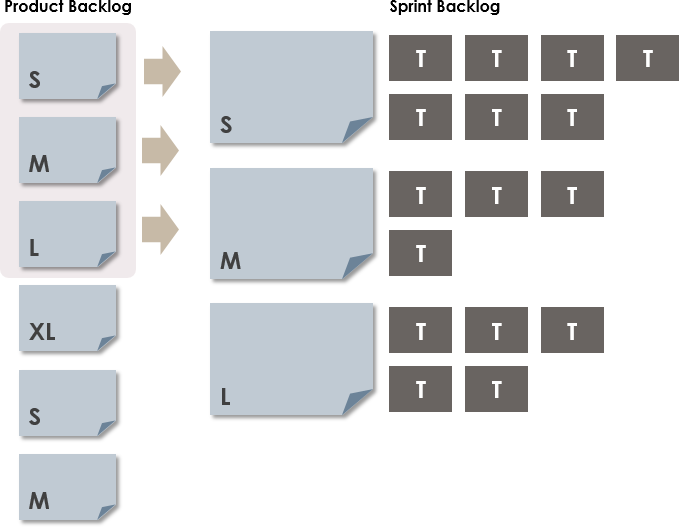
Sprint Backlog Formation
During Backlog Refinement, the Scrum Team discusses items at the top of the Product Backlog (i.e., those waiting to be included in the next Sprint).

 English
 Arabic
 Chinese (Simplified)
 Dutch
Dutch French
 German
 Italian
 Japanese
 Korean
 Portuguese
 Russian
 Spanish