The roles of Scrum Master and Project Manager are very distinct and unique. For people who are just getting started with Agile, the Project Manager and Scrum Master may appear similar or even identical. However, it is important to recognize the differences between the two roles, understand where certain responsibilities may overlap, and see how they complement each other in large-scale projects.
Role of the Project Manager
The traditional Project Manager is a leader, decision-maker, planner, and business owner responsible for managing the project and its team to achieve project objectives. The Project Manager’s duty is to manage the project and ensure it meets requirements.
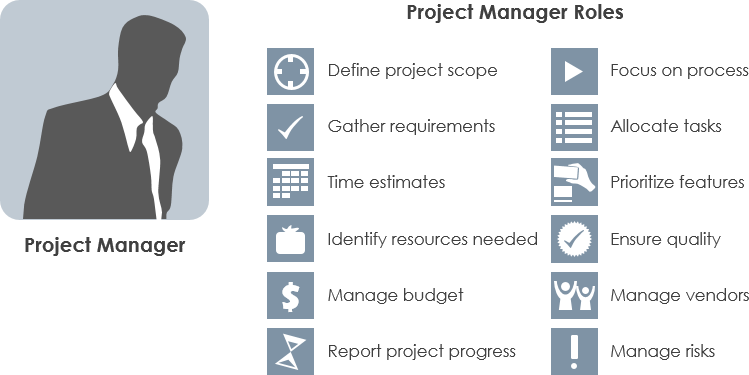
Key roles and responsibilities of the Project Manager include:
- Defining project scope
- Gathering requirements
- Identifying activities, dependencies, sequencing, and time estimates
- Determining required resources
- Managing the budget
- Reporting project progress to business leadership
- Focusing on processes
- Assigning tasks
- Prioritizing features
- Ensuring quality
- Managing vendors
- Managing risks
Role of the Scrum Master
The Scrum Master does not manage the team that produces the work; instead, they support the Product Owner, coach the team, and ensure adherence to the Scrum process. The Scrum Master is responsible for the Scrum process itself, its correct implementation, and maximizing its benefits.
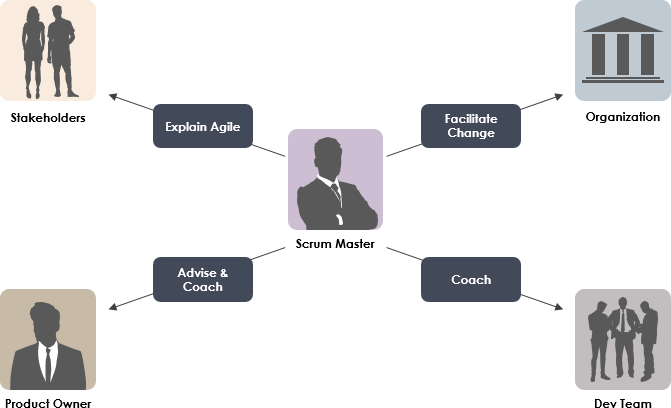
The Scrum Master’s role is primarily that of a coach and facilitator — acting as a bridge between the project, the customer, and the roles involved. Key responsibilities include:
- Leading Sprint Planning
- Leading/organizing Daily Scrum meetings
- Coaching the Product Owner
- Monitoring progress throughout the Sprint
- Helping the team estimate and improve velocity
- Facilitating continuous communication
- Reducing interruptions to the team
- Monitoring and helping improve team dynamics
- Assisting with reporting
- Motivating the team
- Acting as the “glue” that holds the team together
Role of the Product Owner
The Product Owner bears significant responsibility for the project. They are accountable for maintaining the Product Backlog and ensuring the product continues to meet evolving business requirements. In any project, as more is learned about the product, customers, or market, the product usually needs adjustments to satisfy those requirements. The Product Owner must adapt and reprioritize the backlog accordingly to guide the project forward.
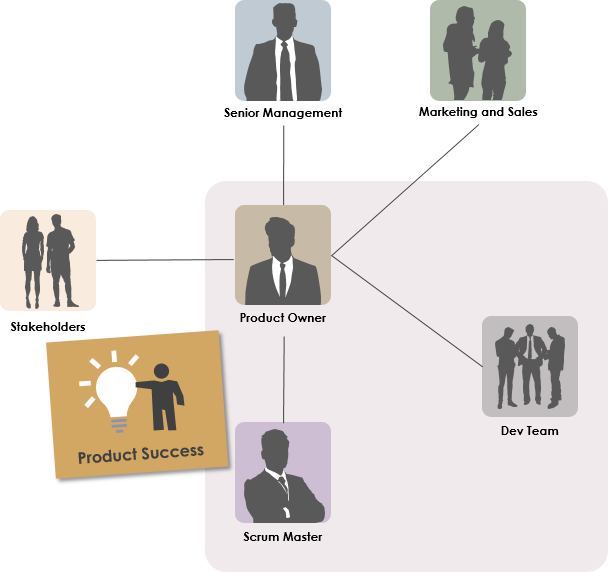
The Product Owner’s key responsibilities include:
- Communicating a clear project vision
- Managing and prioritizing the Product Backlog
- Ensuring the Development Team understands tasks and works on the right features in the correct order of priority
- Providing feedback and signing off on completed work
Differences Between Project Manager and Scrum Master
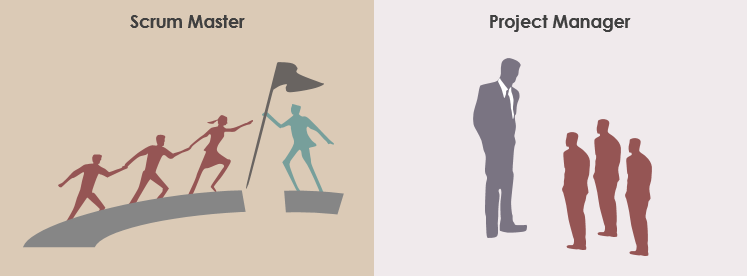
In Waterfall projects, the Project Manager takes a leadership role in guiding the team, creating and managing plans. But what happens to all those project management activities when the team is Agile?
- The Project Manager helps manage the project schedule, resources, and scope to meet business needs. In contrast, the Scrum Master helps ensure the Scrum Team succeeds.
- The Product Owner works with customers and the team to set direction.
- The Scrum Master acts as a coach and facilitator, guiding the Development Team to follow Agile practices and deliver on the Product Owner’s prioritized work.
- The Scrum Master collaborates with the Product Owner and Development Team to ensure team members can continue development without impediments and that Scrum practices are properly implemented.
Note:
In large-scale projects, there is still room and need for a Project Manager. The Project Manager can oversee multiple teams or work with other related teams. They can coordinate across teams, help them meet project schedules, and facilitate collaboration when resources are needed.

 English
 Arabic
 Chinese (Simplified)
 Dutch
Dutch French
 German
 Italian
 Japanese
 Korean
 Portuguese
 Russian
 Spanish