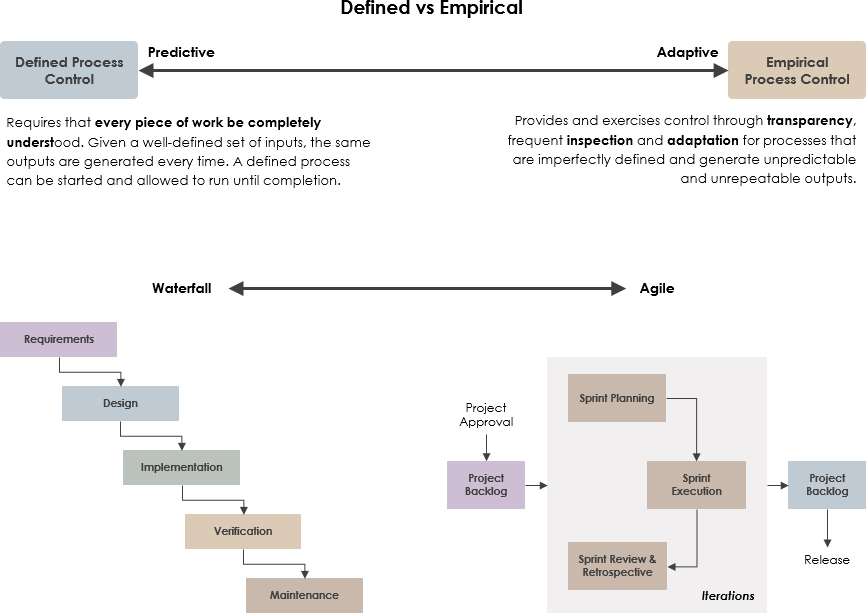
Scrum is based on the empirical process control theory (empiricism), which holds that knowledge comes from actual experience and observation in the current context. (Note: this differs from dogmatism and partial empiricism that ignores theoretical guidance or relies solely on past experience. It emphasizes real-time learning and adaptation.)
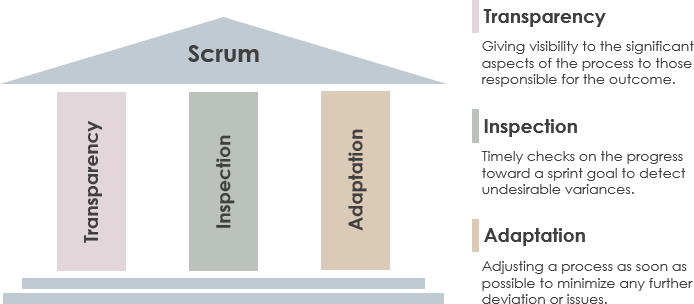
The three pillars of empirical process control—transparency, inspection, and adaptation—support the implementation of every empirical process. Scrum uses an iterative and incremental approach to optimize future forecasting and manage risks, enabling organizations to become more agile and responsive to change for better outcomes.
Scrum leverages lean thinking, time-boxed frameworks, and fully embodies the Agile Manifesto and Agile principles.
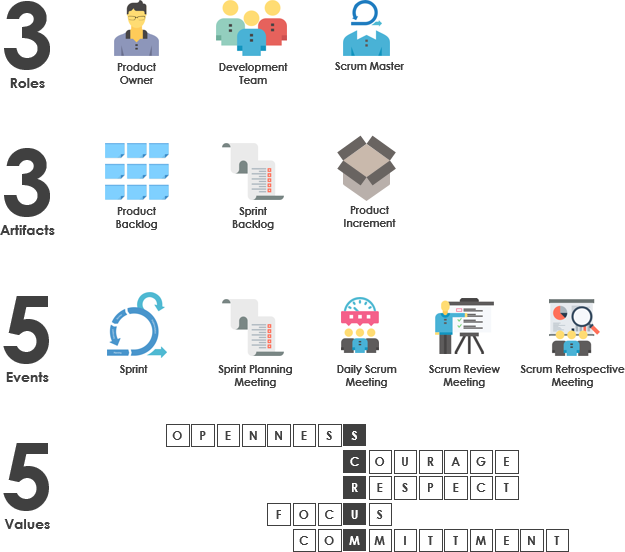
Scrum is a framework for developing and maintaining complex products through “inspect and adapt.” It is a methodology guided by the Agile Manifesto and principles, integrating three roles, three artifacts, five events, and five values—collectively known as “3355”.
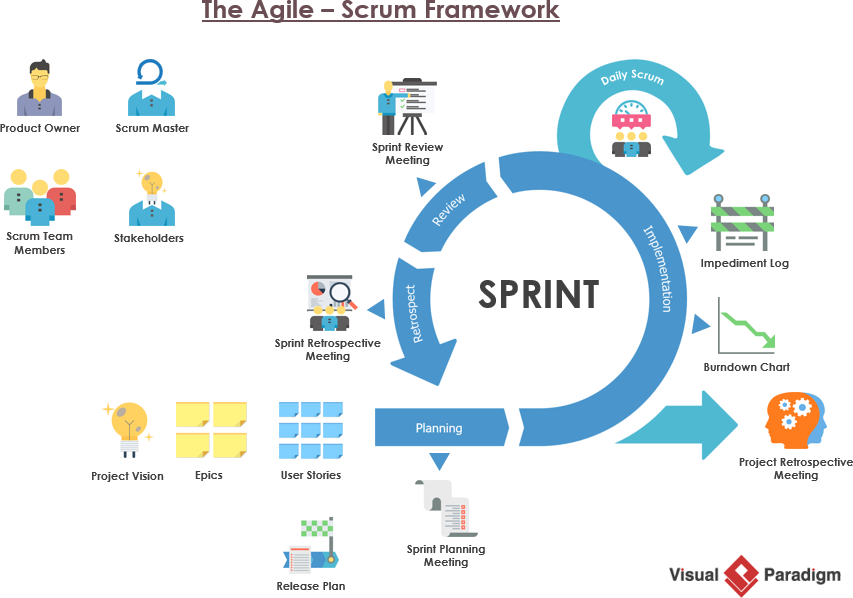
In this framework, the entire development process consists of short iterative cycles called Sprints. Recommended practices include:
- Each Sprint lasts 1 to 4 weeks.
- Use a Product Backlog to manage product requirements—a prioritized list of features.
- During each iteration, the Scrum Team selects the highest-priority items from the Product Backlog.
- During the Sprint Planning meeting, selected items are discussed, analyzed, and estimated to define the Sprint Goal and delivery plan—known as the Sprint Backlog.
- Daily Daily Scrum meetings are held throughout the Sprint.
- At the end of each Sprint, the Scrum Team invites stakeholders and business representatives to review the potentially shippable product increment.
- The team then inspects its performance and continuously improves its process.
- Scrum is not limited to software development—it applies to any complex, innovative, or exploratory project, as well as organizational change initiatives.

 English
 Arabic
 Chinese (Simplified)
 Dutch
Dutch French
 German
 Italian
 Japanese
 Korean
 Portuguese
 Russian
 Spanish