Scrum is a project management framework that emphasizes teamwork, accountability, and iterative progress toward clearly defined goals. It begins with a simple premise: start with what you can see or know. Then, track progress and adjust as needed.
The Three Pillars of Scrum
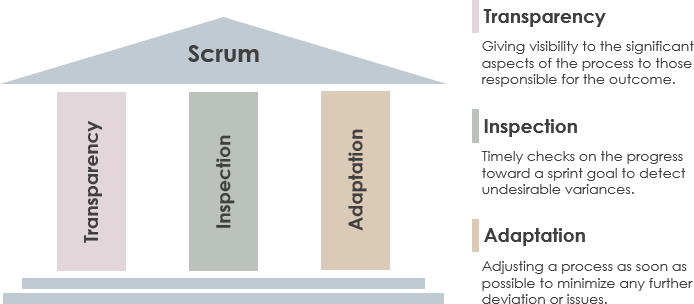
Scrum is grounded in empiricism, which asserts that knowledge comes from experience and decisions should be based on what is known. These three pillars bind Scrum together.
Why Scrum?
Scrum delivers functionality incrementally, whereas Waterfall delivers only in phases. Traditional Waterfall development is a sequential, phase-based process where value is not delivered until the project’s end. Scrum transforms this model by delivering new features every sprint—typically every 2–4 weeks—rather than focusing on a large future release.
Scrum breaks down complex work into manageable pieces, divides large organizations into small teams, and transforms impactful projects into a series of short, time-boxed sprints.

Through iterative and incremental development, companies can deliver the products and services customers truly need faster and more efficiently. With Scrum, you can receive and integrate customer feedback at the end of each sprint, meaning your outcomes are shaped by real-world usage rather than assumptions. This makes it easier to keep customers and key stakeholders actively involved.
Agile vs Scrum
Agile is a practice that enables continuous iteration in development and testing throughout the SDLC. Agile breaks products into smaller, manageable components. Scrum is just one of many iterative and incremental Agile software development processes that allow us to focus on delivering business value in the shortest possible time.
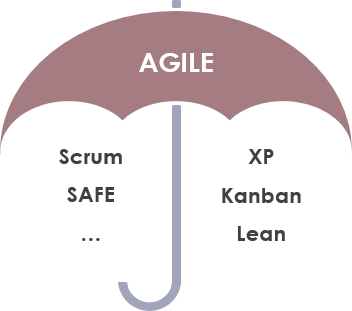
Scrum typically deals with requirements that may change or are unknown at the start of a project. Scrum is characterized by:
- Lightweight
- Easy to understand
- Hard to master
Benefits of Scrum
Here are the benefits Scrum brings to organizations, teams, products, and individuals:
- Better Quality: There is a framework for achieving vision or goals. Scrum provides continuous feedback and visibility to ensure quality is as high as possible. Scrum helps ensure quality through practices such as:
- Reduced Time-to-Market: Scrum has proven to deliver value to end users 30%–40% faster than traditional methods.
- Higher Return on Investment (ROI): Shorter time-to-market is a key reason Scrum projects achieve higher ROI. Early revenue and benefits accumulation mean higher total returns. This is based on the fundamental principle of Net Present Value (NPV) calculations.
- Higher Team Morale: Working with happy, engaged individuals is satisfying and productive. Self-management places decisions typically made by managers or organizations into the hands of Scrum team members.
- Stronger Team Collaboration: When Scrum teams own the project and product, they can achieve excellent results. Scrum teams collaborate and improve quality and project performance through enhanced engagement and communication.
Scrum Framework
Scrum is simple. It’s not a set of rigid, interconnected mandates. Scrum is not a methodology. Scrum embodies the scientific method of empiricism. It replaces procedural algorithmic approaches with heuristic methods, respecting people and self-organization to address unpredictability and solve complex problems. The diagram below shows Scrum in Action, as described by Ken Schwaber and Jeff Sutherland in their book “Scrum: The Art of Doing Twice the Work in Half the Time,” illustrating the journey from planning to software delivery.
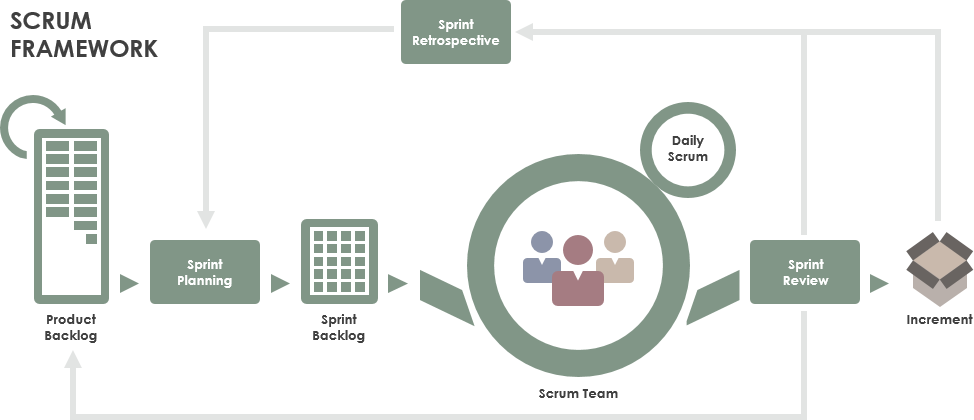
Components of the Scrum Process
The Scrum framework itself is simple. It defines only a few general guidelines, with a small number of rules, roles, artifacts, and events. However, each of these components is crucial for specific purposes and essential for successfully using the framework.
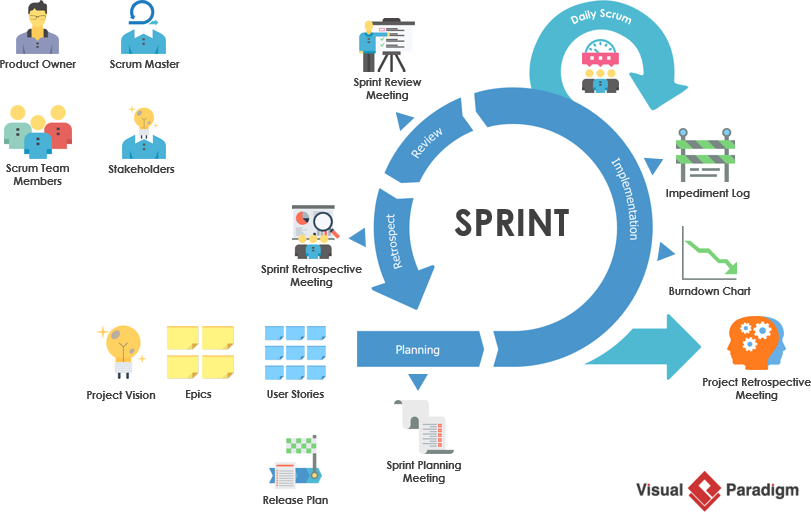
The main components of the Scrum Framework are:
- Scrum Roles: Scrum Master, Product Owner, and the Scrum Team
- Artifacts: Sprint Backlog, Product Backlog, Burndown Chart, logs, etc.
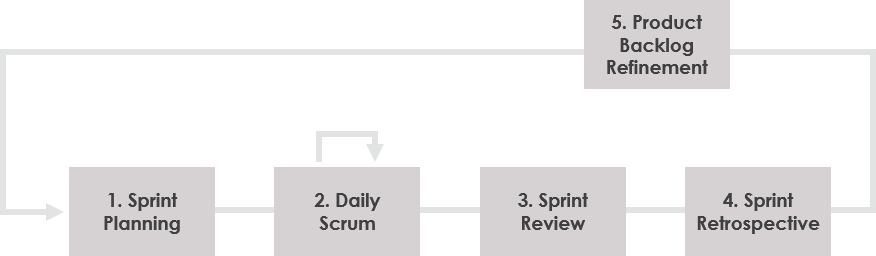
- Scrum Events: Sprint Planning, Sprint Review, Daily Scrum, Sprint Retrospective, etc.
- Sprints
The diagram below shows the key elements of the Scrum framework. The process has been visualized using the Scrum Process Canvas from Visual Paradigm’s Agile software tools.
Scrum Roles
When an organization adopts Scrum, the first thing to understand is how Scrum roles differ from traditional project management roles. Although there are only three main roles in Scrum, they do not automatically align with familiar job titles. Let’s begin with brief definitions of each:
Product Owner
The Product Owner is the Scrum role responsible for representing the business or user community. They work closely with users to define features in the product backlog. Key responsibilities include:
- Defining the product’s vision and strategy, including short- and long-term goals;
- Providing or gathering knowledge about the product or service;
- Understanding and communicating customer needs to the development team;
- Collecting, prioritizing, and managing product or service requirements;
- Taking responsibility for product or service budgeting, including profitability;
- Determining release dates for the product or service;
- Answering questions and making decisions daily with the development team;
- Accepting or rejecting completed work from the Sprint;
- Presenting the team’s main deliverables at the end of each Sprint;
- Managing the Product Backlog.
Scrum Master
The Scrum Master is the facilitator of the Agile development team. Scrum allows teams to self-organize and adapt quickly based on Agile principles. The Scrum Master manages the flow of information. Key responsibilities:
- Serving as a coach to help the team follow Scrum values and practices;
- Helping remove impediments and protecting the team from external distractions;
- Facilitating good collaboration between the team and stakeholders;
- Promoting common sense and transparency within the team;
- Shielding the team from organizational disruptions.
Scrum Team
The Scrum Team (also known as the Development Team) consists of 3 to 9 members who must collectively possess all technical skills needed to deliver the product or service. They are guided directly by the Scrum Master but not managed in the traditional sense. They must be self-organizing, cross-functional, and accountable for completing all required tasks.
The development team is responsible for delivering a potentially shippable product increment at the end of each Sprint—covering analysis, design, development, testing, and technical writing. Important characteristics of a Scrum Team include:
- Self-Organizing: All team members manage their own work to complete assigned tasks. In Agile Scrum, there is no team leader or line manager. Everyone must commit enough to drive their own activities and contribute to the team’s success. If one fails, everyone fails.
- Cross-Functional: All team members must have all the necessary knowledge and skills to deliver a high-quality, shippable product. Experts may be brought in for guidance, but only to transfer knowledge to the team to close skill gaps.
- Product Owner Requires a Business Vision: The Product Owner represents the customer’s voice and must translate their needs into actionable items for the Scrum Master and the development team. This is typically a full-time role.
- Scrum Master Is Not a Line Manager: They help coach the development team and remove obstacles that hinder progress.
Scrum Artifacts
Scrum artifacts help define the work entering the team and currently being worked on. While there are more artifacts—such as user stories, release backlogs, burndown charts—here we focus on the core three:
Product Backlog
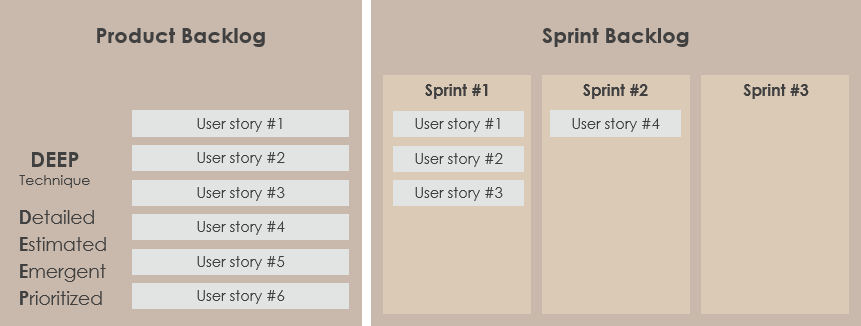
The Product Backlog is a prioritized list of user stories representing the features the product team needs or expects. Typically, the Product Owner maintains this list.
Sprint Backlog
The Sprint Backlog contains a set of selected items to be completed during the current Sprint. Two key points to note about the relationship between the Sprint Backlog and the Product Backlog:
1. The team decides what to add to the Sprint. Therefore, the team owns and is responsible for delivering these items.
2. Before moving an item from the Product Backlog to the Sprint Backlog, the team must ensure they have all the required information. The team typically defines a checklist of criteria that must be met before an item can be added.
Product Backlog vs Sprint Backlog
The Sprint Backlog is the list of tasks the Scrum team commits to completing during the Sprint. During the Sprint Planning meeting, the team typically selects a few Product Backlog Items in the form of user stories and determines the tasks needed to complete each one, as shown below:
Burndown Chart
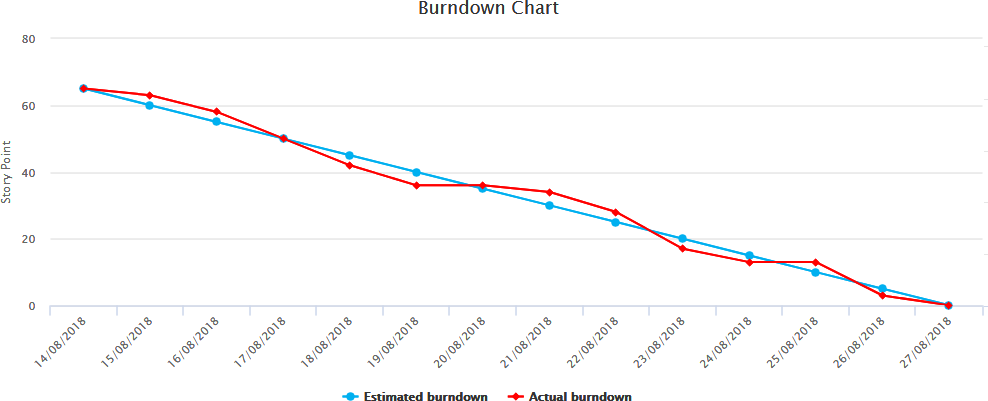
A Burndown Chart is a graphical representation of remaining work over time. The remaining work (or backlog work) is shown on the vertical axis, with time along the horizontal axis. It’s a running chart of work left to do. It can be used to predict when all work will be completed. It is commonly used in Agile software development methods like Scrum but can apply to any project with measurable progress over time. Remaining work can be measured in time or story points.
Scrum Events
Communication is key! Scrum relies on transparency across all aspects (Scrum Pillar #1). Given this core principle, the framework is built around a series of key events to ensure the other two pillars—Inspect and Adapt—as shown in the table below:
| Event | Inspect | Adapt |
|---|---|---|
| Sprint Planning |
|
|
| Daily Scrum |
|
|
| Sprint Review |
|
|
| Sprint Retrospective |
|
|
Note: During each Sprint, there are five key meetings in Scrum, as shown below:
Sprint Planning
Every Sprint begins with planning. The team must determine and commit to what they will deliver as part of the Sprint. Possible items are always pulled from the Sprint Backlog, as shown below:
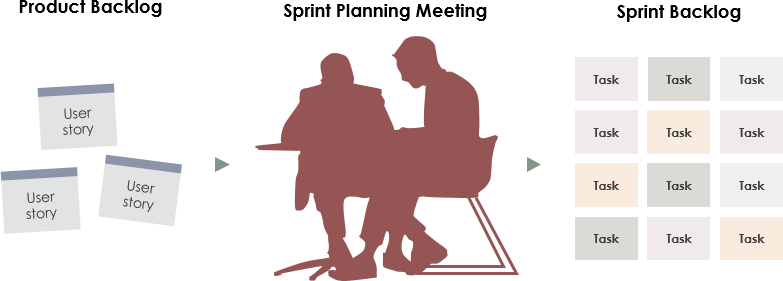
This is where the Scrum Master can shine. The Product Owner defines what is needed from a business/customer perspective, the Scrum Team determines what they believe they can deliver, and the Scrum Master ensures the best fit for both sides.
Daily Scrum Meeting
Once the team commits to what they will deliver as part of the Sprint, they hold a Daily Stand-up. The core goal is to ensure every team member (and possibly observers) fully understands the status and progress of the work:
- What did I do yesterday?
- What will I do today?
- What is blocking me?
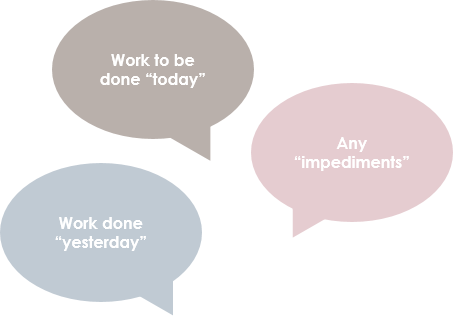
This daily update provides immediate feedback to the team. The meetings are brief—no more than 3 minutes per person.
Note: Observers are there to observe. The Scrum Master must minimize external and internal distractions.
Sprint Review Meeting
The Sprint Review or Demo is held at the end of the Sprint to inspect the Increment. The team demonstrates the Increment based on the Definition of Done, focusing on the Sprint Goal. The Product Owner reviews and accepts the delivered Increment.
Sprint Retrospective
The Sprint Retrospective is typically the last activity in the Sprint. Many teams conduct it immediately after the Sprint Review. The entire team—including the Scrum Master and Product Owner—should participate. A one-hour retrospective is usually sufficient. This meeting allows the team to reflect on:
- What should we start doing?
- What should we stop doing?
- What should we continue doing?
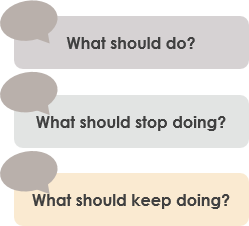
The goal is to continuously improve team efficiency.
Backlog Refinement
Think of the Product Backlog as the project’s roadmap. As the team collaborates, they create and update a list of all items needed to complete the project, ensuring all necessary requirements are met.
Sprints
In the Scrum framework, all activities required to implement an item from the Scrum Product Backlog are performed within a Sprint (also called “Iterations”). Sprints are always short—typically 2 to 4 weeks. Each Sprint follows a defined process, as shown below:
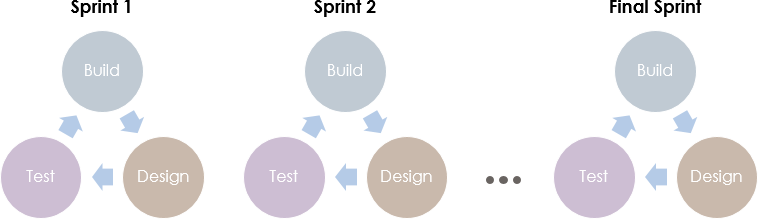
As noted, items in the Product Backlog are prioritized and selected for the Sprint Backlog. A Sprint contains only a few major items—any underestimation of work for a single item can significantly impact the Sprint. Since larger items are often harder to estimate and understand, the risk of Sprint failure increases. Experienced Scrum teams spend time and effort breaking down complex or large items (e.g., user features or Epics) into smaller user stories (or further into tasks or subtasks).
Epic
An Epic captures a large body of work. It is essentially a “large user story” that can be broken down into many smaller stories. Completing an Epic may take several Sprints. Therefore, when using Epics in development, they must be decomposed into smaller user stories.
Epics are introduced early in the project lifecycle. They are high-level, almost marketing-focused functional points.
We call large stories “Epics” to convey their scale. Think of it like a movie. If I tell you a film is an “action-adventure,” you get a sense of what to expect—possibly car chases, shooting, etc. Similarly, labeling a story as an “Epic” can sometimes convey additional context.
User Story
A User Story is a brief statement of a product requirement or business case. It is usually written in simple language to help readers understand what the software should do. The Product Owner creates the story. Then, Scrum team members break the story into one or more Scrum tasks.
User Stories are typically features visible to the end user. They follow the format: “I want to [do something] so that [I can achieve a goal].” They deliver value to the customer/user. This is the customer’s product requirement.
Example: “As a customer, I want to create an account so I can view my purchases from last year to help me plan my budget next year.”
Task
In contrast, a Task is more technical. Tasks often involve code, design, creating test data, automation, etc. These are typically individual responsibilities. Tasks are not written in user-story format. They are more technical.
Example: “Evaluate the UI angle using Material Design” or “Submit the application to the App Store.”

 English
 Arabic
 Chinese (Simplified)
 Dutch
Dutch French
 German
 Italian
 Japanese
 Korean
 Portuguese
 Russian
 Spanish