SMART is a set of criteria for creating goals—such as a Sprint goal—that are concise statements written by the Scrum team (based on the initial goal from the Product Owner) to guide them toward what they want to achieve. SMART stands for Specific, Measurable, Achievable, Relevant, and Time-bound. Writing goals in SMART format ensures the goal setter clearly understands what they want to achieve, how, and by when.
Specific: When setting a goal, be specific about what you want to achieve. Think of this as your goal’s mission statement.
Measurable: What metrics will you use to determine if you’ve achieved the goal? This makes the goal more concrete by providing a way to track progress. For a project that takes months to complete, setting some milestones by identifying specific tasks to be completed is helpful.
Achievable: This focuses on how important the goal is to you, and what you can do to make it possible—and possibly develop new skills and change your mindset. Goals should inspire motivation, not frustration. Think about how you’ll achieve the goal, and whether you have the necessary tools or skills. If you don’t currently have these, consider what it would take to acquire them.
Relevant: This refers to focusing on something meaningful in the context of broader business objectives. For example, if the goal is to launch a new product, it should align with the overall business strategy. Your team might be able to launch a new consumer product, but if your company is a B2B business with no plans to expand into the consumer market, then the goal would be irrelevant.
Time-bound: Anyone can set a goal, but without a real timeframe, you’re unlikely to succeed. A target date for deliverables is essential. Ask specific questions about the goal’s deadline and what tasks can be completed within that period. If the goal takes three months to complete, defining intermediate goals to be achieved throughout the timeline is useful. Setting a time limit also creates urgency.
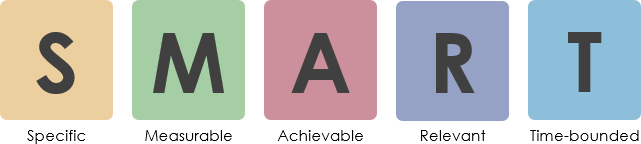
SMART Goals
INVEST reminds you of the qualities of a well-written product Backlog item (PBI) or user story. But what makes a good user story? The acronym “INVEST” can help remind you that a good story should be:
A good user story should be – INVEST:
- I ndependent: Should be self-contained in a way that allows release without depending on each other.
- Negotiable: Captures only the essence of the user’s need, leaving room for conversation. A user story shouldn’t be written like a contract.
- V aluable: Delivers value to the end user.
- E stimable: The user story must be estimable so it can be properly prioritized and fit into a Sprint.
- S mall: A user story is a small piece of work that can be completed in about 3 to 4 days.
- T estable: The user story must be confirmed through predefined acceptance criteria.
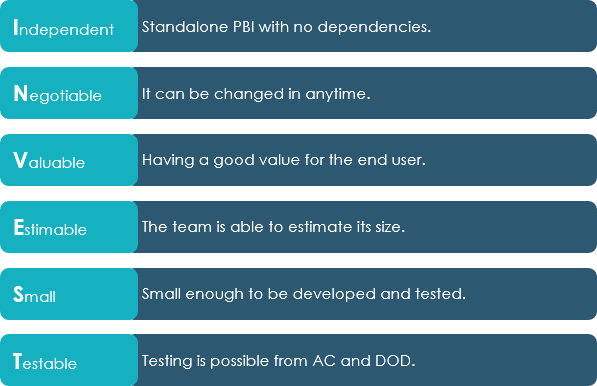
User Story – INVEST
- AC (Acceptance Criteria) and DoD (Definition of Done)

 English
 Arabic
 Chinese (Simplified)
 Dutch
Dutch French
 German
 Italian
 Japanese
 Korean
 Portuguese
 Russian
 Spanish