In the field of Enterprise Architecture (EA) development, TOGAF, ADM, and ArchiMate are three essential concepts. Each plays a unique role and together they enable the successful implementation of enterprise architecture. This article explores their differences and relationships in detail and recommends Visual Paradigm as the best tool for enterprise architecture development.
TOGAF (The Open Group Architecture Framework)
TOGAF is an enterprise architecture framework developed by The Open Group. It helps organizations design, plan, implement, and govern enterprise architecture. TOGAF provides a comprehensive set of methods and tools to support the full lifecycle management of enterprise architecture.
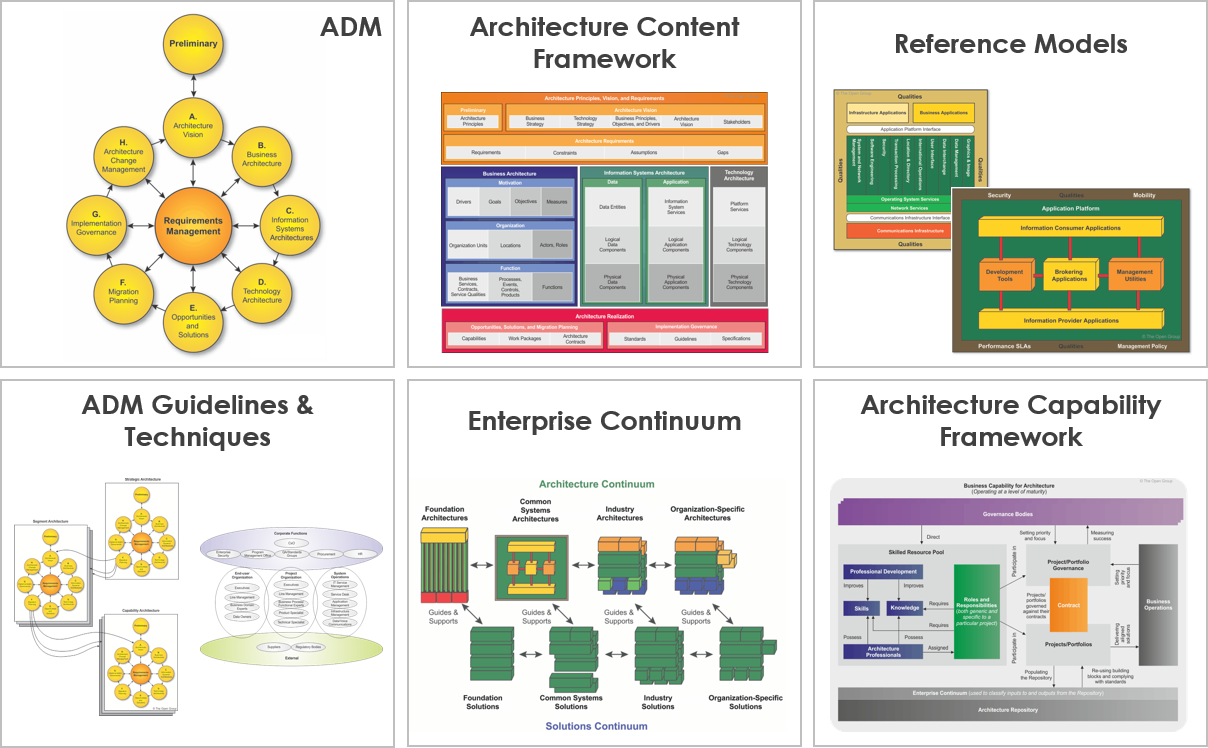
- Advantages: TOGAF offers a comprehensive framework covering all aspects of enterprise architecture—from business architecture to technology architecture. It also includes a detailed Architecture Development Method (ADM) that guides the step-by-step development of enterprise architecture.
- Applications: TOGAF is widely used across industries to align business objectives with technology goals.
ADM (Architecture Development Method)
ADM is the core component of the TOGAF framework. It provides a detailed step-by-step guide for developing and implementing enterprise architecture. ADM consists of nine phases, each with clear objectives and deliverables.
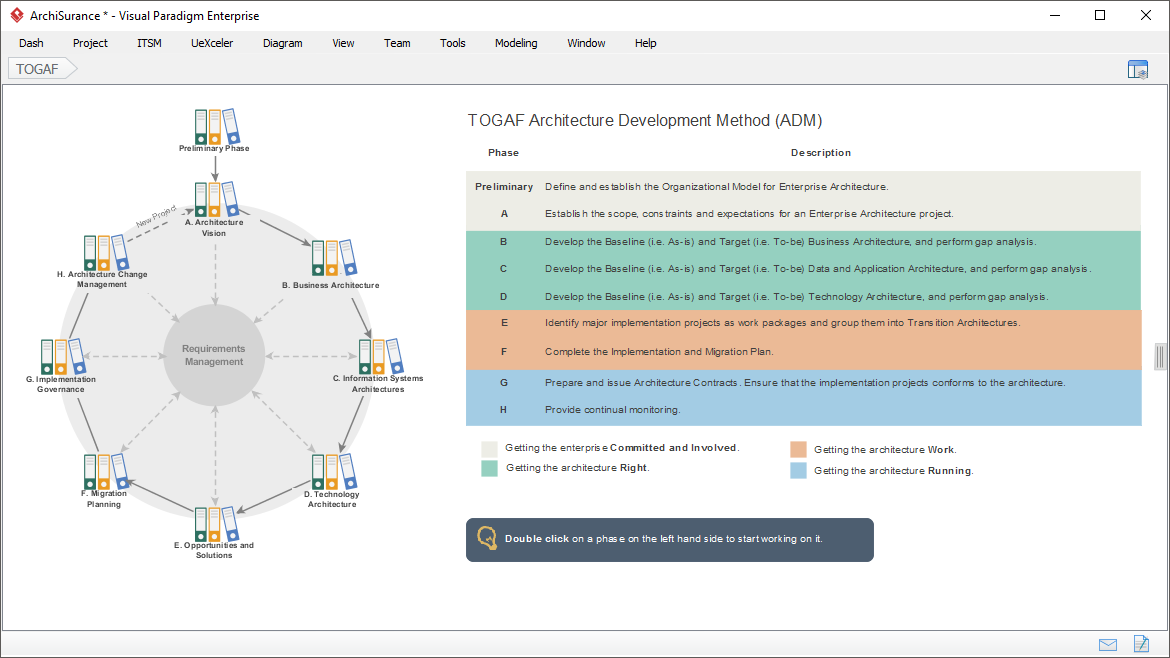
- Advantages: ADM delivers a structured approach that helps enterprise architects develop architecture systematically. It also supports iterative and incremental development, allowing organizations to adapt flexibly to change.
- Applications: ADM is widely used in enterprise architecture projects to ensure consistency and repeatability in the architecture development process.
ArchiMate
ArchiMate is an enterprise architecture modeling language designed to provide a standardized way to describe enterprise architecture. It offers a set of graphical notations and concepts for modeling different aspects of an organization—from business processes to IT infrastructure.
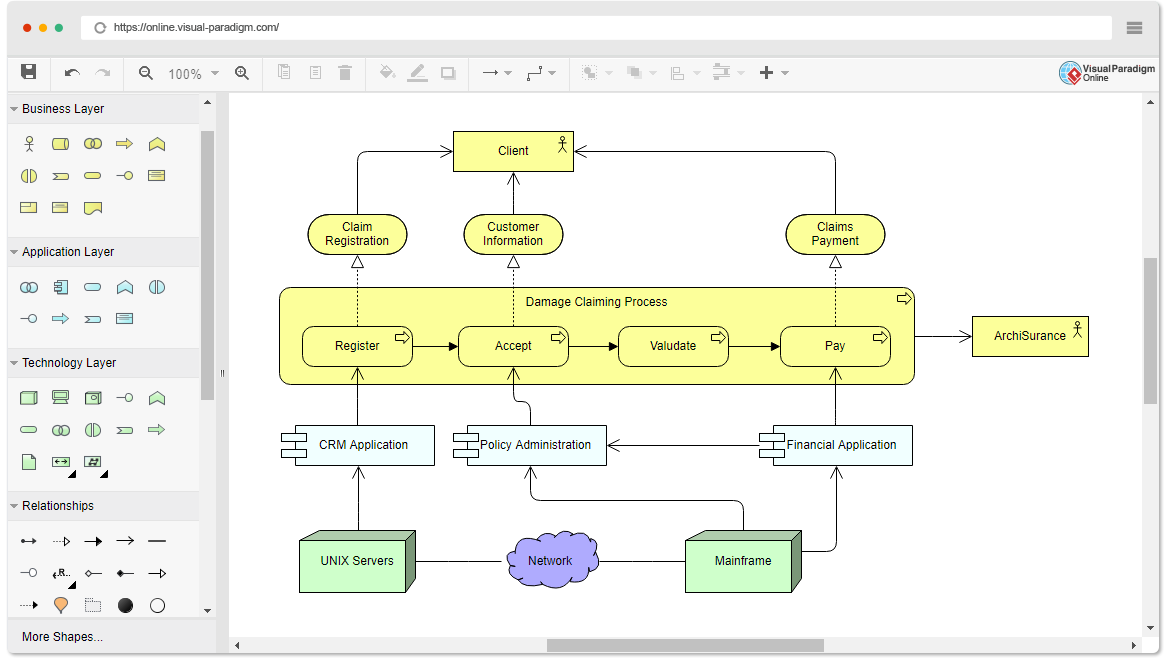
- Advantages: ArchiMate provides a common modeling language that enables different stakeholders to understand and communicate about enterprise architecture. It supports multi-layer modeling, from high-level business views to detailed technical views.
- Applications: ArchiMate is widely used for enterprise architecture modeling, helping architects create clear and consistent architecture diagrams.
Comparison Table: TOGAF, ADM, and ArchiMate
| Feature | TOGAF | ADM | ArchiMate |
|---|---|---|---|
| Definition | Enterprise architecture framework providing methods and tools for full lifecycle management of enterprise architecture. | Core component of TOGAF, providing a detailed step-by-step guide for developing and implementing enterprise architecture. | Enterprise architecture modeling language providing a standardized way to describe enterprise architecture. |
| Main Components | Architecture views, reference models, standards, guidelines, ADM. | Nine phases, each with clear objectives and deliverables. | Graphical notations and concepts supporting multi-layer modeling. |
| Application Areas | Various industries, aligning business and technology goals. | Enterprise architecture projects ensuring consistency and repeatability. | Enterprise architecture modeling, creating clear and consistent diagrams. |
| Advantages | Comprehensive framework covering all aspects of enterprise architecture. | Structured approach supporting iterative and incremental development. | Universal modeling language supporting multi-layer modeling. |
| Tool Support | Visual Paradigm provides full support, including automated ADM guidance and task management. | Visual Paradigm offers automated ADM guidance and task management features. | Visual Paradigm is a certified ArchiMate 3 tool by The Open Group, offering powerful modeling capabilities. |
| Collaboration & Integration | Supports team collaboration and integration with other tools and systems. | Supports team collaboration and ensures consistency in the architecture development process. | Supports team collaboration and ensures clarity and consistency in architecture diagrams. |
| Certification | Certified by The Open Group. | Certified by The Open Group. | Certified by The Open Group. |
Visual Paradigm: The Best Tool for Enterprise Architecture Development
Visual Paradigm is a powerful enterprise architecture tool that supports TOGAF, ADM, and ArchiMate. It provides a comprehensive set of features to help enterprise architects develop and manage architecture efficiently.
- TOGAF & ADM Support: Visual Paradigm offers full support for TOGAF and ADM, including automated ADM guidance and task management capabilities.
- ArchiMate Modeling: Visual Paradigm is a certified ArchiMate 3 tool by The Open Group, delivering powerful modeling features to help architects create clear and consistent architecture diagrams.
- Collaboration & Integration: Visual Paradigm supports team collaboration, enabling different stakeholders to work together. It also provides integration capabilities with other tools and systems, ensuring alignment between enterprise architecture and the business & IT environment.
Conclusion
TOGAF, ADM, and ArchiMate form the three pillars of enterprise architecture development, each contributing unique value. Visual Paradigm, as a comprehensive enterprise architecture tool, supports the seamless integration of all three, helping organizations efficiently develop and manage their enterprise architecture. Whether you are just starting out or already have experience in enterprise architecture, Visual Paradigm is your best choice.
Try Visual Paradigm today and experience a new level of enterprise architecture development!

 English
 Arabic
 Chinese (Simplified)
 Dutch
Dutch French
 German
 Italian
 Japanese
 Korean
 Portuguese
 Russian
 Spanish