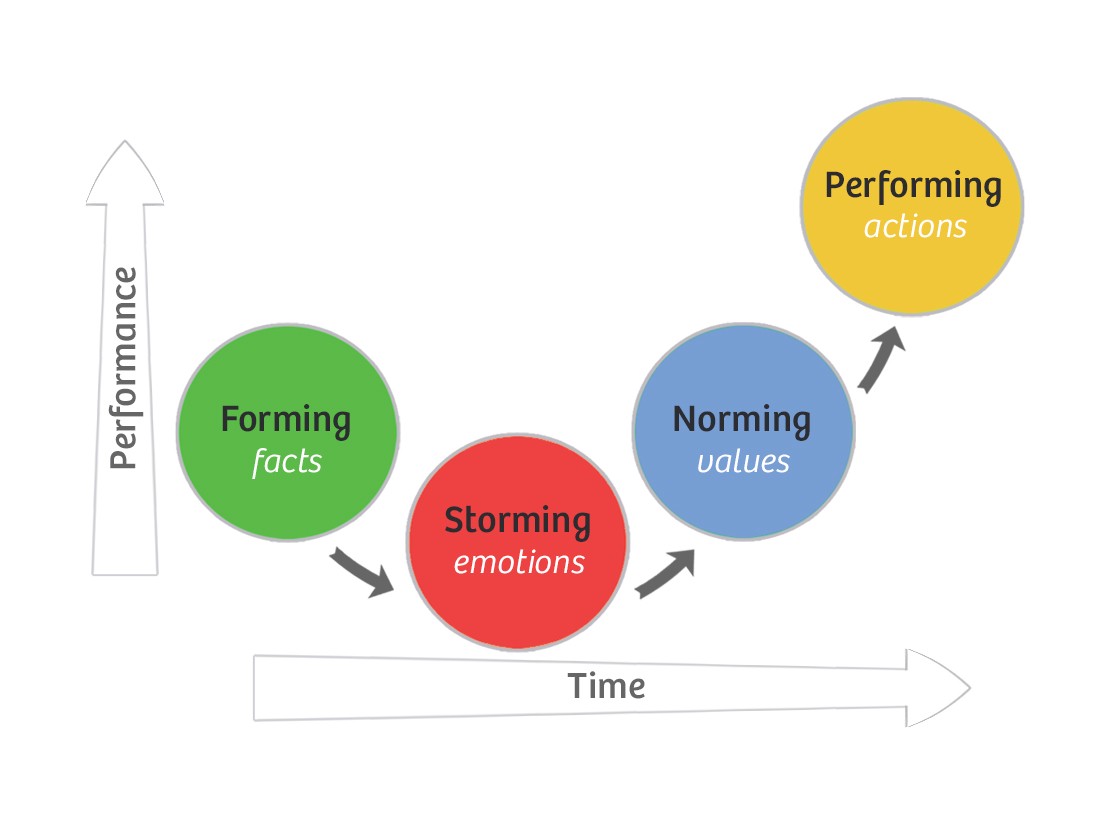
The Forming, Storming, Norming, and Performing (FSNP) model describes the four stages of psychological development that a team goes through during a project. As the team overcomes challenges, it progresses through each stage, learns to work together, and ultimately focuses on achieving shared goals.
This concept originated in 1965 from American psychologist Bruce Tuckman, who proposed a group development model built around FSNP. In 1977, he added a fifth stage called “Adjourning” (sometimes referred to as “Mourning”) to address the end of a project and the dissolution of the team.
Understanding what typically happens at each stage is important because many organizations still find this model useful when developing teams.
What Happens in Each Stage of Forming, Storming, Norming, and Performing?
Each stage of FSNP describes different team dynamics that team leaders may encounter throughout a project. If a team successfully completes the described stages, it leads to a successful project conclusion.
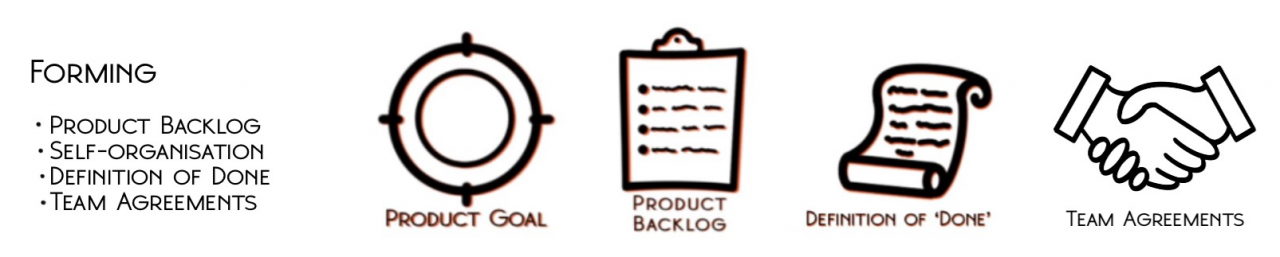
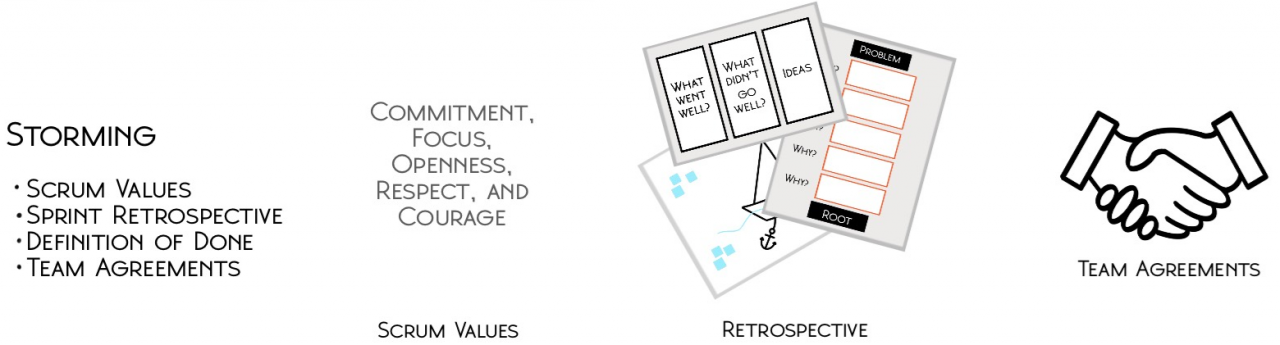
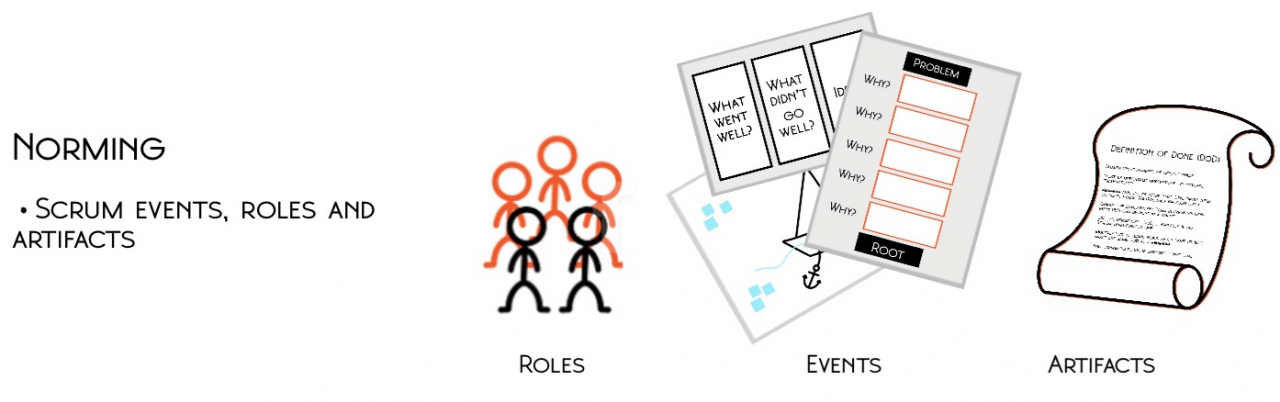
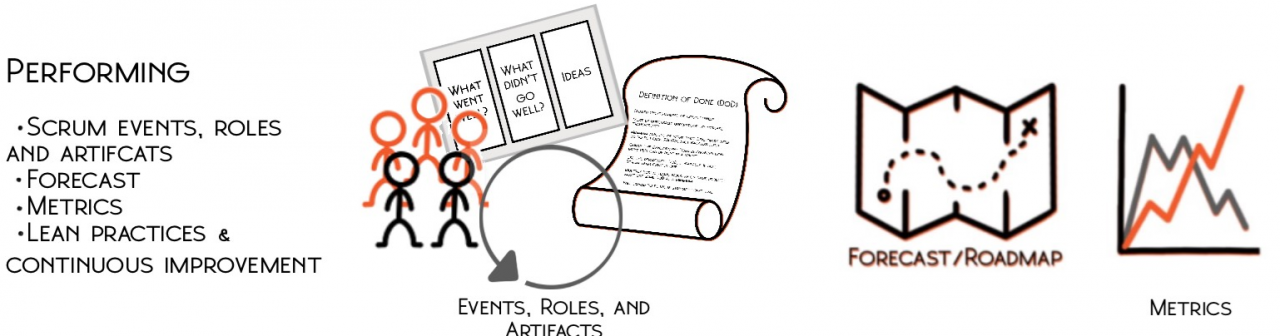
For agile teams, the goal of the Scrum Master or agile coach is to help the team move quickly through the first three stages (Forming, Storming, and Norming) so the team can reach the Performing stage. In each team development stage, you can see how corresponding agile values are reinforced through Scrum artifacts and events.
Forming
Whether using a top-down or bottom-up approach, the team comes together to solve problems and propose solutions. Each team member begins adapting to the project tasks. They start building relationships within the group. This is a period filled with positive emotions.
Storming
In terms of team success, this is the most dangerous stage. The team leader establishes roles for each member. This often brings out many negative group behaviors. For example, it can lead to interpersonal conflicts and “turf wars,” as people stake out the parts of the project they want to control. This may cause team members to dismiss others’ perspectives. Some may even refuse to join the team entirely. This is the stage where teams are most likely to fall apart.
Norming
The turning point. Team members accept the process and begin working together effectively. They build trust with one another. When people find ways to collaborate despite differences, the team achieves greater cohesion.
Performing
The team starts performing at a high level. By placing the team’s needs above individual ones, the team focuses on shared goals and finds ways to resolve any issues that arise. Typically, this means the team structure is fixed, but individual roles remain flexible.
In the 1970s, Tuckman collaborated with psychologist Mary Ann Jensen to add a fifth stage called Adjourning (sometimes called Mourning). In this stage, the team concludes its work. It is important for the team to celebrate its achievements. Their work should also be recognized and rewarded.
Another possible outcome of the Adjourning stage is that the team performs so well together that the organization assigns them to another project, hoping to replicate the same level of success.

 English
 Arabic
 Chinese (Simplified)
 Dutch
Dutch French
 German
 Italian
 Japanese
 Korean
 Portuguese
 Russian
 Spanish