Story points are a measurement used in Agile project and product management to estimate the effort required to implement a given user story. It’s an abstract measure of the amount of work needed to complete the story. In simple terms, a story point is a number that tells the team the level of difficulty of a story. The difficulty may relate to complexity, risk, and effort involved.
Story point estimation is a relative estimation technique, typically performed during product backlog grooming sessions, where the team responsible for the actual development and testing evaluates the backlog items.
To make Sprint Planning more efficient in practice, the Product Owner and the team perform rough estimates beforehand—called product backlog refinement—and check:
- Whether Sprint Planning can be carried out effectively?
- Is there enough information to complete these items?
- Are user stories properly broken down?
Fibonacci Numbers for Story Points
When estimating, it’s recommended for development teams to use Fibonacci numbers (1, 2, 3, 5, 8, 13, 21, …) to assign story points (see the article on Planning Poker).
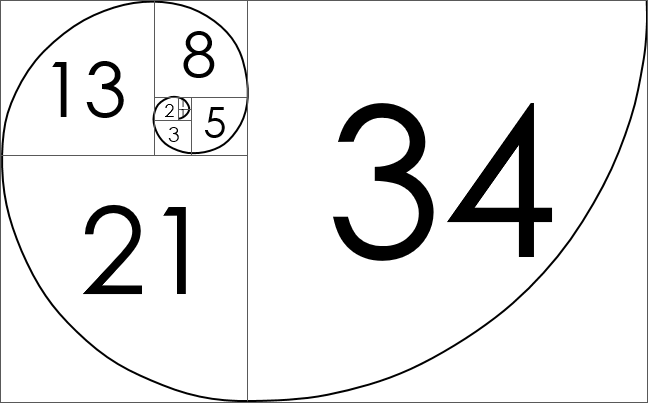
Story Point Fibonacci Numbers
How to Perform Agile Estimation?
To do this, each team must identify a baseline story. It doesn’t have to be the smallest, but rather one that resonates with every team member. Once identified, all user stories should be sized relative to this baseline story.
When estimating a new story, simply pick one and ask: “Is this going to take longer than the reference story X?” or “Will it take more than reference story Y?” Having enough reference stories allows you to find a suitable comparator to identify a similar-sized story and assign it the same number of points, or more or fewer points based on the factors considered.
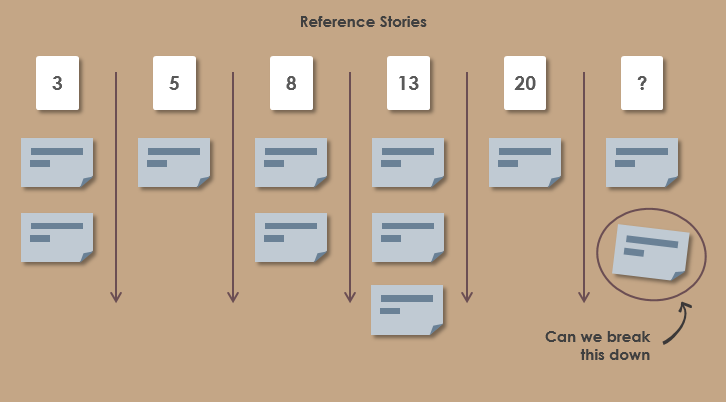
Agile Estimation Reference Stories
When assigning story points, we assign a point value to each story. The relative value is more important than the absolute number. A story assigned 2 points should be twice as hard as a story assigned 1 point. It should also be two-thirds the size of a story estimated at 3 points.
Additionally, note that when the estimated story point value exceeds 21, the user story should be split again. It’s generally recommended that no single user story exceed 8 story points for better manageability.

 English
 Arabic
 Chinese (Simplified)
 Dutch
Dutch French
 German
 Italian
 Japanese
 Korean
 Portuguese
 Russian
 Spanish