Data Flow Diagrams (DFDs) continue to be one of the most effective ways to visualize how information moves through a system — yet many professionals still spend far too long creating them manually. In 2026, Visual Paradigm’s AI Chatbot changes that completely.
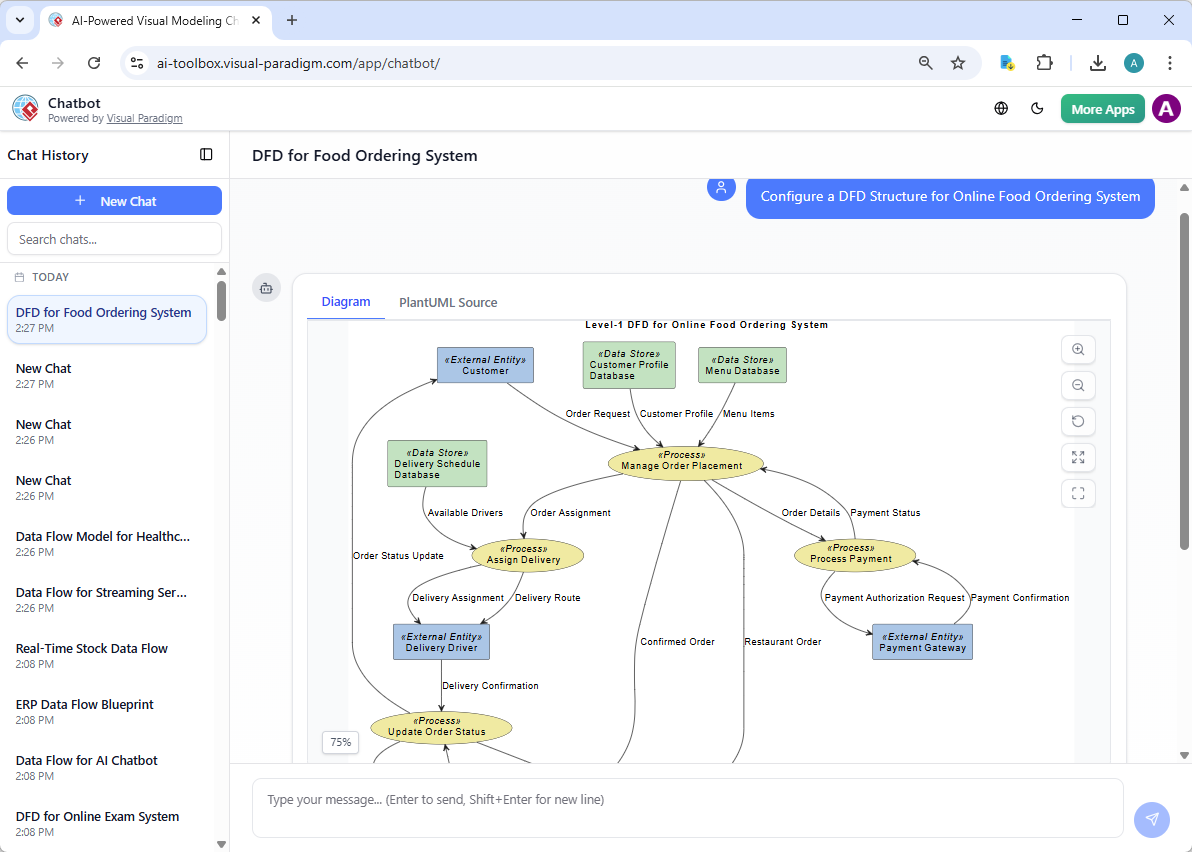
What is a Data Flow Diagram (DFD)?
A Data Flow Diagram (DFD) is a graphical representation that shows how data flows through a system — from external entities (users, organizations, other systems), through processes (actions or transformations), into and out of data stores (databases, files), and back out again.
Key characteristics of DFDs:
- Focuses purely on data movement, not timing or sequence
- Uses only four core symbols: External Entity, Process, Data Store, Data Flow
- Supports leveling: Context Diagram (big picture) → Level 0 → Level 1+ (increasing detail)
- Helps identify bottlenecks, redundant data handling, missing flows, and security gaps early
DFDs are widely used in:
- Business analysis & requirements gathering
- Software/system architecture design
- Database & integration planning
- Security & compliance reviews
- Academic projects and certifications (e.g., CBAP, CCBA, TOGAF)
Meet the Fastest Way to Create DFDs in 2026: Visual Paradigm AI Chatbot
Instead of dragging shapes for hours, simply describe your system in plain English. The AI understands context, selects appropriate notation, balances the diagram, and delivers a clean, professional result — usually in under 45 seconds.
Try it now (no signup required for basic use):
10 Brand-New DFD Examples — All Created with One Prompt Each
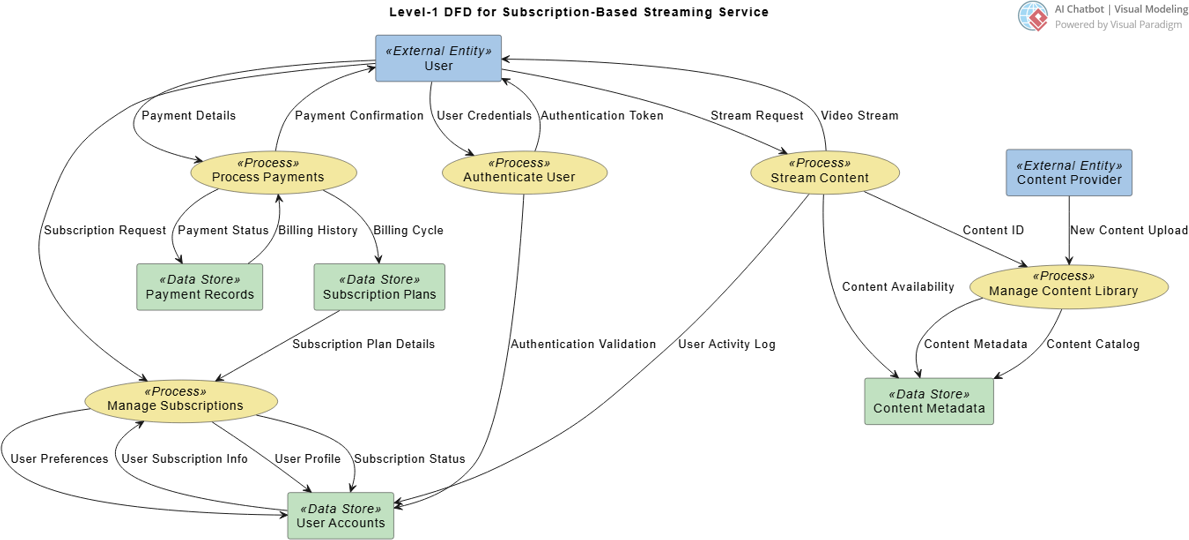
1. Subscription-Based Streaming Service
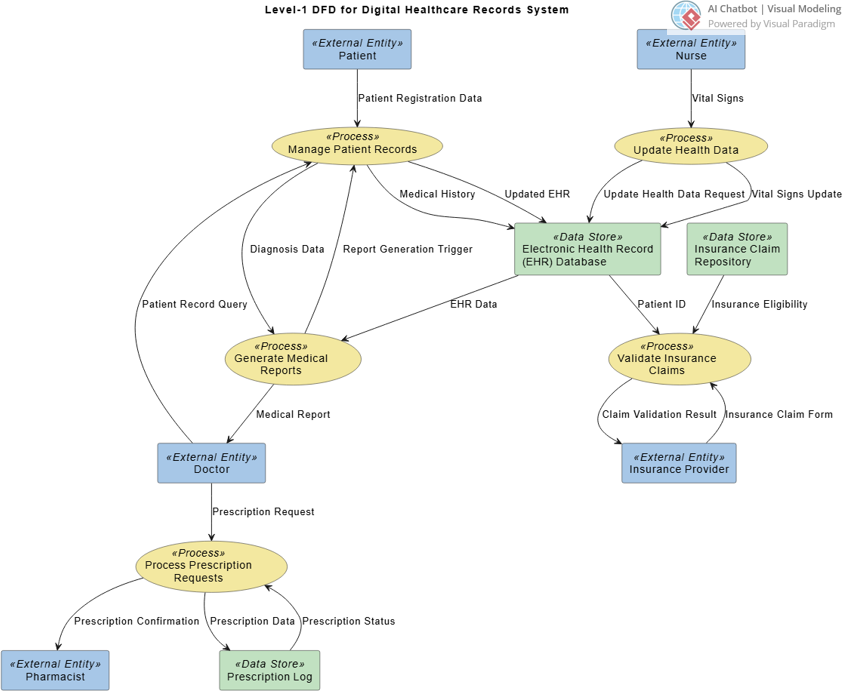
2. Digital Healthcare Records System
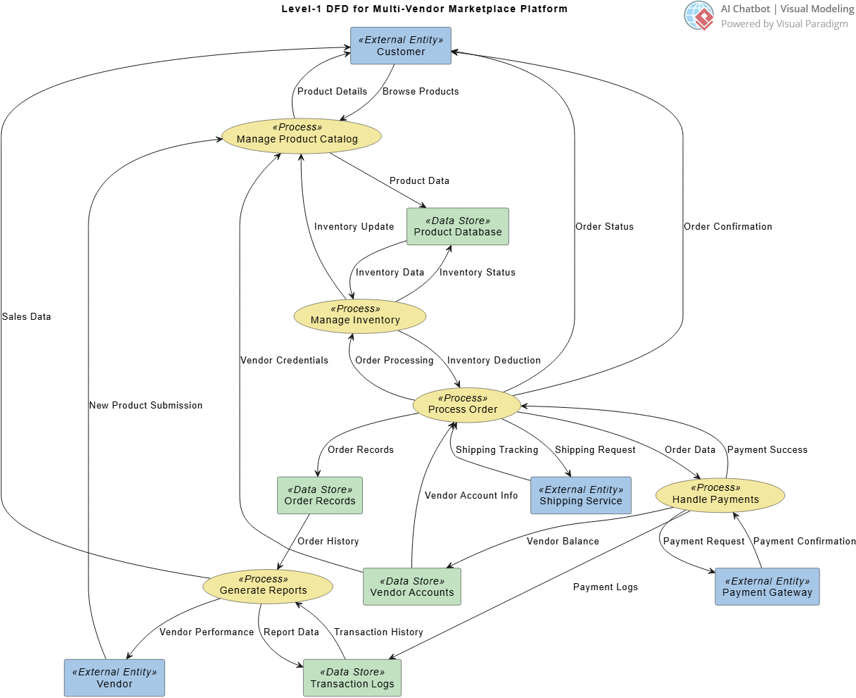
3. Multi-Vendor Marketplace Platform
4. Automated Payroll System
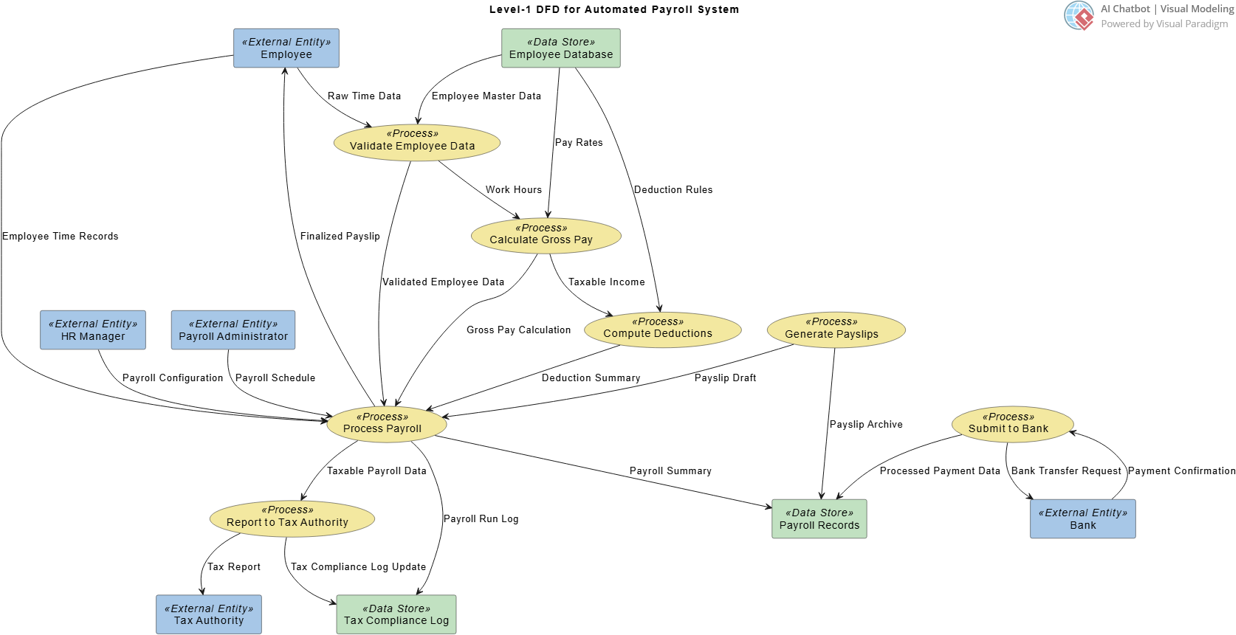
5. Smart Parking Management System
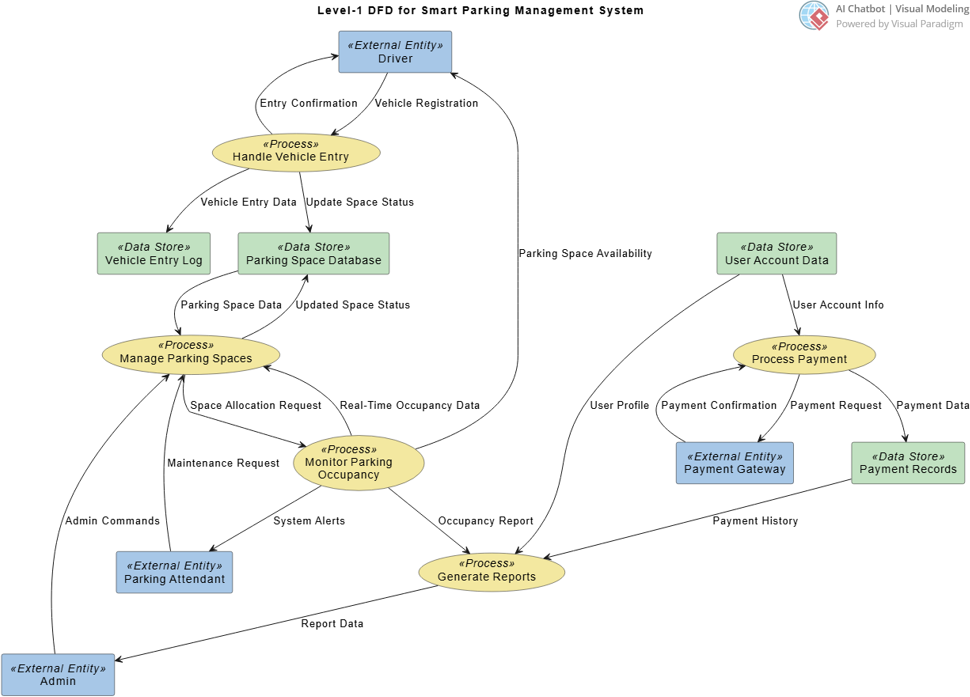
6. Online Food Ordering System
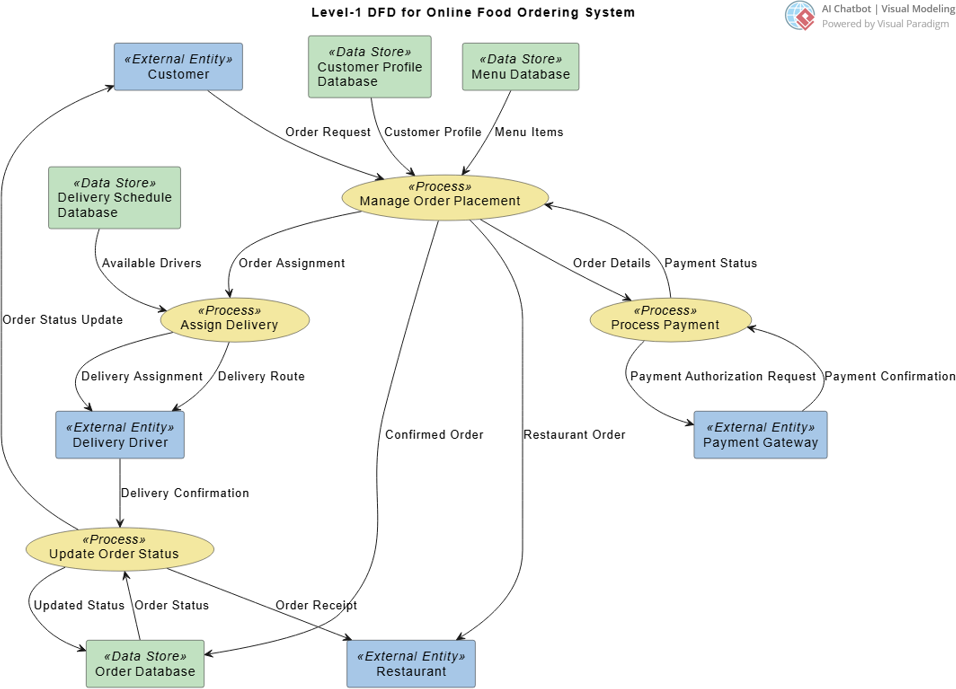
7. Customer Support Ticketing System
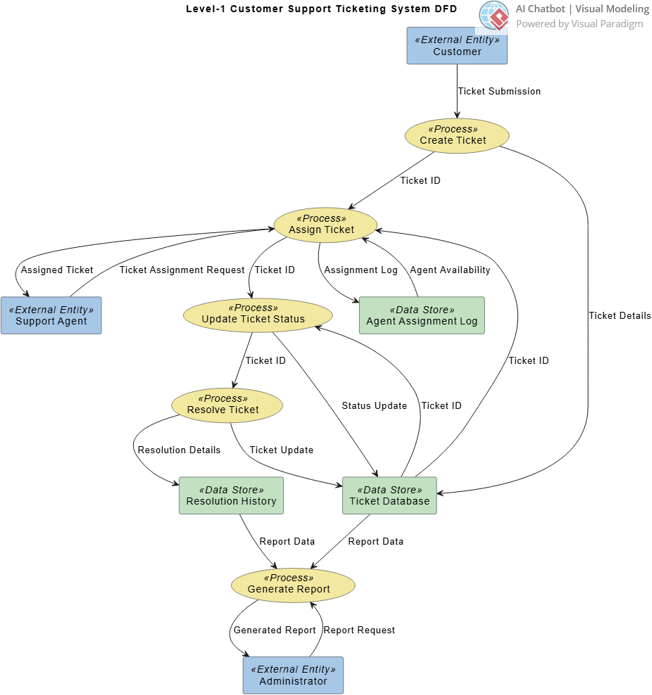
8. Insurance Claim Processing System
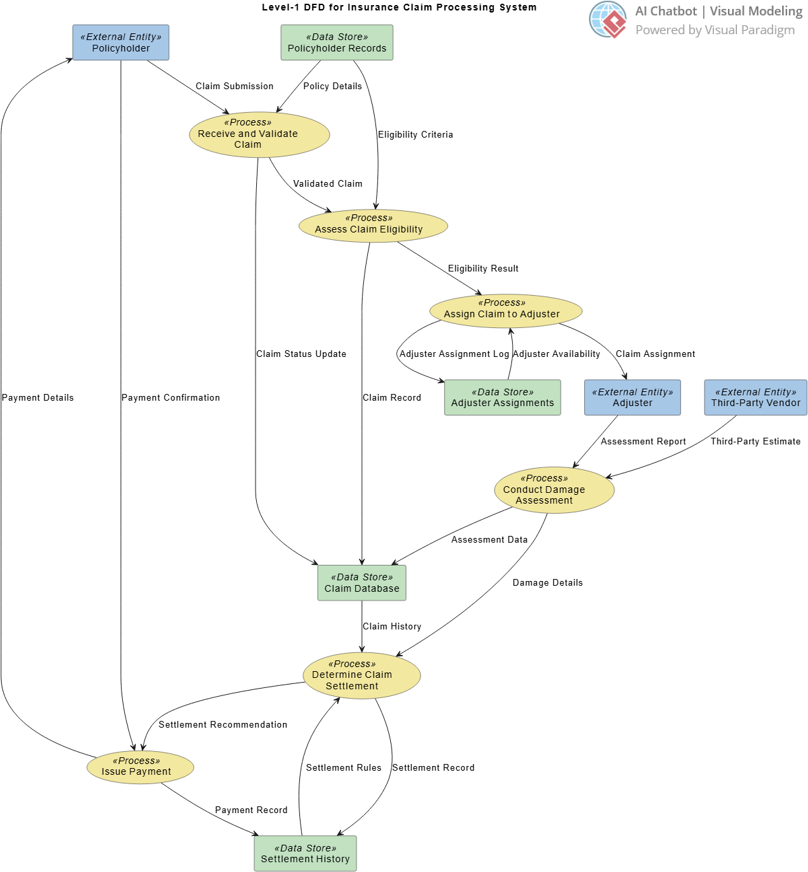
9. Inventory Tracking Application
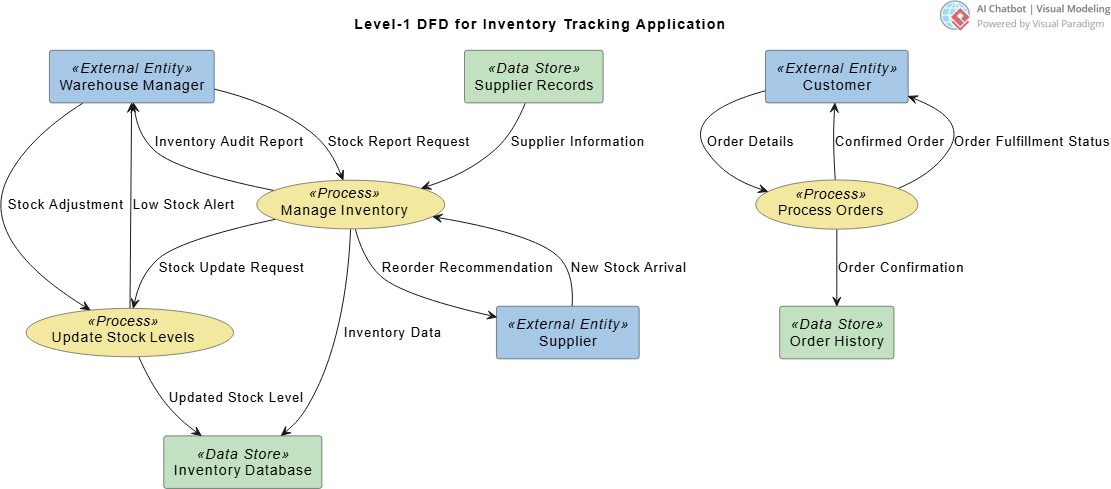
10. Online Auction Platform
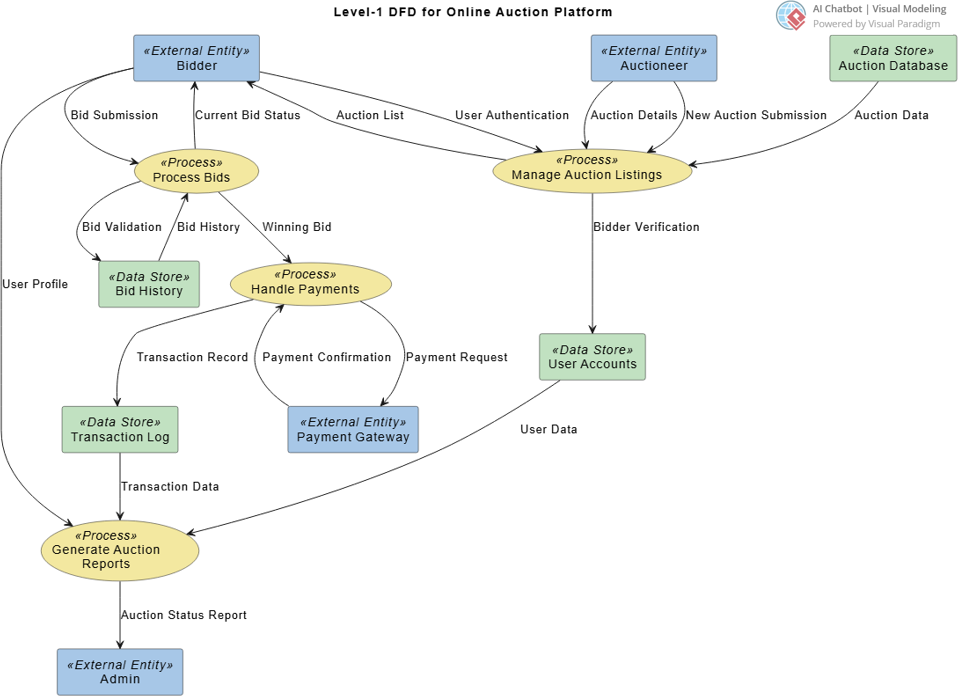
Create Your Own Professional DFD — in Seconds
Stop wrestling with shapes and connectors. Let AI do the heavy lifting while you focus on the system logic.
Quick Recap: Why Use Visual Paradigm AI for DFDs?
- Natural language → instant diagram (no learning curve)
- Correct notation & automatic layout
- Export as image
- Free tier powerful enough for most individual & student use cases

 English
 Arabic
 Chinese (Simplified)
 Dutch
Dutch French
 German
 Italian
 Japanese
 Korean
 Portuguese
 Russian
 Spanish