Traditionally, projects were organized around component teams (such as UX, Dev, Business, Tester, etc.), and any release requiring a series of component expertise would involve multiple component teams. Typically, different teams would have different priority sets, inevitably leading to bottlenecks in the product release cycle.
According to Wikipedia, a cross-functional team is a group of individuals with diverse functional expertise working toward a common goal. One of the best ways to improve team quality is to make it cross-functional. A cross-functional team possesses all the necessary skills to turn ideas into working products.
The Scrum Guide states: “The Scrum Team consists of a Product Owner, the Development Team, and a Scrum Master. The Scrum Team is self-organizing and cross-functional. Unlike the component team approach, a cross-functional team is composed of individuals from different functional areas within the organization. It should include not only technical experts (backend, frontend developers, QA engineers, etc.) but also members such as business analysts, marketers, UX experts, or any other individuals actively involved in the project.”
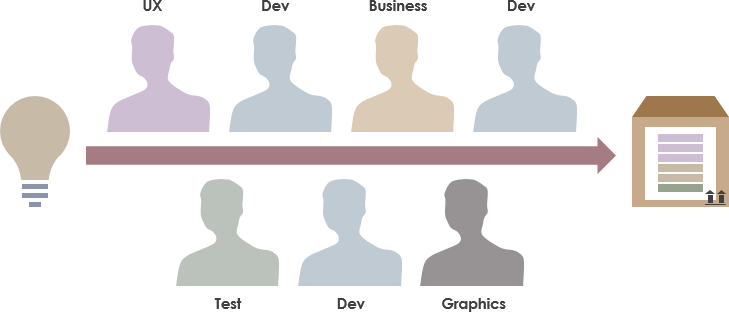
Cross-functional team in Agile
Cross-functional – Team Members or Individual Members?
One of the key factors helping Scrum teams succeed and work efficiently is the cross-functional team. Cross-functional teams offer greater flexibility, enabling faster responses to changing requirements and better handling of ongoing support and maintenance.
As Mike Cohn states, “One of the most common and enduring myths in Agile is that a cross-functional team is one where everyone has all the skills needed to complete the work. That’s not true at all… Members of a cross-functional team have a variety of skills, but that doesn’t mean every member possesses all of them.”
In reality, an Agile cross-functional team not only means the team as a whole is cross-functional, but each team member can also take on multiple roles. Being an expert doesn’t mean knowing one thing at the expense of others; ideally, a professional should be T-shaped—deep in one specialty and broad in others.
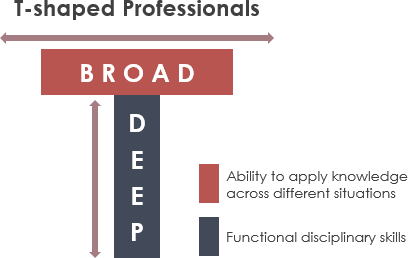
T-shaped professionals
Summary
The advantages of cross-functional teams include improved coordination across functional areas, increased innovation in products and processes, and shortened development cycles for feedback on critical customer touchpoints. Cross-functional teams eliminate most (if not all) priority conflicts, as every team member shares the same priorities toward achieving the common goal.

 English
 Arabic
 Chinese (Simplified)
 Dutch
Dutch French
 German
 Italian
 Japanese
 Korean
 Portuguese
 Russian
 Spanish