The Scrum Master is the facilitator of an agile development team. Scrum is a method that enables teams to self-organize and make rapid changes in accordance with agile principles. The Scrum Master manages the process of information exchange.
Roles and Responsibilities
The Scrum Master role was created as part of the Scrum framework. This role typically has no real authority (also known as servant leadership). The name was originally intended to indicate that the person is an expert in Scrum and can therefore guide others. The Scrum Master is also responsible for improving interactions between the Scrum Team and the organization to maximize the team’s efficiency. Finally, the Scrum Master is responsible for scheduling and facilitating the team’s meetings — Daily Scrum, planning meetings, Sprint Retrospective, and so on.
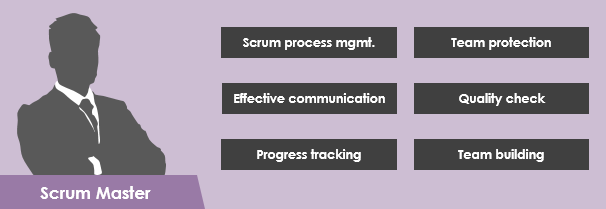
The Scrum Master’s responsibilities include:
- Removing impediments
- Creating an environment where the team can be effective
- Addressing team dynamics issues
- Ensuring good relationships between the team, the Product Owner, and others outside the team
- Protecting the team from external interruptions and distractions
Challenges Faced by the Scrum Master
The Scrum Master’s responsibility is to ensure the team follows the Scrum process and that people outside the team give the team the space they need to follow the process. Even though the role may be the easiest to explain, it is often one of the most difficult in practice. Here are the three biggest challenges teams commonly face:
- Resistance to Change — Perhaps the most frustrating obstacle is resistance. It can take many forms — active or passive, overt or covert — as noted by Mike Cohn, author of “Agile Estimating and Planning” and “Succeeding with Agile.”
- Misunderstanding of the Process — Experts say that because Scrum changes the way people work so fundamentally, there is a great deal of room for confusion in day-to-day implementation. People commonly believe they understand Scrum, but mix old terminology and methods with Scrum processes and terms.
- Inability to Adapt to Changing Roles — Transitioning to Scrum impacts the entire team, department, or even the whole company (cross-functional and self-organizing), which can feel intimidating. For example, managers may fear losing authority or control, while team members may struggle to adapt to group-driven processes.
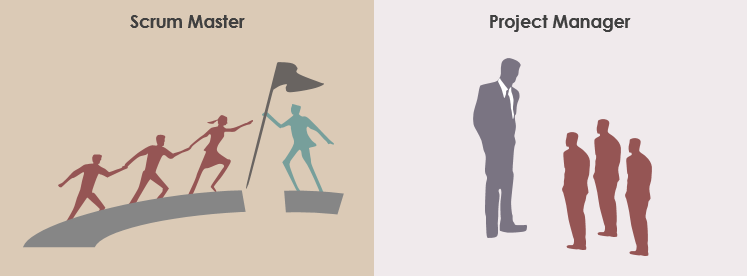
Scrum Master vs Project Manager
In Waterfall, the Project Manager takes a leadership role in guiding the team, creating, and managing plans. But what happens to all those project management activities when the team is Agile?
- The Project Manager helps manage the project schedule, resources, and scope to meet business needs. In contrast, the Scrum Master helps ensure the Scrum Team succeeds.
- The Product Owner works with customers and the team to set direction.
- The Scrum Master acts as a coach and facilitator, guiding the Development Team to follow Agile practices and deliver on the Product Owner’s prioritized work.
- The Scrum Master collaborates with the Product Owner and Development Team to ensure team members can continue development without impediments and that Scrum practices are properly implemented.

 English
 Arabic
 Chinese (Simplified)
 Dutch
Dutch French
 German
 Italian
 Japanese
 Korean
 Portuguese
 Russian
 Spanish