A Sprint is a time-boxed iteration of continuous development. During the Sprint, the planned workload must be completed by the team and prepared for review. A Scrum project is broken down into small, consistent time intervals called Sprints. They can be as short as a few days but typically last no more than 3–4 weeks.
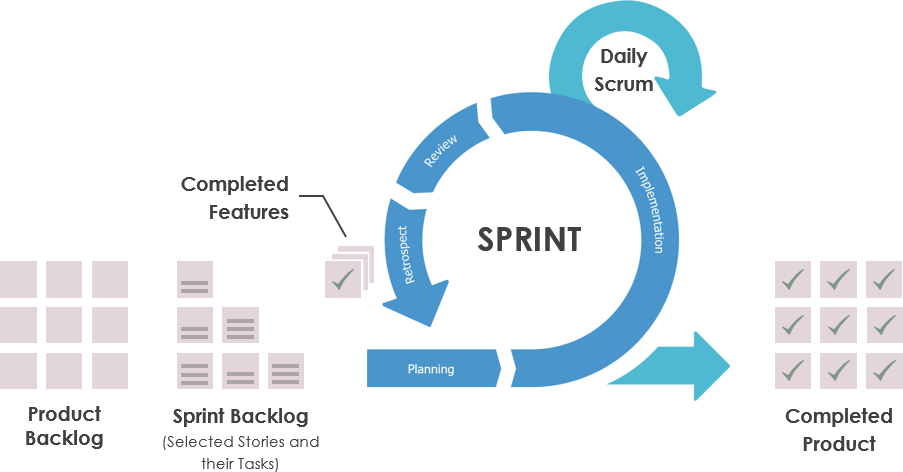
In Scrum, we usually plan Sprints based on the overall scope of the project. In a sense, each Sprint in Scrum should itself be treated as a mini-project — with a beginning and an end. We commit to achieving the Sprint Goal: we plan, refine, build, deliver, review, and so on.
During the Sprint, there is a Development Team composed of cross-functional members capable of achieving the Sprint Goal. This may include software engineers, architects, programmers, analysts, system administrators, QA specialists, testers, UI designers, and more.

Before the Sprint
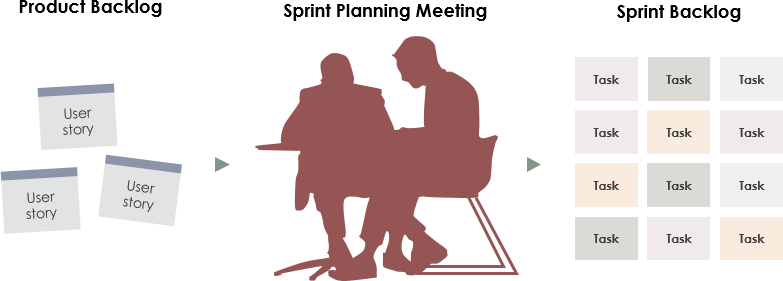
There is a Sprint Planning meeting. The length of the Sprint Planning meeting is proportional to the length of the Sprint. A four-week Sprint should be planned in no more than 8 hours. A one-week Sprint should be planned in no more than 2 hours.
This meeting determines the goal of the Sprint. Based on the team’s velocity, a set of features is pulled from the top of the Product Backlog into the Sprint Backlog for the upcoming Sprint.
During the Sprint
No new features are added, and the Sprint Goal does not change. The only exception is if the team finishes the Sprint early.
Daily Stand-up During the Sprint
During the Daily Scrum (also called Daily Stand-up or Daily Scrum), team members synchronize their work. Daily Scrums enable team members to ensure the right things are being worked on by the right people at the right time.
Every morning during the Sprint, the project team gathers for a short Daily Stand-up meeting (less than 15 minutes). This meeting takes place at the same time every day and includes everyone involved in the project. Everyone stands during the meeting to keep it focused and brief. A timer is usually set so the meeting does not run too long.

Everyone on the team is responsible for answering three simple questions:
- What did I do yesterday to help achieve the Sprint Goal?
- What will I do today to help achieve the Sprint Goal?
- What, if anything, is blocking or impeding progress toward the Sprint Goal?

These three questions allow complete transparency. Everyone on the team is in the loop, and the answers hold people accountable for what they say. The results of this meeting are often shared with the customer. This daily communication ensures that if anything is blocking the team, it can be addressed quickly.

 English
 Arabic
 Chinese (Simplified)
 Dutch
Dutch French
 German
 Italian
 Japanese
 Korean
 Portuguese
 Russian
 Spanish