The Daily Scrum Meeting (also known as the Daily Stand-up) typically takes place every day during each Sprint, lasting around 15 minutes. In Scrum Agile practices, teams usually meet at the same time and place every morning—often at 9:00 AM.

Daily Scrum Meeting
Purpose of the Daily Stand-up
The stand-up meeting provides team members with a simple way to stay updated without spending excessive time in meetings or reading lengthy status reports. It focuses on quick discussions about progress, plans, and blockers. The main goal is to help team members quickly understand:
- What each person did yesterday
- What they plan to do today
- Any obstacles they’re facing
- Whether they need help
Daily stand-ups enable more effective communication within the team and improve overall productivity.
Participants in the Daily Stand-up
Team (Required)
The development team often meets after the Daily Scrum to discuss details, adjust plans, or re-prioritize the remaining Sprint work.
Scrum Master (Required)
The Scrum Master ensures the meeting happens, but the team owns the Daily Scrum. The Scrum Master coaches the team to keep the meeting within the 15-minute timebox.
Note:
The Daily Scrum is an internal team meeting. If others are present, the Scrum Master ensures they do not interrupt.
- Product Owner (Optional)
- Other Stakeholders (Optional)
Duration
Every morning from 9:00 to 9:15 AM.
Meeting Agenda
- What I did yesterday
- What I plan to do today
- Any blockers or impediments
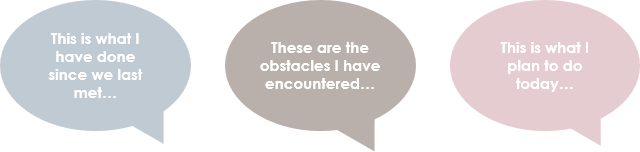
Daily Scrum Meeting Agenda
Daily Stand-up Best Practices
Effective Daily Stand-ups require experimentation and commitment to experience the benefits of short, daily meetings. However, many stand-ups often become too long and unfocused, defeating their purpose. Here are some useful guidelines for a successful Daily Stand-up:
- Hold the meeting at a fixed time and location daily—no late arrivals, early departures, or absences. This builds a habit, making communication more natural and fluid.
- As the name suggests, the stand-up is meant to be a standing meeting—no sitting or lying down. Standing keeps the meeting focused and ensures it ends within 15 minutes. Comfortable seating can lead to longer, less productive discussions.
- Each member should share their update concisely—no detailed explanations. Detailed discussions should happen offline. Focus on the current status and any issues.
- A common misconception is that team members report to the Scrum Master. This is not the case. Instead, each person speaks in turn to the whole team, so everyone understands their progress, status, or needs help. The goal is to enhance communication and collaboration across the team.
- One person speaks at a time. Everyone gets one turn. When someone is speaking, others should listen or ask clarifying questions. This improves understanding of others’ progress and enables smoother teamwork and support.
- Use automated Scrum tools (like a Sprint board with user stories and tasks) to track progress visually, so the Sprint status is always clear at a glance.
Summary
The Daily Stand-up is an effective way to ensure all members of the Scrum team are aligned, share a common understanding of tasks and goals, improve communication, eliminate unnecessary meetings, identify and remove blockers, promote quick decision-making, and enhance team knowledge and collaboration.

 English
 Arabic
 Chinese (Simplified)
 Dutch
Dutch French
 German
 Italian
 Japanese
 Korean
 Portuguese
 Russian
 Spanish