Scrum is grounded in empiricism, which is based on three key pillars (also known as the three pillars shown in the diagram below), supporting every implementation of an empirical process control: transparency, inspection, and adaptation. When the Scrum team embodies and practices the values of commitment, courage, focus, openness, and respect, the pillars of Scrum—transparency, inspection, and adaptation—come to life, building trust for everyone. Scrum team members learn and explore these values while using Scrum roles, events, and artifacts.
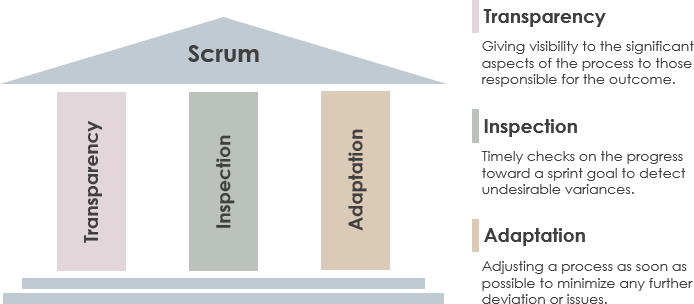
Ensuring Transparency – Scrum Team
Scrum enforces transparency both within and outside the team. Transparency is crucial to the Scrum process because it allows everyone to see and understand what is truly happening in each sprint, enabling greater, better communication and building trust in the team. The team can achieve transparency through various means.

Making Work Progress More Visible
The team can see progress: burn-down charts and whiteboards are traditional ways to display progress toward the sprint goal. A simple visual report showing progress at all planning levels—from sprint down to individual tasks—can effectively reduce the number of “when will it be done?” conversations.
Free Flow of Up-to-Date Information
Information must flow in both directions. Stakeholders and the product owner—especially those directly collaborating with the team—must also be transparent. Roadmaps, release plans, or the Definition of Done can be shared with the team so they understand the overall goals and expectations they are committed to achieving.
Scrum Master
In Scrum, the Scrum Master is not a team member who works on the project, but rather a facilitator who helps the development team. The Scrum Master must collaborate with the Product Owner, the development team, and other stakeholders to ensure that events and artifacts are fully transparent. The Scrum Master must help everyone apply the most appropriate practices when transparency is incomplete. By inspecting artifacts, recognizing patterns, listening carefully to what is said, and detecting discrepancies between expected and actual outcomes, the Scrum Master can detect incomplete transparency.
Transparency in Events
The sprint is the container for all other events. Each event in Scrum is a formal opportunity to inspect and adapt something. These events are specifically designed to achieve key transparency and inspection. Failing to include any of these events results in reduced transparency and the loss of opportunities for inspection and adaptation.
Transparency is the first critical aspect of the Scrum process and must be visible to those responsible for the outcome. Transparency requires that these aspects be clearly defined in daily activities and artifacts so the team can share a common understanding of what is seen.
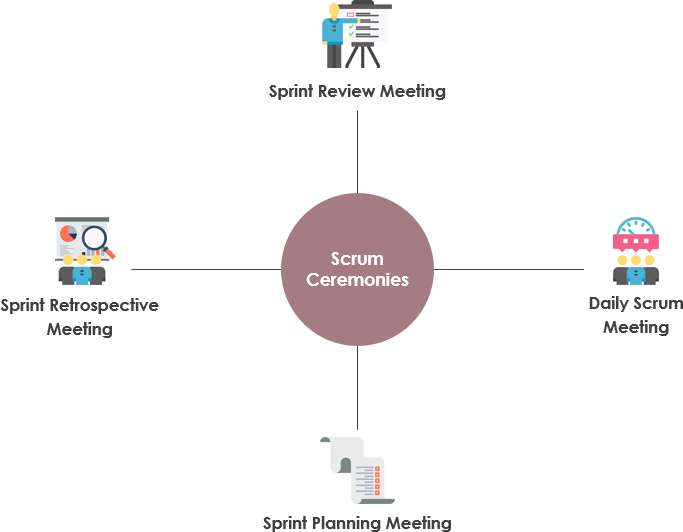
Transparency in Events
Sprint Planning Meeting
The Sprint Planning meeting is held at the beginning of the sprint to understand and document the Sprint Backlog items. This ensures that everyone involved clearly understands what they need to do to advance the specific incremental iteration.
Daily Scrum Meeting
The Daily Scrum focuses on the team’s contribution to the specific sprint, day by day. It answers three key questions:
- What did I complete in the past 24 hours to help achieve the daily sprint goal?
- What will I do today to help achieve my next sprint goal?
- What obstacles are blocking my progress toward the goal?
The Daily Scrum is crucial for sharing all these points without fear of admitting mistakes. If not shared, projects become complex, leading to delays and ultimately the risk of project failure.
Sprint Review Meeting
The Sprint Review meeting takes place at the end of the sprint to reflect on what was accomplished and to present the product increment. The team invites stakeholders to provide feedback on the sprint. The Product Owner integrates the results into the Product Backlog to improve the next sprint.
Sprint Retrospective Meeting
The Sprint Retrospective is held to inspect the last sprint, interactions, processes, and tools, and to define improvements for future sprints. This process requires transparency in reporting and communication.
Transparency in Artifacts
Scrum has several artifacts that act as information radiators throughout all stages of Scrum. The team must clearly see and understand the information to grasp project progress trends. Availability and clarity of information are essential for making informed decisions.
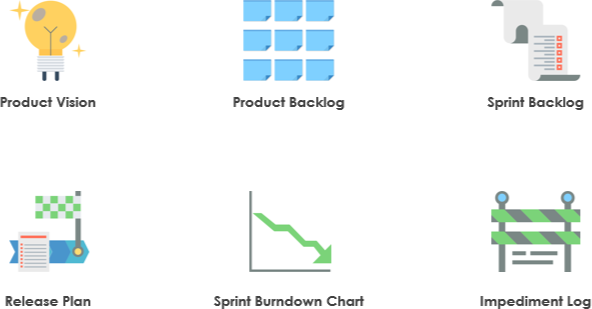
Product Backlog
The Product Backlog is an ordered list of everything the Product Owner and the team have prioritized based on importance and urgency. It contains all major features, attributes, fixes, and enhancements, ensuring clarity and understandability for the team.
Sprint Backlog
The Sprint Backlog is developed at the start of the Sprint Planning meeting after the Product Backlog is finalized. It contains user stories required to develop a complete product increment. Typically, some Product Backlog items are broken down into team-agreed tasks or user stories.
Burn-Down Charts – Progress Tracking
Use burn-down charts to illustrate how the team is performing during a given sprint. Burn-down charts tell the true story of team performance. They describe the remaining work needed to complete the sprint.
Scrum Task Board
The Scrum board is also used to reflect the three stages of work during a sprint:
- What needs to be done?
- What is currently in progress?
- What has been completed?
Definition of Done
Transparency is also closely tied to the “Definition of Done.” A formal definition of “done” reduces variability and the likelihood of incomplete work, while clearly measuring progress—either “done” or “not done”—improves transparency.
A less-than-perfect “Definition of Done” means there is “unfinished work” in your system. This incomplete work also leads to a lack of transparency. Risks are hidden within. For example, if performance testing is left as “undone,” it increases the risk of releasing a flawed system until just before release—when the damage is most severe.
Conclusion
Scrum is based on transparency, as described through its events and artifacts. However, if transparency and communication are lacking within the team, it cannot be achieved. If team members hesitate or fear sharing mistakes, it becomes difficult to establish and maintain full transparency. In fact, every team member must demonstrate mutual understanding and respect. The Product Owner and Scrum Master should encourage and motivate the team to share any risks or challenges they face. While the team must not only focus on individual achievements, they must also work toward shared project goals. All this feedback and sharing are vital for establishing and maintaining full transparency in information flow, enabling organizations and teams to continuously improve.

 English
 Arabic
 Chinese (Simplified)
 Dutch
Dutch French
 German
 Italian
 Japanese
 Korean
 Portuguese
 Russian
 Spanish