The software development industry features many different approaches — some are new versions of old methods, while others adopt relatively recent practices. The two most commonly used approaches are Agile, such as Scrum, Kanban, and Lean, and the traditional Waterfall model, such as structured methods or the newer RUP.
Most software companies following these two paradigms believe their chosen method is superior in certain aspects. So before answering the question, “Which is more successful?” — let’s examine their key differences.
Waterfall Approach
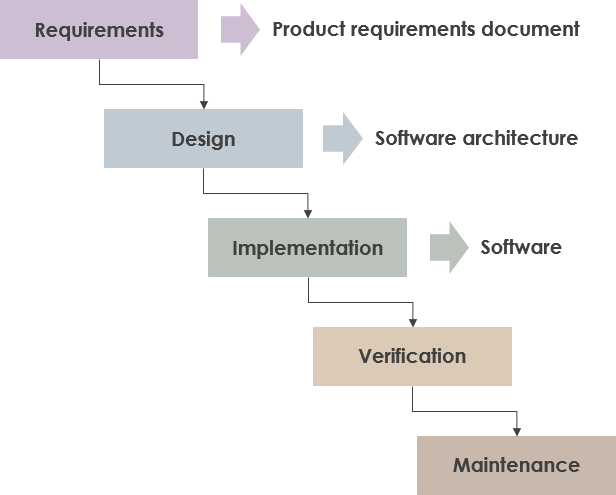
Waterfall is a linear approach to software development. Each phase represents a distinct stage in the process, typically completed before the next begins. Milestones often exist between each development phase.
- Structured as a large project in a sequential process
- Suitable for environments where changes are rare
- Requires fully defined requirements upfront
Thus, the Waterfall model insists on moving to the next phase only after the previous one has been verified and validated, as shown in the figure below:
Waterfall Approach
In Royce’s original Waterfall model, the following phases are followed in order:
- System and Software Requirements: Captured in a product requirements document
- Analysis: Produces models, architecture, and business rules
- Design: Produces the software architecture
- Coding: Development, verification, and integration of the software
- Testing: Systematic discovery and debugging of defects
- Operation: Full system installation, migration, support, and maintenance
Agile Approach
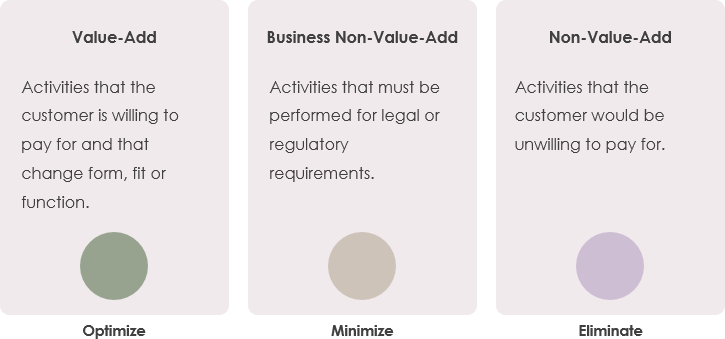
Agile is derived from Lean thinking, applying the “Lean” concept in IT environments. The key focus of Lean methods is:
- Eliminate waste in processes
- Minimize non-value-adding business activities
- Maximize value from the customer’s perspective
Agile Approaches
Agile is a proven project management methodology that encourages the following core principles:
- Frequent inspection and adaptation
- Encourages team collaboration, self-organization, and accountability
- A set of engineering best practices for delivering high-quality projects quickly
- A business approach that aligns development with customer needs and company goals
Agile Development – Iterative Lifecycle
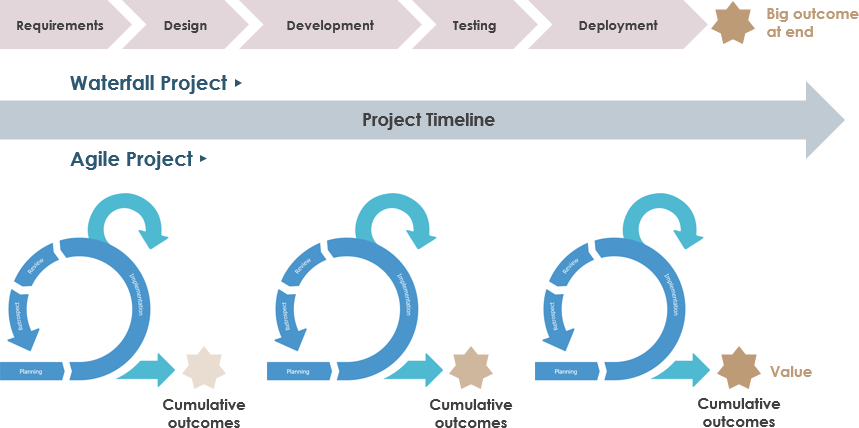
Agile development includes traditional phases such as planning, requirement analysis, design, coding, testing, and deployment — but they form a loop rather than a straight line. This means the process is flexible, repeatable, and can occur in any order or in parallel. This allows for collecting user feedback, continuous testing across environments, and changing the project scope during runtime.
Foundations of Agile Methodology
- Empiricism: Ability to execute, stop, reflect, improve, and continue in a way that progressively increases productivity.
- Prioritization: Deliver work based on business value.
- Self-organization: The team best understands how to deliver work given available resources and constraints.
- Time-Boxing: The team must complete a defined task within a fixed time frame.
- Collaboration: The team commits to delivering the final product within a given time, encouraging cross-team collaboration and creative task completion.
Agile vs Waterfall – The Triple Constraint
The biggest advantage of the Waterfall approach is fixed cost and predictability. You know the price and the delivery date. Its greatest weakness is lack of flexibility. Agile methods are highly flexible and can evolve into products significantly different from the original vision.
Agile vs Waterfall
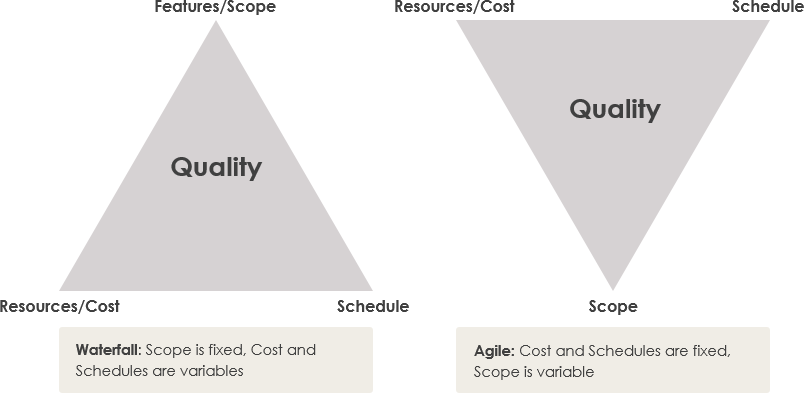
Traditional Waterfall is based on the triple constraint of time, cost, and scope. Adjusting any one of these variables forces a change in at least one other. Delivering a successful project depends on balancing these competing variables. But as we know, simply adding resources to a project doesn’t always achieve the desired outcome. In fact, adding resources late in a software project can have a negative impact.
Agile Approach takes a different approach, reversing the triple constraint. Instead of treating scope as fixed from the start, Agile sets time (iterations) and cost (team members) as fixed, then adjusts scope to focus on the highest priority items. Agile assumes scope will evolve over time. The goal is to meet the customer’s most important requirements within budget and time. As the project progresses, Agile allows for new requirements or reprioritization.
Agile vs Waterfall Quality
Agile or Waterfall? See the Figures
The latest report from the Standish Group covers projects studied between 2013 and 2017. The overall success, challenges, and failures of Agile and Waterfall projects are shown below. Agile projects are approximately twice as likely to succeed, and three times less likely to fail than Waterfall projects.

Agile vs Waterfall – Project Success Rate
The Agile Umbrella
Since the birth of the Agile Manifesto in 2001, Agile has gained significant momentum. In fact, Agile is not a single methodology but a mindset that enables teams and organizations to innovate, respond quickly to changing demands, and reduce risk. Organizations can flexibly adopt various available frameworks such as Scrum, Kanban, Lean, XP, and more.
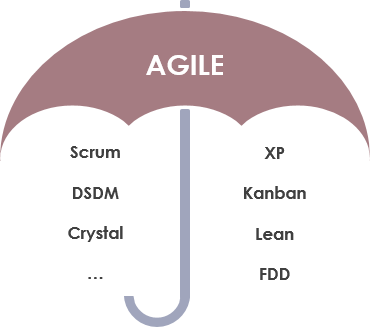
Agile Umbrella
Lean Approach
Lean organizations understand customer value and focus on their core processes to continuously improve it. The ultimate goal is to deliver perfect value to the customer through a zero-waste, ideal value-creation process.
The five-step thinking process guiding Lean implementation is easy to remember but not always easy to execute:
- Define value from the end customer’s perspective.
- Map all steps in the value stream for each product, eliminating non-value-adding steps wherever possible.
- Make value-creating steps flow smoothly and sequentially toward the customer.
- Let the customer pull value from the next upstream activity as needed.
- Continuously improve by identifying value streams, eliminating waste, introducing flow and pull, and repeating the process until perfection is achieved — where perfect value is delivered with zero waste.
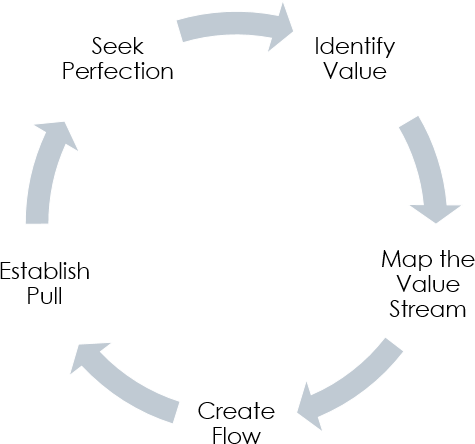
5-Step Lean Approach
Scrum Approach
Scrum is an Agile way of managing projects, typically in software development. Using Scrum for Agile software development is often seen as a methodology — but rather than treating Scrum as a methodology, it should be viewed as a framework for managing the process.
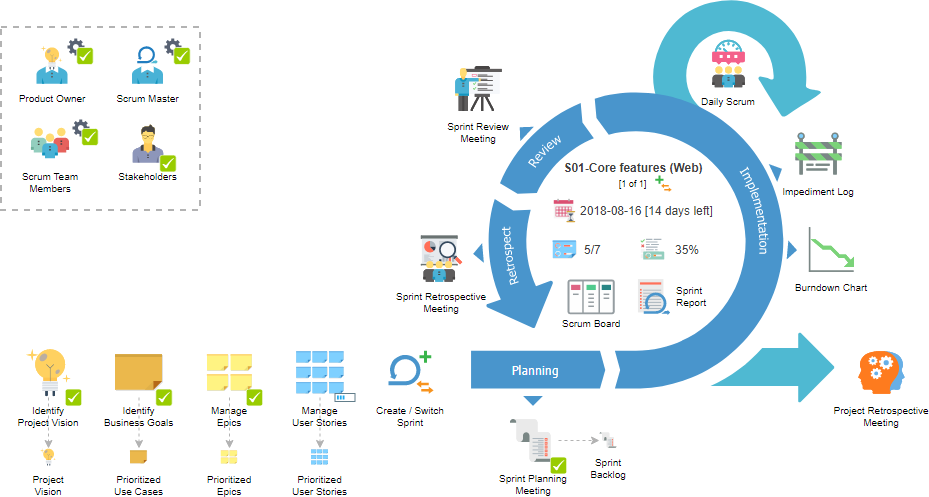
Scrum Process Canvas
Kanban Approach
Kanban is Japanese for “visual signal” or “card.” Toyota line workers used Kanban to represent steps in a manufacturing process. As part of Lean, the system’s high visual nature allows teams to communicate more easily what needs to be done and when. It also standardizes the workflow and refines the process, helping reduce waste and maximize value. Like a Scrum sprint board, Kanban tracks “To Do – In Progress – Done” activities, but it limits the number of “In Progress” tasks (defined by the team lead and cannot be exceeded).
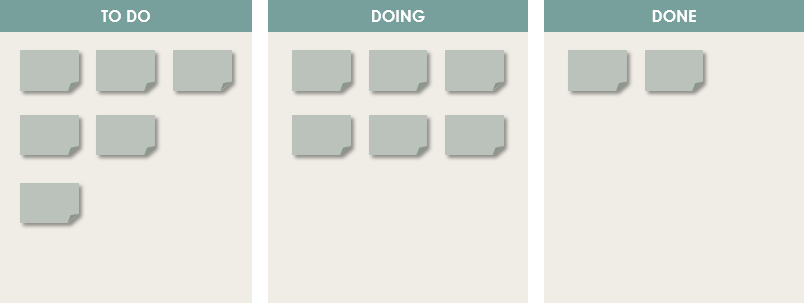
Kanban Approach
There are four core Kanban principles:
- Visualize work to increase communication and collaboration.
- Limit work in progress to avoid infinite chains of un-prioritized open tasks.
- Measure and optimize flow — collect metrics, predict future issues.
- Continuously improve through analysis and feedback.

 English
 Arabic
 Chinese (Simplified)
 Dutch
Dutch French
 German
 Italian
 Japanese
 Korean
 Portuguese
 Russian
 Spanish