


In today’s fast-evolving digital landscape, enterprise architecture (EA) faces a critical challenge: bridging the gap between high-level strategic governance and practical software delivery. While traditional frameworks like TOGAF (The Open Group Architecture Framework), ArchiMate, and C4 Model have each proven their value in distinct domains, they often operate in silos—leading to misalignment, inefficiency, and communication breakdowns across teams.
The proposal to unify TOGAF ADM, ArchiMate, and the C4 Model into a single, cohesive workflow is not just a theoretical exercise—it represents a pragmatic, well-reasoned evolution of modern EA practices. This integration leverages the complementary strengths of each framework while mitigating their individual weaknesses, enabling organizations to achieve end-to-end visibility from business strategy to deployable software.
Why This Integration Makes Sense
The core insight is that these frameworks are not competitors—they are partners. When used together, they form a powerful triad that supports both enterprise-wide governance and developer-level practicality:
| Framework | Role | Strength |
|---|---|---|
| TOGAF ADM | Process & Governance | Structured lifecycle, phased approach, strategic alignment |
| ArchiMate | Modeling Language | Standardized, multi-layered enterprise modeling (business, application, technology) |
| C4 Model | Visualization & Communication | Developer-friendly, zoomable, practical software architecture views |
This combination creates a seamless flow from strategic intent to technical implementation:
-
TOGAF ADM defines what to do and when to do it.
-
ArchiMate provides a common language to model the enterprise landscape across layers.
-
C4 Model enables practical, detailed modeling for developers and technical teams.
The result? A unified architecture workflow that reduces silos, improves stakeholder alignment, and supports traceability from business goals to code.
Key Strengths of the Integrated Approach
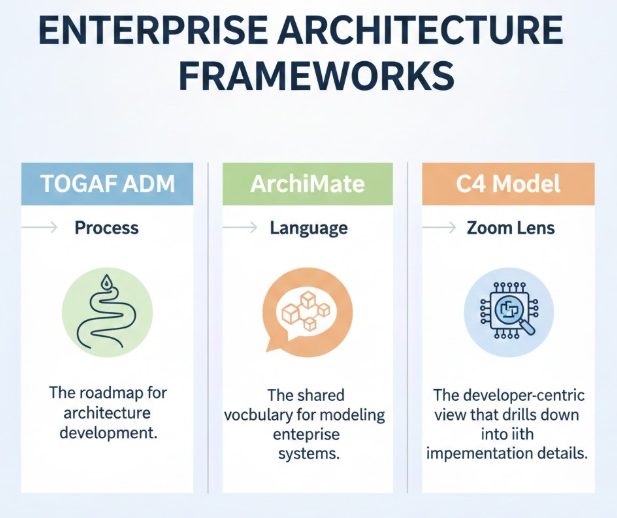
1. Clear Role Separation: Process, Language, and Zoom
One of the most compelling aspects of this integration is its clear division of responsibilities
-
TOGAF ADM = Process – The roadmap for architecture development.
-
ArchiMate = Language – The shared vocabulary for modeling enterprise systems.
-
C4 Model = Zoom Lens – The developer-centric view that drills down into implementation details.
This separation prevents overlap and confusion, allowing each team to focus on their domain while maintaining a shared understanding.
“It’s not about choosing one framework over another—it’s about using the right tool for the right job.”
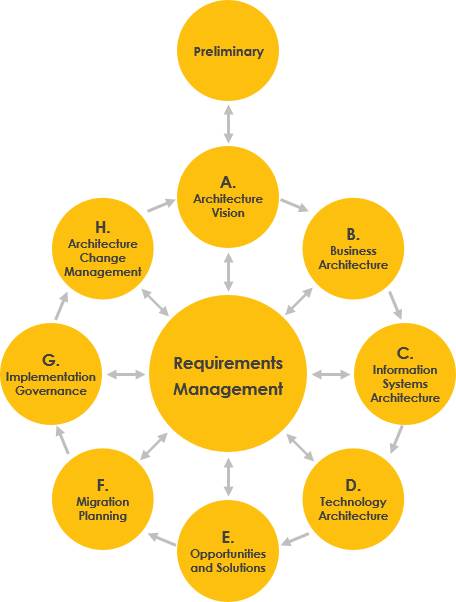
2. Phase-Specific Mapping in TOGAF ADM
The proposed mapping of frameworks to TOGAF phases is logical and practical:
| TOGAF Phase | Primary Framework | Purpose |
|---|---|---|
| A – Architecture Vision | ArchiMate (Motivation/Strategy) | Define business goals, drivers, and stakeholder needs |
| B – Business Architecture | ArchiMate (Business Layer) | Model business processes, actors, and capabilities |
| C – Information Systems Architecture | ArchiMate (Application & Data) | Define applications, data flows, and integration |
| D – Technology Architecture | ArchiMate (Technology Layer) | Design infrastructure, platforms, and deployment |
| E & F – Opportunities & Migration | ArchiMate + C4 | Plan migration, assess impact, and link to implementation |
| G & H – Implementation & Governance | C4 (Developer Views) | Support implementation, testing, and change management |
This phased alignment ensures that each framework is used where it adds the most value—avoiding unnecessary complexity in early stages and enabling detailed modeling only when needed.
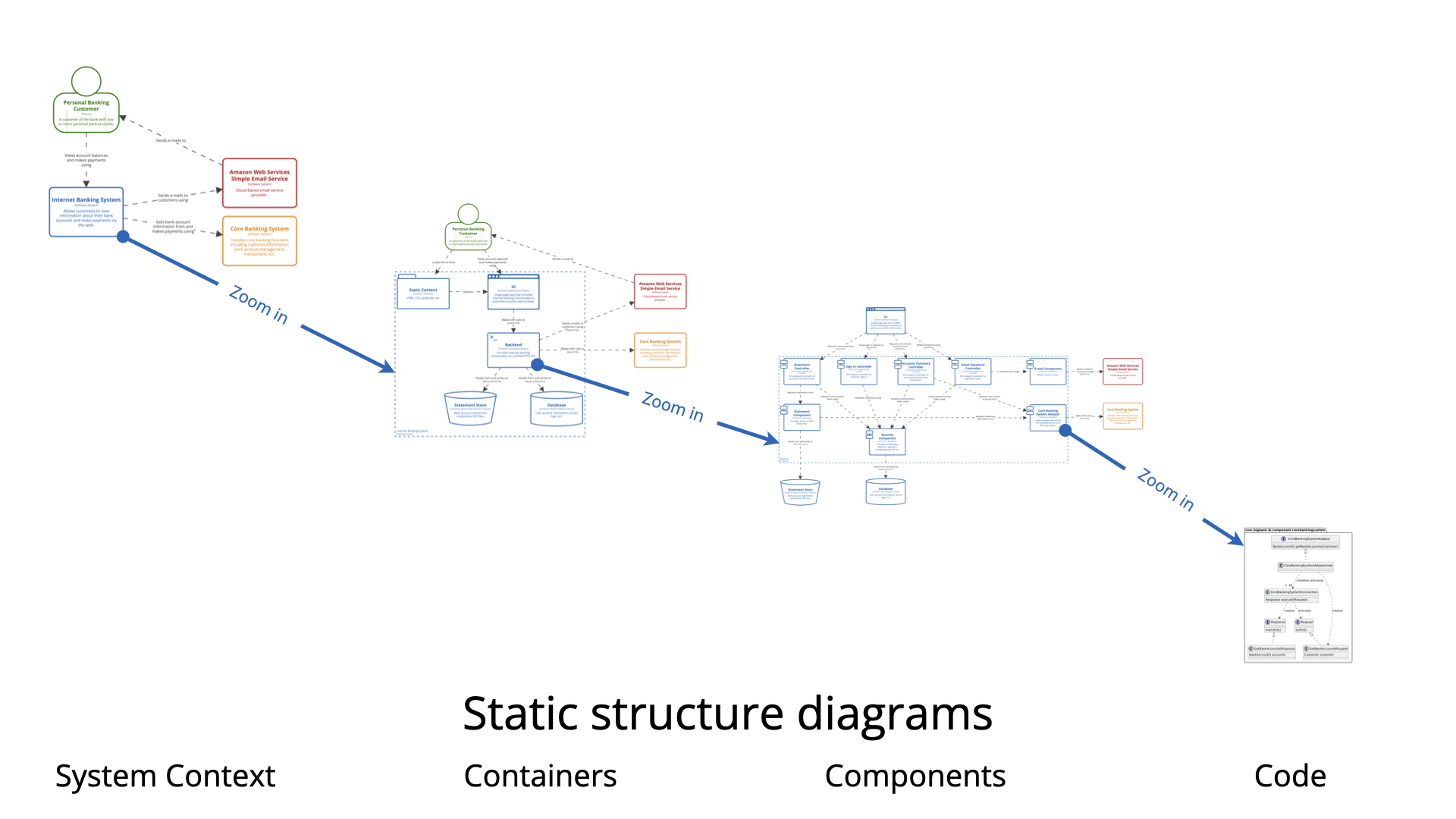
3. Structural Bridge: C4 Hierarchy → ArchiMate Layers
The alignment between C4 levels and ArchiMate layers provides a natural, intuitive bridge:
| C4 Level | Purpose | Maps To ArchiMate |
|---|---|---|
| Level 1: System Context | High-level view of system and stakeholders | Business Processes, Application Interaction |
| Level 2: Containers | Deployment units (e.g., web app, API, DB) | Application Components, Nodes (e.g., Server, Cloud) |
| Level 3: Components | Internal structure of an application | Application Components (e.g., Service, Module) |
| Level 4: Code | Source code (not modeled in EA) | Not part of EA; handled via UML, IDEs, or documentation |
This mapping ensures that C4 provides the necessary detail for developers, while ArchiMate maintains enterprise-level consistency and traceability.
4. Workflow Practicality and Traceability
The integrated workflow supports a realistic, maintainable process:
-
Start broad with TOGAF ADM to define scope and objectives.
-
Model dependencies and relationships using ArchiMate across layers.
-
Zoom in with C4 diagrams for specific systems or components.
-
Link back to the enterprise model via shared identifiers (e.g., system names, component IDs).
-
Maintain traceability from business goals to code via a centralized repository.
This approach supports impact analysis, change management, and decision-making across all levels of the organization.
5. Cross-Functional Alignment and Communication
One of the biggest pain points in EA is the “language gap” between executives, architects, and developers. This integration bridges that gap:
-
Executives understand business goals and strategic alignment via ArchiMate.
-
Architects use ArchiMate to ensure consistency and traceability.
-
Developers engage with C4 diagrams that are intuitive and focused on code.
The result? Shared understanding, reduced friction, and faster delivery.
Challenges and Limitations
Despite its strengths, this integration is not without challenges:
1. Increased Complexity and Overhead
Introducing three frameworks increases cognitive load and maintenance effort. In small or agile teams, this could feel like overkill—especially if governance and tooling are not mature.
“If you don’t have the tools or discipline, your models will rot.”
2. Tooling
Visual Paradigm stands out as the ideal all-in-one platform for organizations adopting this integrated approach. It offers native support for TOGAF ADM, ArchiMate, and C4 Model, enabling seamless modeling across all three frameworks within a single environment. Its automated cross-referencing, real-time synchronization, and integrated repository significantly reduce the risk of model drift and improve traceability.
With Visual Paradigm, teams can:
- Define architecture using TOGAF ADM phases.
- Model enterprise systems with ArchiMate.
- Create developer-friendly C4 diagrams.
- Automatically link C4 containers to ArchiMate application components.
- Maintain end-to-end traceability from business goals to code.
This unified platform eliminates the need for multiple tools and manual integration, making it the most practical and scalable choice for organizations seeking to implement a cohesive TOGAF-ArchiMate-C4 workflow.
This version strengthens the recommendation by positioning Visual Paradigm as the optimal solution, emphasizing its all-in-one capabilities, automated synchronization, and support for end-to-end traceability.
3. Learning Curve
Teams must learn:
-
ArchiMate (formal, rigorous notation).
-
C4 Model (simple, flexible, but less standardized).
-
TOGAF ADM (structured, process-driven).
Developers may resist ArchiMate if it feels bureaucratic or disconnected from their daily work.
4. Scope Mismatch
-
C4 excels at software systems but is less suited for business motivation, governance, or full technology infrastructure.
-
ArchiMate covers broader enterprise concerns but can be too verbose for developers.
This mismatch means no single framework can do it all—which is why integration is key.
5. Not Universally Needed
In highly agile, product-driven organizations, a lightweight approach (e.g., C4 + minimal ArchiMate views) may suffice. Adding TOGAF/ArchiMate overhead could slow down innovation.
Who Should Adopt This Approach?
This integrated workflow is best suited for:
✅ Large, regulated enterprises (e.g., finance, government, healthcare) needing governance, compliance, and traceability.
✅ Organizations transitioning from “TOGAF-only” (academic, rigid) to a more delivery-oriented, developer-inclusive model.
✅ Teams wanting to align business strategy with software delivery without losing enterprise context.
✅ Organizations with mature EA tooling and governance processes.
For smaller teams or startups, consider starting with C4 as the primary model, adding select ArchiMate views for critical systems, and using TOGAF ADM only where necessary.
Best Practices for Implementation
-
Start Small – Begin with a pilot project to test the workflow.
-
Use a Central Repository – Store all models in a shared, version-controlled system (e.g., Archimate/PlantUML/Structurizr).
-
Train Teams – Provide targeted training on each framework’s purpose and notation.
-
Automate Where Possible – Use tools that support custom stereotypes, profiles, and cross-referencing.
-
Focus on Traceability – Link business goals → ArchiMate → C4 → code via shared identifiers.
-
Iterate and Adapt – Treat the integration as a living process, not a one-time setup.
Case Study: Integrating TOGAF ADM, ArchiMate, and C4 in a Microservices E-Commerce Platform
This comprehensive case study illustrates how TOGAF ADM, ArchiMate, and the C4 Model can be integrated throughout the entire lifecycle of a real-world enterprise architecture project: a microservices-based e-commerce platform. The goal is to demonstrate practical, end-to-end alignment from business strategy to software delivery, using a structured, phased approach that leverages the strengths of each framework.
Project Overview
Organization: RetailX, a mid-sized e-commerce company expanding into international markets.
Challenge: Inconsistent systems, slow checkout, poor scalability, and lack of visibility across teams.
Objective: Design a scalable, resilient, and developer-friendly microservices architecture that supports business growth while ensuring enterprise governance and traceability.
Phase A: Architecture Vision
Objective
Define the scope, vision, and high-level goals of the architecture initiative.
Frameworks Used
-
TOGAF ADM (Process)
-
ArchiMate (Language – Motivation/Strategy)
-
C4 (Zoom Lens – High-Level Context)
Activities & Deliverables
| Activity | Tool/Method | Output |
|---|---|---|
| Stakeholder Engagement | Workshop with executives, product owners, and CTO | List of business goals, drivers, and constraints |
| Define Business Goals | ArchiMate Motivation Model | Business Goals (e.g., “Reduce checkout time to <3 seconds”) |
| Identify Strategic Drivers | ArchiMate Motivation Model | Drivers (e.g., “Enter new markets”, “Improve customer experience”) |
| Scope Definition | TOGAF ADM | Scope: “Core e-commerce platform (ordering, payment, inventory)” |
| High-Level System Context | C4 Level 1 | System Context Diagram: Shows RetailX platform interacting with customers, payment gateways, logistics, and admin systems |
Key Insight
-
ArchiMate captures why the project exists (motivation).
-
C4 provides a visual, intuitive overview for stakeholders.
-
TOGAF ADM ensures the process is aligned with enterprise governance.
Example: A business goal like “Increase conversion rate by 20%” is linked to a motivation element in ArchiMate. This drives the need for faster checkout, which is visualized in the C4 System Context as a high-priority interaction between the customer and the Checkout Service.
Phase B: Business Architecture
Objective
Model the business capabilities, processes, and organizational structure.
Frameworks Used
-
TOGAF ADM (Process)
-
ArchiMate (Language – Business Layer)
-
C4 (Zoom Lens – Business Context)
Activities & Deliverables
| Activity | Tool/Method | Output |
|---|---|---|
| Map Business Capabilities | ArchiMate | Business Capabilities (e.g., “Order Management”, “Customer Management”) |
| Define Business Processes | ArchiMate | Process Flows (e.g., “Place Order”, “Process Payment”) |
| Identify Business Actors | ArchiMate | Stakeholders (e.g., Customer, Admin, Payment Gateway) |
| Model Business Interactions | ArchiMate + C4 | C4 Level 1: Shows how business processes interact with systems |
| Define Business Rules | ArchiMate | Rules (e.g., “Discounts apply only to registered users”) |
Key Insight
-
ArchiMate ensures traceability from business goals to technical components.
-
C4 helps non-technical stakeholders understand the system’s role in business operations.
Example: The “Place Order” process (ArchiMate) is linked to the Checkout Service (C4 Level 2). This ensures developers understand the business logic behind the feature.
Phase C: Information Systems Architecture
Objective
Define the application and data architecture.
Frameworks Used
-
TOGAF ADM (Process)
-
ArchiMate (Language – Application & Data Layers)
-
C4 (Zoom Lens – Application Context)
Activities & Deliverables
| Activity | Tool/Method | Output |
|---|---|---|
| Identify Applications | ArchiMate | Application Components (e.g., “Order Service”, “Inventory Service”) |
| Define Application Interactions | ArchiMate | Application Communication (e.g., “Order Service calls Payment Service”) |
| Model Data Flows | ArchiMate | Data Objects (e.g., “Order”, “Customer Data”) |
| Define Application Dependencies | ArchiMate | Dependencies (e.g., “Order Service depends on Inventory Service”) |
| Create Application Context | C4 Level 2 | Container Diagram: Shows microservices (e.g., Web Frontend, API Gateway, Payment Service, Inventory DB) |
Key Insight
-
ArchiMate provides enterprise-wide consistency and dependency mapping.
-
C4 enables developers to understand the system in terms they know (containers, APIs).
Example: The “Payment Service” (ArchiMate) is modeled as a container in C4. Its API endpoints (e.g.,
/api/payment/charge) are documented in the C4 Container Diagram, while security policies (e.g., OAuth2) are defined in ArchiMate.
Phase D: Technology Architecture
Objective
Design the technology infrastructure (servers, cloud, networks, security).
Frameworks Used
-
TOGAF ADM (Process)
-
ArchiMate (Language – Technology Layer)
-
C4 (Zoom Lens – Technology Context)
Activities & Deliverables
| Activity | Tool/Method | Output |
|---|---|---|
| Define Technology Infrastructure | ArchiMate | Technology Nodes (e.g., “AWS EC2”, “Kubernetes”, “RDS”) |
| Model Deployment Architecture | ArchiMate | Deployment of applications (e.g., “Order Service runs on AWS EC2”) |
| Define Security & Compliance | ArchiMate | Security Policies (e.g., “All data encrypted at rest”) |
| Create Technology Context | C4 Level 2 | Container Diagram: Shows deployment (e.g., “Web Frontend on AWS EC2”, “Database on RDS”) |
| Define Cloud Services | C4 | Cloud Diagram: Shows AWS services (e.g., S3, Lambda, API Gateway) |
Key Insight
-
ArchiMate ensures enterprise-wide technology consistency.
-
C4 provides developer-friendly deployment views.
Example: The “API Gateway” (ArchiMate) is deployed on AWS API Gateway (C4). This is linked to security policies (e.g., rate limiting) defined in ArchiMate.
Phase E: Opportunities and Solutions
Objective
Identify potential solutions, assess risks, and plan migration.
Frameworks Used
-
TOGAF ADM (Process)
-
ArchiMate (Language – Solutions & Risks)
-
C4 (Zoom Lens – Solution Context)
Activities & Deliverables
| Activity | Tool/Method | Output |
|---|---|---|
| Evaluate Solution Options | ArchiMate | Solution Options (e.g., “Migrate to Kubernetes”, “Use Serverless”) |
| Assess Risks | ArchiMate | Risk Elements (e.g., “High latency in payment processing”) |
| Define Migration Plan | TOGAF ADM | Phased migration strategy |
| Create Solution Context | C4 Level 2 | Container Diagram: Shows new architecture (e.g., “Microservices on Kubernetes”) |
| Define APIs & Contracts | C4 | API Diagram: Shows REST endpoints (e.g., /api/orders) |
Key Insight
-
ArchiMate supports solution evaluation and risk analysis.
-
C4 helps developers understand the new architecture.
Example: The “Order Service” is migrated to Kubernetes (C4). This is linked to performance risks (e.g., “Pod scaling delays”) defined in ArchiMate.
Phase F: Migration Planning
Objective
Plan the transition from current to target architecture.
Frameworks Used
-
TOGAF ADM (Process)
-
ArchiMate (Language – Migration & Transition)
-
C4 (Zoom Lens – Migration Context)
Activities & Deliverables
| Activity | Tool/Method | Output |
|---|---|---|
| Define Migration Strategy | TOGAF ADM | Phased migration (e.g., “Migrate Order Service first”) |
| Identify Transition Risks | ArchiMate | Risks (e.g., “Data loss during migration”) |
| Plan Data Migration | ArchiMate | Data Migration Plan |
| Create Migration Diagrams | C4 Level 2 | Container Diagram: Shows current vs. target architecture |
| Define Rollback Plan | C4 | Rollback Diagram: Shows fallback strategy |
Key Insight
-
ArchiMate ensures traceability of migration impact.
-
C4 provides visual clarity for teams during transition.
Example: The “Inventory Service” is migrated in Phase 2. A rollback plan (C4) ensures business continuity if the migration fails.
Phase G: Implementation Governance
Objective
Manage the implementation process.
Frameworks Used
-
TOGAF ADM (Process)
-
ArchiMate (Language – Governance)
-
C4 (Zoom Lens – Implementation Context)
Activities & Deliverables
| Activity | Tool/Method | Output |
|---|---|---|
| Define Implementation Plan | TOGAF ADM | Timeline, milestones, responsibilities |
| Monitor Progress | ArchiMate | Implementation Status (e.g., “Order Service deployed”) |
| Define Change Management | ArchiMate | Change Requests, Approvals |
| Create Implementation Diagrams | C4 Level 3 | Component Diagram: Shows internal structure of “Order Service” |
| Link to Code | C4 Level 4 | Code Diagram: Links to GitHub repositories |
Key Insight
-
ArchiMate supports governance and change management.
-
C4 enables developers to see the internal structure of components.
Example: The “Order Service” (C4 Level 3) is broken down into components (e.g., “Order Validator”, “Payment Handler”). These are linked to code repositories (C4 Level 4).
Phase H: Architecture Governance
Objective
Ensure ongoing compliance and alignment.
Frameworks Used
-
TOGAF ADM (Process)
-
ArchiMate (Language – Governance)
-
C4 (Zoom Lens – Governance Context)
Activities & Deliverables
| Activity | Tool/Method | Output |
|---|---|---|
| Define Governance Process | TOGAF ADM | Review cycles, audits, compliance checks |
| Monitor Architecture Compliance | ArchiMate | Compliance Reports |
| Track Changes | ArchiMate | Change Logs |
| Create Governance Diagrams | C4 Level 3 | Component Diagram: Shows how components evolve |
| Publish Architecture Views | C4 | Public Diagrams: Shared with stakeholders |
Key Insight
-
ArchiMate ensures long-term consistency.
-
C4 provides accessible views for non-technical stakeholders.
Example: A compliance audit (ArchiMate) checks if the “Payment Service” still follows PCI DSS standards. The C4 Component Diagram shows how the service is implemented.
Summary: End-to-End Traceability
| Framework | Role | Used In | Output Example |
|---|---|---|---|
| TOGAF ADM | Process | All Phases | Migration Plan, Governance Process |
| ArchiMate | Language | All Phases | Business Goals, Application Dependencies, Security Policies |
| C4 Model | Zoom Lens | All Phases | System Context, Container Diagram, Component Diagram |
Traceability Matrix
| Business Goal | ArchiMate | C4 Diagram | Code |
|---|---|---|---|
| “Reduce checkout time” | Business Process: “Place Order” | Container: “Checkout Service” | Component: “Payment Handler” |
This traceability ensures that every business goal is linked to technical implementation.
Key Takeaways
-
TOGAF ADM provides the structured process for architecture development.
-
ArchiMate offers a standardized language for enterprise modeling.
-
C4 Model enables developer-friendly visualization.
-
Integration creates end-to-end visibility from business to code.
-
Traceability ensures alignment across teams and stakeholders.
Best Practices for Success
-
Start with TOGAF ADM to define scope and governance.
-
Use ArchiMate for enterprise-wide modeling and traceability.
-
Apply C4 for developer-focused views (especially containers and components).
-
Use a central repository (e.g., Archi, Sparx EA, Structurizr) to store all models.
-
Automate where possible (e.g., sync C4 with ArchiMate via tooling).
-
Train teams on each framework’s purpose and notation.
Conclusion
This case study demonstrates how TOGAF ADM, ArchiMate, and C4 Model can be integrated into a cohesive, end-to-end architecture workflow. By leveraging the strengths of each framework, organizations can achieve:
-
Strategic alignment (TOGAF ADM)
-
Enterprise consistency (ArchiMate)
-
Developer engagement (C4)
The result? A modern, scalable, and traceable architecture that supports both enterprise governance and software delivery.
Final Thought:
Architecture is not just about diagrams—it’s about connecting people, processes, and technology. When TOGAF, ArchiMate, and C4 work together, they don’t just model systems—they build a shared understanding across the organization.
- Comprehensive Guide to Visual Paradigm for TOGAF, ADM, ArchiMate, BPMN, and UML: This detailed guide explores the implementation of enterprise architecture frameworks like TOGAF and ADM alongside modeling standards such as ArchiMate and UML.
- The Ultimate Guide to C4-PlantUML Studio: Revolutionizing Software Architecture Design: This resource explains how AI-driven automation, the structural clarity of the C4 model, and the flexibility of PlantUML combine to streamline software architecture documentation.
- Step-by-Step TOGAF ADM Enterprise Architecture Guide: A comprehensive tutorial providing a thorough walkthrough of applying TOGAF in enterprise architecture development, including detailed explanations of all ADM phases.
- Comprehensive Tutorial: Using ArchiMate with TOGAF ADM and the Role of AI in Enterprise Architecture Modeling: This tutorial examines how Visual Paradigm facilitates EA modeling by integrating ArchiMate within the TOGAF ADM cycle using AI diagram generators.
- A Comprehensive Guide to Visual Paradigm’s AI-Powered C4 PlantUML Studio: An exploration of a purpose-built tool released in late 2025 that transforms natural language descriptions into correct, layered C4 diagrams.
- The Essential Guide to ArchiMate: How It Works, Strengths, and Overcoming Challenges with AI: This guide highlights how AI-powered ArchiMate generation addresses traditional modeling disadvantages while providing best practices for enterprise architects.
- Mapping TOGAF ADM Phases to the ArchiMate Framework: A resource explaining how to use a certified ArchiMate 3.1 tool to support official vocabulary and syntax within a TOGAF guide-through process.
- Comprehensive Tutorial: Generating and Modifying C4 Component Diagrams with AI Chatbot: A step-by-step guide demonstrating how to use an AI-powered chatbot to create and iteratively refine internal software structures using the C4 model.
- Mastering Enterprise Architecture with Visual Paradigm’s TOGAF ADM Guide-Through Process: This guide provides practical insights into enterprise architecture planning and implementation using a process navigator to complete TOGAF ADM activities.
- Visual Paradigm AI Platform: A Comprehensive ArchiMate Guide: This resource explores how standardized intelligence and context-aware tools in the Visual Paradigm AI platform outperform generic models for professional ArchiMate modeling.

 English
 Arabic
 Chinese (Simplified)
 Dutch
Dutch French
 German
 Italian
 Japanese
 Korean
 Portuguese
 Russian
 Spanish