


I’ve spent over a decade working in enterprise architecture—first in legacy systems, then leading digital transformations across banking, healthcare, and e-commerce. But nothing prepared me for the shift I experienced when I finally adopted Visual Paradigm as my primary architecture platform. What started as a simple upgrade to a better diagramming tool turned into a full transformation of how my team delivers architecture—strategically, collaboratively, and with real impact.
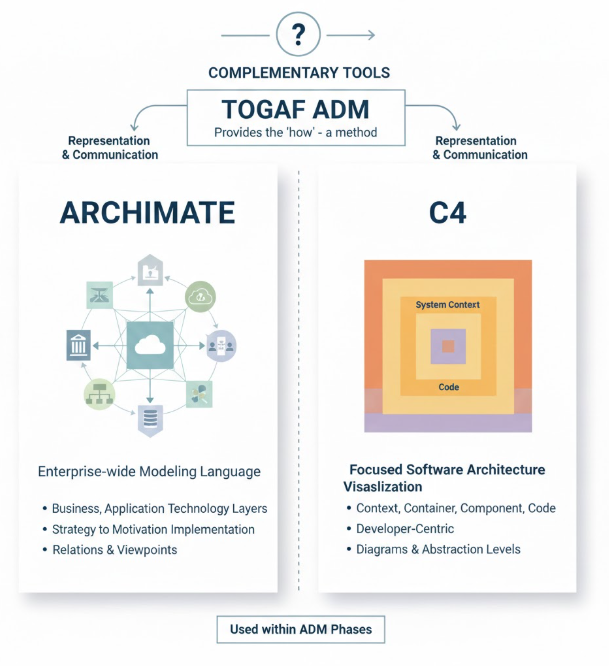
Let me walk you through my experience, not just as a technical guide, but as a real-world story of how TOGAF ADM, ArchiMate, C4 Model, and AI-powered automation came together—thanks to Visual Paradigm.
The Challenge: Too Many Tools, Too Little Alignment
At RetailX, we were in the middle of migrating from a monolithic e-commerce platform to a scalable microservices architecture. Our TOGAF ADM process was solid—phases were defined, stakeholders were engaged, and governance was enforced. But we were stuck in a cycle:
-
Business teams wanted clear, visual goals.
-
IT teams needed detailed, code-ready diagrams.
-
Architects struggled to keep ArchiMate models in sync with C4 diagrams.
-
Manual updates led to inconsistencies, delays, and frustration.
We were using Archi for modeling, draw.io for C4 diagrams, Confluence for documentation, and Jira for tracking. But no real integration. No traceability. No way to connect business goals to code.
It was like building a house with mismatched blueprints—every team saw a different version of the truth.
Then I discovered Visual Paradigm.
First Impression: “This Feels Like the Architecture Platform I’ve Been Waiting For”
I started with the free trial. Within minutes, I was up and running with a pre-configured TOGAF ADM workspace—complete with templates for each phase, checklists, and artifact tracking.
But what blew me away was the one-click integration of ArchiMate and C4.
✅ I could model a business capability in ArchiMate, and instantly generate a C4 Level 1 (Context) diagram from it.
✅ I could break down a C4 container into components, and Visual Paradigm automatically mapped them to ArchiMate Application Functions and Components.
✅ All linked—no copying, no pasting, no confusion.
Suddenly, my architecture wasn’t just a collection of diagrams. It became a living, traceable ecosystem.
Phase A: Architecture Vision – From Idea to Visual Story
Our goal? Reduce checkout time to under 3 seconds.
I typed into the AI assistant:
“Create a business vision diagram showing the e-commerce system, customers, payment gateways, and inventory systems.”
In seconds, Visual Paradigm generated:
-
A ArchiMate motivation diagram with the goal, drivers, and capabilities.
-
A C4 Level 1 (Context) diagram showing stakeholders and external systems.
I shared it with executives. They got it instantly. No jargon. No confusion.
🎯 “This is what we’re building—clear, simple, and aligned.”
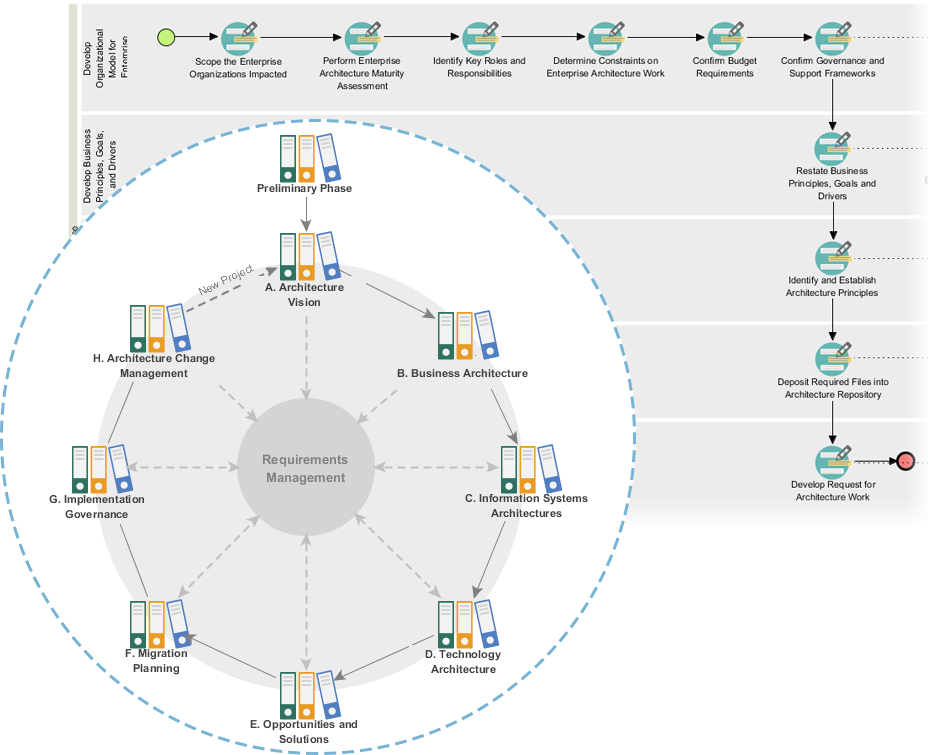
Phase B: Business Architecture – Modeling the Flow That Matters
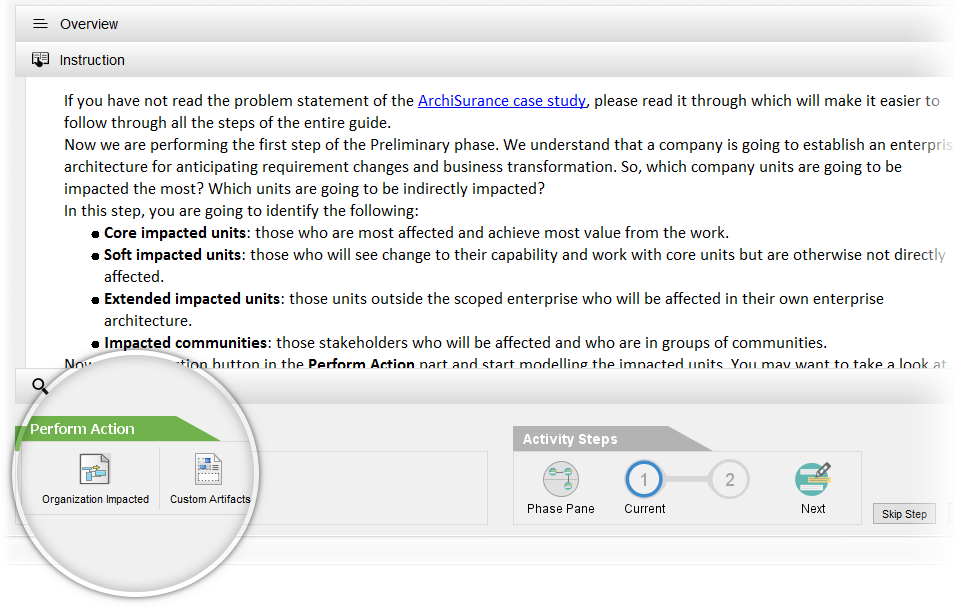
We modeled the “Place Order” process in ArchiMate:
-
Business Actor: Customer
-
Business Process: Place Order
-
Business Service: Order Validation
-
Data Object: Order Details
Then, I used the AI assistant to auto-generate a C4 Level 2 diagram of the system, showing:
-
The API Gateway
-
The Order Microservice
-
The Inventory Service
-
The Payment Service
All linked with real interactions. No more guesswork.
🔄 The magic? Changes in ArchiMate automatically updated the C4 diagram—and vice versa.
Phase C & D: Application & Technology Architecture – Where Devs Get Involved
This is where it got really exciting.
We used ArchiMate to define:
-
Application components (Order Service, Payment Service)
-
Data flows (Order → Payment)
-
Technology nodes (AWS EC2, Kubernetes, S3)
Then, Visual Paradigm auto-generated a C4 Level 2 Deployment Diagram, showing:
-
Containers deployed on AWS
-
API calls via HTTPS
-
Data stored in S3 and DynamoDB
We exported it directly to our CI/CD pipeline. Devs could see exactly how their service fit into the bigger picture.
💬 One developer said:
“I finally understand why we’re building this. The diagram explains more than 10 pages of documentation.”
Phase E & F: Opportunities & Migration Planning – AI to the Rescue
We were comparing our current monolith vs. target microservices architecture.
I asked the AI:
“Highlight the gaps and suggest migration paths.”
In seconds, it:
-
Identified missing services (e.g., “No dedicated Inventory Validation service”)
-
Suggested decomposing the monolith into 4 microservices
-
Generated a migration roadmap with risk assessments and dependency maps
We used the impact analysis tool to check:
“If we change the Order Service, what else is affected?”
The answer? Payment Service, Inventory Service, and the API Gateway.
🛠️ We adjusted our rollout plan—phased, low-risk, high-visibility.
Phase G: Implementation Governance – No More “Architects Don’t Know Code”
This was the game-changer.
We integrated Visual Paradigm with GitHub and Jira.
Now, every time a developer pushed code:
-
Visual Paradigm scanned the codebase.
-
It checked if the service matched the architecture.
-
If a developer tried to call the database directly from an API (bypassing the gateway), it flagged the violation instantly.
🚨 One day, a junior developer tried to access the DB directly.
Visual Paradigm sent an alert: “This violates the architecture rule: All data access must go through the API layer.”
The PR was blocked. The team learned. No damage done.
🎯 Governance became proactive, not punitive.
Phase H: Architecture Change Management – Evolving with Confidence
After a major release, we needed to update the architecture.
I used the AI assistant to:
-
Analyze the changes
-
Identify impacted components
-
Suggest updated diagrams
It auto-generated:
-
A new C4 Level 3 (Component) diagram for the updated Order Validator
-
A traceability report linking the change to the original business goal
-
A change impact summary for stakeholders
📊 We presented it in a 5-minute meeting—instead of 45 minutes of manual updates.
Why I Now Believe in One Platform, One Truth
Before Visual Paradigm, architecture felt like a side project—documented, but disconnected from reality.
Now? It’s the backbone of delivery.
-
Executives see clear business alignment.
-
IT leaders get governance without bureaucracy.
-
Developers get clarity, context, and code-ready diagrams.
-
Architects save time, reduce errors, and focus on strategy.
And all of it powered by AI that learns from my team’s habits and improves over time.
Final Thoughts: The Platform That Learns With You
I used to think enterprise architecture was about control. Now I know it’s about clarity, collaboration, and confidence.
With Visual Paradigm, I don’t just design architecture—I manage it, govern it, and evolve it with real-time intelligence.
🏁 If you’re still juggling ArchiMate, C4, Jira, Confluence, and GitHub—it’s time to unify.
🚀 Try Visual Paradigm today. Let your architecture speak to everyone—business, IT, and developers—without translation.
“The best architecture isn’t just well-documented. It’s well-understood, well-governed, and well-executed.”
— Sarah Lin, Enterprise Architect
👉 Start your free trial at www.visual-paradigm.com
Join thousands of architects who are already building smarter, faster, and with AI on their side.
- Step-by-Step TOGAF ADM Enterprise Architecture Guide: A comprehensive tutorial that explains the Architecture Development Method (ADM) phases and demonstrates how Visual Paradigm helps produce standardized deliverables with instructions, tips, and case studies.
- The Ultimate Guide to C4-PlantUML Studio: Revolutionizing Software Architecture Design: This resource explains how the studio combines AI-driven automation, the structural clarity of the C4 model, and the flexibility of PlantUML to solve documentation bottlenecks.
- The Essential Guide to ArchiMate: How It Works, Strengths, and Overcoming Challenges with AI: This guide explores how AI-powered ArchiMate diagram generation addresses traditional modeling disadvantages and highlights best practices for effective usage.
- Comprehensive Tutorial: Using ArchiMate with TOGAF ADM and the Role of AI in Enterprise Architecture Modeling: A detailed walkthrough exploring how Visual Paradigm, as a certified tool, facilitates EA modeling through its AI Diagram Generator within the TOGAF framework.
- Beginner’s Guide to C4 Model Diagrams: A step-by-step introduction to the four levels of abstraction—Context, Containers, Components, and Code—for effective software architecture communication.
- Full ArchiMate Viewpoints Guide (Examples Included): A complete reference including 23 official ArchiMate example viewpoints with clear diagram explanations and certified tool vendor insights.
- Comprehensive Guide to Applying Gap Analysis in TOGAF ADM: A technical overview providing a systematic approach to identifying discrepancies between current and target architectures within the TOGAF lifecycle.
- Comprehensive Tutorial: Generating and Modifying C4 Component Diagrams with AI Chatbot: A hands-on guide demonstrating how to use a conversational AI assistant to create and iteratively refine the internal structures of a software system.
- Seamlessly Integrating ArchiMate into TOGAF’s Architecture Development Method: This article explains how to automate the TOGAF ADM process using standard diagrams and a visual Process Navigator to simplify the architect’s journey.
- Why ArchiMate? A Guide to the Common Language of Enterprise Architecture: An exploration of ArchiMate’s role as an independent modeling language for describing, analyzing, and visualizing enterprise architectures.
- AI-Powered C4 Diagram Generator – Features and Core Levels: Documentation detailing support for the four core C4 levels (Context, Container, Component, Deployment) plus essential supporting architectural views.
- TOGAF ADM Phase A: Architecture Vision Deliverables: A focused technical guide detailing the specific activities and mandatory deliverables expected during the initial vision phase of the ADM.
- Mastering ArchiMate: A Comprehensive Tutorial for Enterprise Architects: A structured walkthrough designed to help architects use standardized notation to analyze and visualize cross-layer relationships.
- Introducing AI-Powered ArchiMate Viewpoints Generator in Visual Paradigm: This release note covers an AI-driven tool that automates the creation of viewpoints to boost modeling speed and standards compliance.
- TOGAF ADM: Requirements Management Deliverables: A guide focused on the processes and artifacts required to maintain and manage architectural requirements throughout the entire ADM cycle.
Related posts:
 How AI Accelerates TOGAF ADM for Enterprise Architecture
 Comprehensive Guide to Visual Paradigm’s TOGAF ADM Guide-Through Process
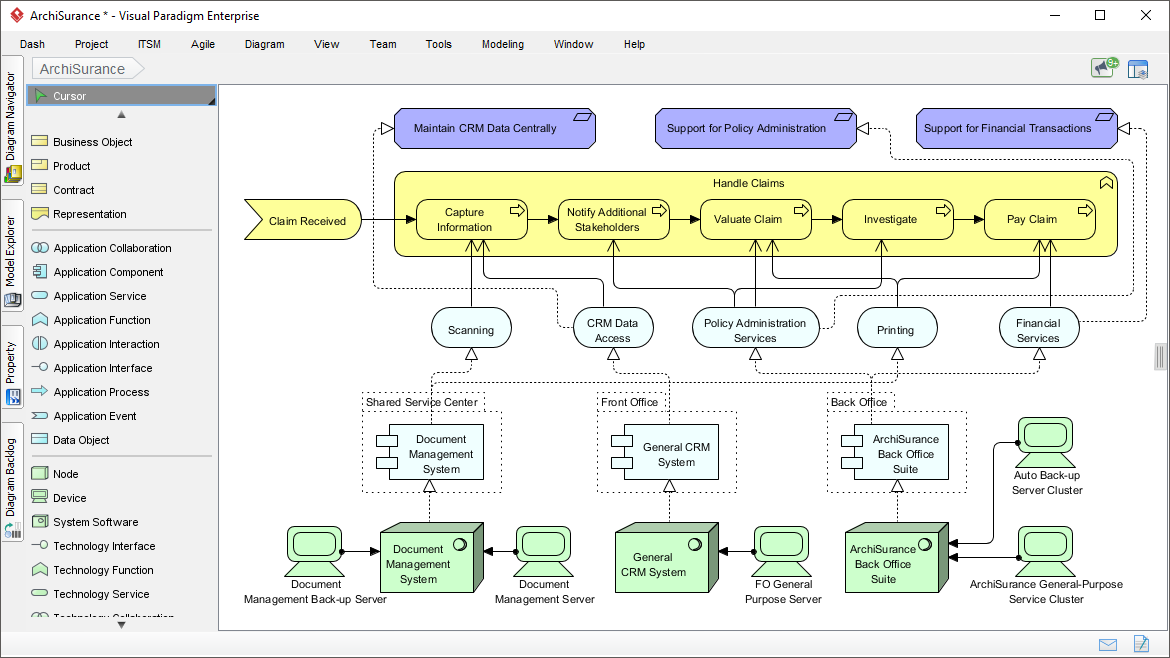 Why Visual Paradigm is the Best ArchiMate Tool for EA Development Teams
 TOGAF 10 and ArchiMate 4: A Synergistic Evolution for Modern Enterprise Architecture (2026 Outlook)

 English
 Arabic
 Chinese (Simplified)
 Dutch
Dutch French
 German
 Italian
 Japanese
 Korean
 Portuguese
 Russian
 Spanish