


Introduction: The Convergence of Method and Model
In the ever-evolving landscape of enterprise architecture (EA), two foundational pillars stand tall: TOGAF Standard, 10th Edition and the ArchiMate modeling language. As of early 2026, these standards are not just complementary—they are converging in ways that redefine how organizations design, visualize, and govern their digital transformations.
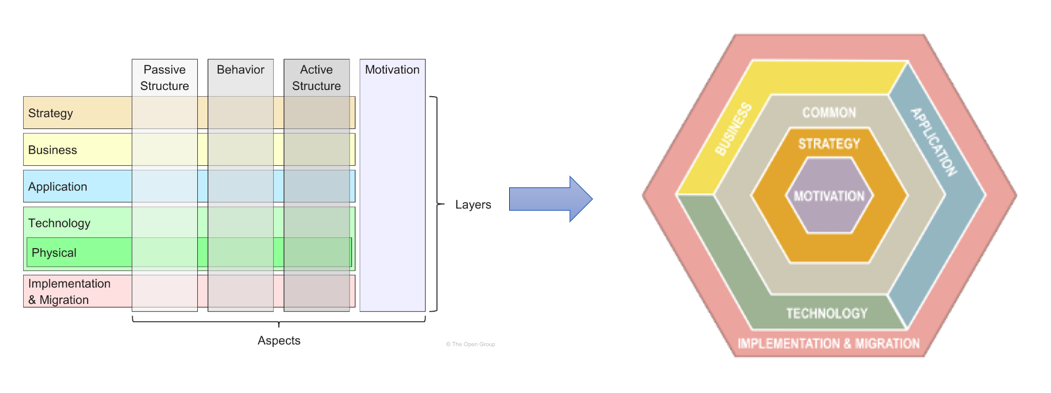
TOGAF 10, released by The Open Group, delivers a mature, agile, and digitally aligned framework built around the iterative Architecture Development Method (ADM). It emphasizes flexibility, tailoring, and integration with modern enterprise challenges such as cloud migration, AI adoption, and sustainability.
Meanwhile, ArchiMate, the world’s most widely adopted enterprise architecture modeling language, is undergoing a transformative evolution. The release of new ArchiMate Snapshot 1 (mid-2025) signals the beginning of a new era—ArchiMate 4.0, expected in Q2 2026, promises to simplify modeling, enhance dynamic interconnectivity, and better serve hybrid and cloud-native environments.
This article explores how TOGAF 10 and ArchiMate 4 form a powerful synergy—bridging methodological rigor with visual clarity—enabling organizations to build agile, traceable, and future-ready architectures.
Core Pillars of TOGAF 10: The Framework for Digital Agility
TOGAF 10 represents a significant leap forward in adaptability and practicality, especially for enterprises navigating digital transformation. Key enhancements include:
✅ The Architecture Development Method (ADM) – Iterative & Tailorable
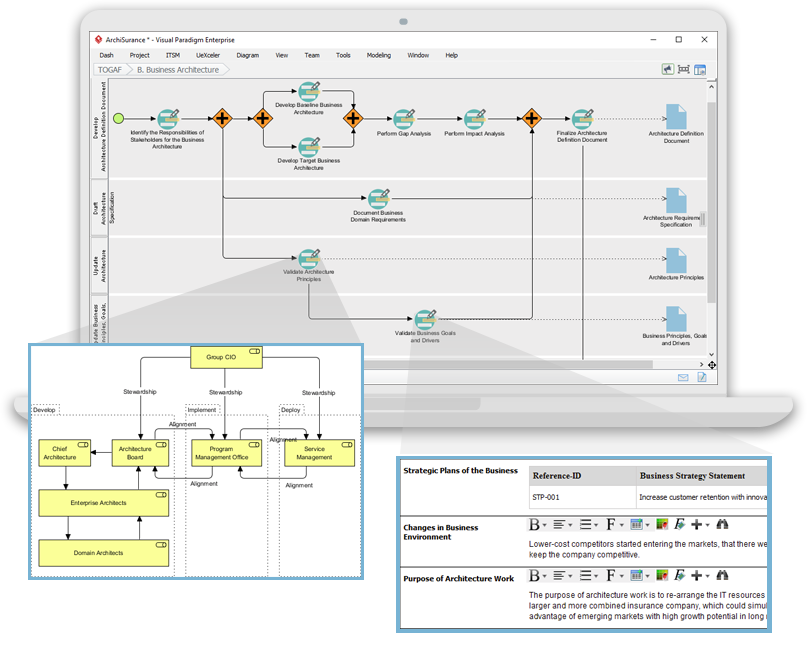
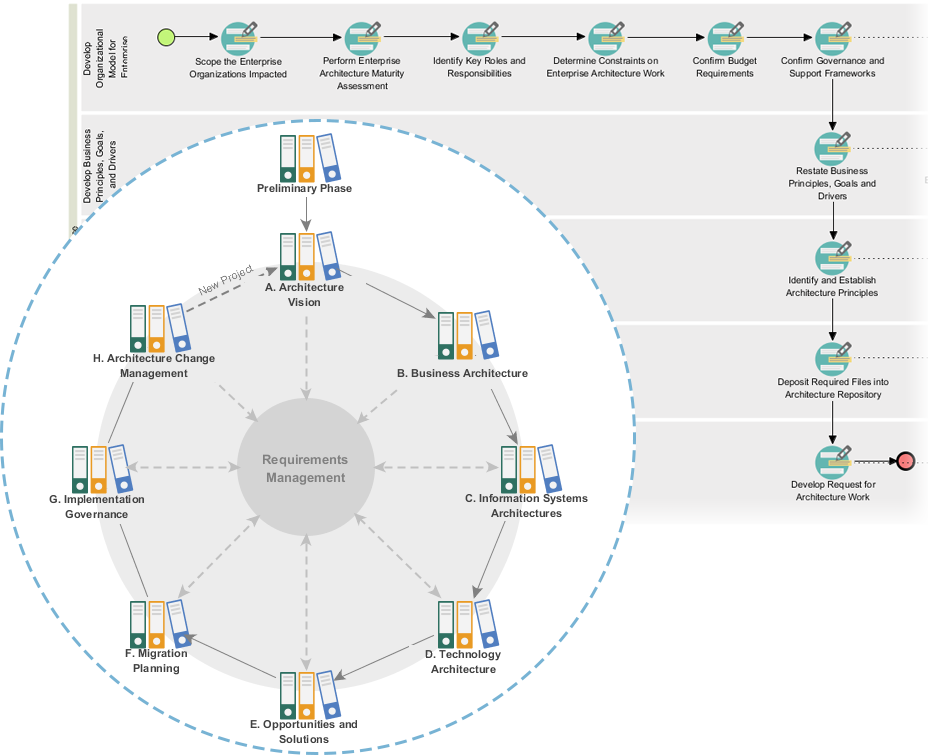
- The ADM remains the core process: Preliminary → Phases A–H → Requirements Management.
- Enhanced guidance on tailoring the ADM for agile delivery, DevOps, and hybrid environments.
- Greater emphasis on governance, stakeholder management, and value-driven outcomes.
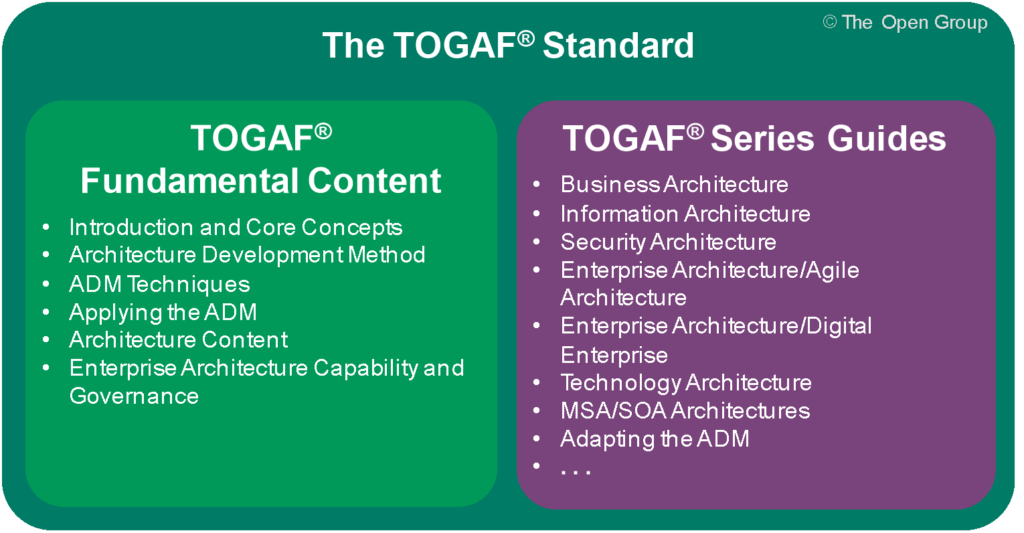
✅ Fundamental Content & TOGAF Series Guides
- Architecture Building Blocks (ABBs) define required capabilities, realized through Solution Building Blocks (SBBs).
- Core entities include:
- Capabilities
- Value Streams
- Stakeholders & Concerns
- Requirements
- TOGAF Series Guides provide contextual advice (e.g., Agile EA, Digital Transformation, Sustainability in EA)—making TOGAF actionable in real-world scenarios.
✅ Standardized Integration with ArchiMate
- TOGAF 10 explicitly endorses ArchiMate as the preferred visual modeling language.
- It supports modeling across:
- Business, Application, Technology, and Data architecture domains.
- Motivation (drivers, goals, principles).
- Implementation & Migration (work packages, deliverables, gaps).
🔗 TOGAF provides the “how” — ArchiMate delivers the “what and how visualized.”
ArchiMate 4: The Future of Enterprise Modeling
The ArchiMate 4 initiative, introduced via Snapshot 1 (mid-2025), is not a minor update—it’s a philosophical and structural reinvention of the language. Designed for modern, dynamic enterprises, it addresses long-standing criticisms of complexity and rigidity in ArchiMate 3.2.
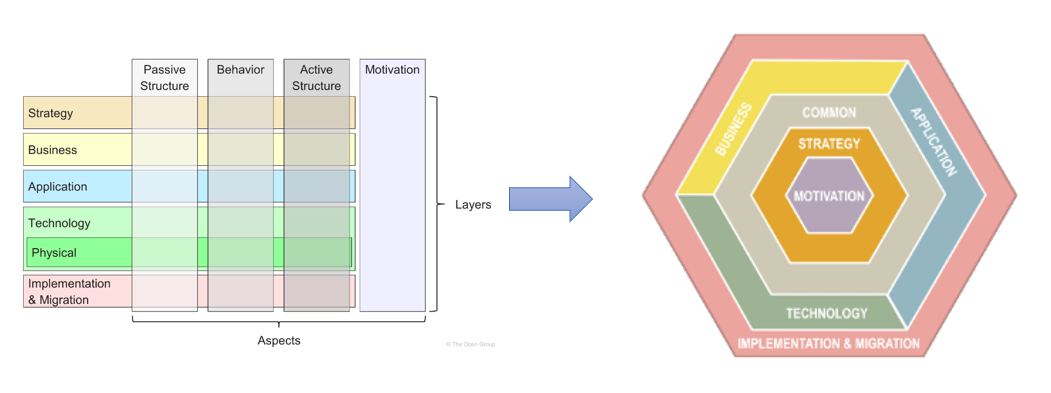
🔄 Key Innovations in ArchiMate 4
| Feature | ArchiMate 3.2 | ArchiMate 4 |
|---|---|---|
| Behavior Elements | Layer-specific: Process (Business), Function (Application), Service (Technology) | Unified behavior model: Service, Process, Function, Event — shared across layers |
| Relationships | Complex hierarchy; rigid layering | Simplified, dynamic connections; reduced redundancy |
| Removed Elements | Minimal | Composition, Constraint, Contract, Gap, Representation, Interaction types (e.g., Business/Application/Technology Interaction) |
| Focus | Hierarchical structure | Dynamic interconnectivity, ecosystem thinking, AI-driven architectures |
| Use Case Fit | Traditional, monolithic systems | Hybrid cloud, API ecosystems, digital platforms, AI services |
💡 Philosophy Shift: From “modeling the structure” to “modeling the flow and connection.”
🌐 Why It Matters
- Reduces cognitive load for modelers.
- Enables faster, more intuitive modeling in agile and DevOps contexts.
- Better supports real-time impact analysis, dependency mapping, and automated validation.
Synergy in Action: How TOGAF 10 Meets ArchiMate 4
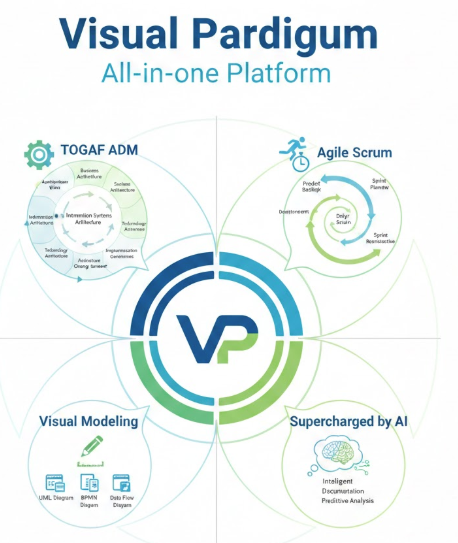
The alignment between TOGAF 10 and ArchiMate 4 is not coincidental—it’s intentional. Together, they form a method + language duo that empowers enterprise architects to
- Communicate clearly across business and technical teams.
- Trace strategy to implementation with confidence.
- Govern change efficiently in complex, evolving environments.
🔗 Key Synergies
| TOGAF 10 Element | ArchiMate 4 Alignment | Benefit |
|---|---|---|
| Architecture Domains (Business, Application, Technology) | Direct mapping to ArchiMate layers | Consistent, cross-layer modeling |
| Motivation & Strategy (Drivers, Goals, Objectives) | Modeled via Driver → Goal → Outcome chain using unified Event/Process/Service elements | Clear traceability from strategy to execution |
| Realization & Impact | Realization, Serving, and Access relationships now work seamlessly across layers | Enables impact analysis across ADM phases |
| Implementation & Migration | Work Package, Deliverable, Gap, Plateau elements in the Implementation & Migration extension | Aligns perfectly with TOGAF Phase E/F and H |
🔄 The result? A unified, agile, and scalable EA practice where modeling is intuitive, governance is transparent, and change is predictable.
Practical Examples: From Strategy to Execution
Let’s explore how this synergy plays out in real-world scenarios.
1. Strategy to Execution: Regulatory Compliance to Data Protection
TOGAF Phase A (Architecture Vision):
- Driver: “Regulatory Compliance Pressure (GDPR/CCPA)”
- Goal: “Achieve Data Privacy Maturity Level 3”
- Capability: “Data Protection Services”
ArchiMate 4 Modeling:
- Use a unified Service element:
Business Service: Customer Data Handling→Application Service: Data Anonymization Engine→Technology Service: Encrypted Storage - Replace old Business-to-Application-to-Technology Interaction with Serving and Realization relationships.
- Impact: Quick visualization of how a regulatory driver flows into operational capabilities.
✅ Outcome: Faster stakeholder alignment and clear audit trails.
2. Capability-Based Planning: Streamlining Value Streams
TOGAF 10 Focus:
- Model Capability Maps and Value Streams (e.g., “Order-to-Cash”).
ArchiMate 4 Approach:
- Model:
Capability: Order Fulfillment→ Realized by →Business Function: Dispatch→ Supported by →Application Component: Order Management System - Use same
Functionelement across business and application views — no duplication. - Replace Composition with direct aggregation via Aggregation or Composition-like connection.
✅ Outcome: Reduced modeling overhead, improved consistency, and easier maintenance.
3. Digital Transformation: Cloud Migration in Retail
TOGAF Phase B–C:
- Business Architecture: Value Stream “Order-to-Cash”
- Application Architecture: Application Components (e.g., Payment Gateway, Inventory Sync)
ArchiMate 4 Visualization:
- Chain:
Event: Order Placed→Process: Order Validation→Service: Payment Processing - Cross-layer service chain connects:
- On-premises Technology Service: Legacy Payment Processor
- Cloud Technology Service: AWS Lambda Function
- Use Dynamic Connection to show hybrid deployment.
✅ Outcome: Clear visibility into hybrid deployment, enabling migration planning and risk assessment.
4. Change Impact Analysis: Upgrading to a New Cloud Platform
TOGAF Phase H (Change Management):
- Proposed change: Replace legacy cloud provider with a new one.
ArchiMate 4 Advantage:
- Trace dependencies from:
- Motivation: “Reduce TCO” → Goal: “Migrate to Cost-Efficient Cloud”
- → Event: “Migration Trigger”
- → Process: “System Rehosting”
- → Service: “Compute Service”
- → Technology: “New Cloud Platform”
- Dynamic connections highlight affected Work Packages and Deliverables.
- Fewer relationship types to manage → faster analysis.
✅ Outcome: Faster decision-making, reduced risk of unintended impacts.
Conclusion: The Future of Enterprise Architecture is Unified
As of early 2026, TOGAF 10 and ArchiMate 4 are not just compatible—they are co-evolving partners in enterprise transformation.
| Element | TOGAF 10 | ArchiMate 4 |
|---|---|---|
| Role | The method: How to build the architecture | The language: What to model and how to visualize it |
| Focus | Agility, governance, digital alignment | Simplicity, connectivity, dynamic modeling |
| Best For | Enterprise-wide strategy, compliance, transformation | Rapid modeling, cloud ecosystems, AI-driven systems |
Together, they enable:
- Clearer communication across business and IT.
- End-to-end traceability from strategy to implementation.
- Agile, resilient, and future-proof architectures.
🚀 Recommendation for Organizations:
- Begin adopting ArchiMate 4 concepts (via Snapshot 1) in parallel with TOGAF 10.
- Use ArchiMate 3.2 for legacy systems but prototype with ArchiMate 4 for new initiatives.
- Prepare for ArchiMate 4.0 (Q2 2026) through training, tooling updates, and pilot projects.
Final Thought:
In a world of complexity, the future of enterprise architecture lies not in more layers or rules—but in clearer connections, simpler models, and unified purpose. TOGAF 10 and ArchiMate 4 are not just tools—they are the compass and map for navigating the digital enterprise of tomorrow.
- Comprehensive Guide to Applying Gap Analysis in TOGAF ADM: This resource provides a detailed technical overview of how to perform gap analysis within the Architecture Development Method (ADM) to identify discrepancies between current and target enterprise architectures.
- TOGAF Architecture Development Method (ADM) Guide-Through Process: This page explores an automated tool that provides step-by-step instructions, input references, and samples to help architects kick-start and navigate projects of any size.
- Step-by-Step TOGAF ADM Enterprise Architecture Guide: A thorough guide for enterprise architects that includes detailed explanations of the various ADM phases and production of standardized deliverables.
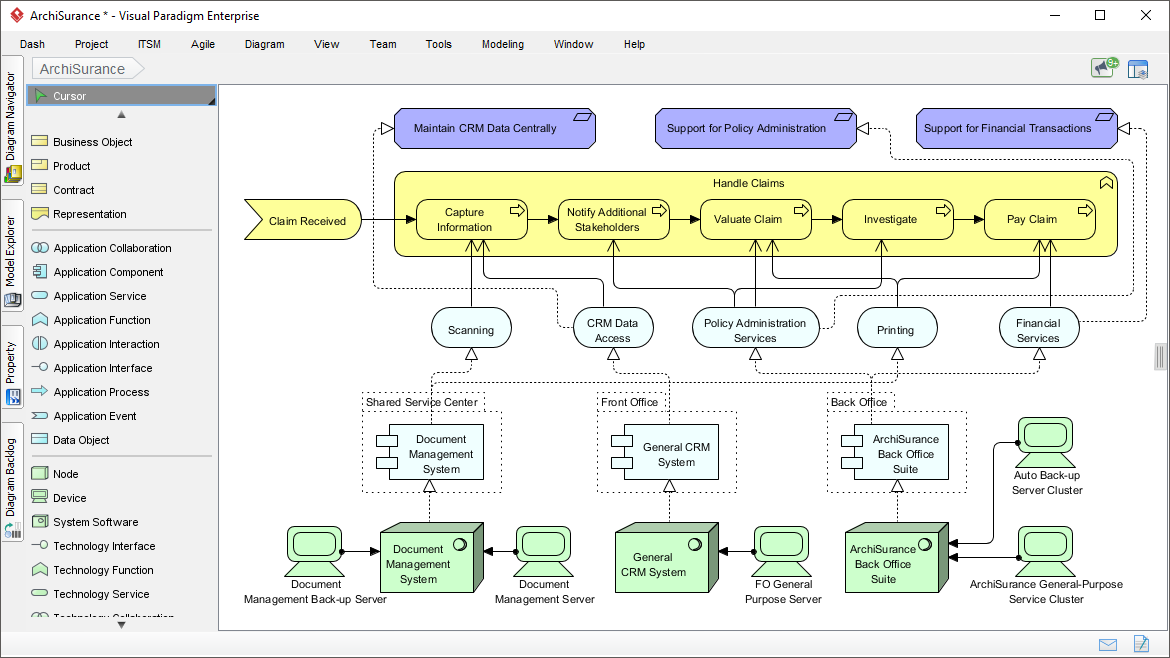
- Integrating ArchiMate with TOGAF ADM for Enterprise Architecture: This article explains how to practically apply ArchiMate within the TOGAF cycle to ensure structured and consistent enterprise modeling.
- TOGAF ADM Tutorial: Step-by-Step Guide to Enterprise Architecture: A comprehensive tutorial designed to guide users through the Architecture Development Method for designing complex enterprise systems.
- TOGAF ADM and Architecture Content Framework Explained: This resource offers a detailed overview of how the ADM integrates with the Architecture Content Framework to generate structured architectural outputs.
- TOGAF ADM Guide with ArchiMate Integration: A guide focused on implementing the Architecture Development Method using ArchiMate for enhanced modeling precision and framework alignment.
- TOGAF ADM: Requirements Management Deliverables: This article provides an in-depth look at the key deliverables and mandatory processes for managing architecture requirements throughout the ADM.
- TOGAF ADM Phase A: Architecture Vision Deliverables: A focused technical guide detailing the specific activities and deliverables expected during the initial Architecture Vision phase (Phase A).
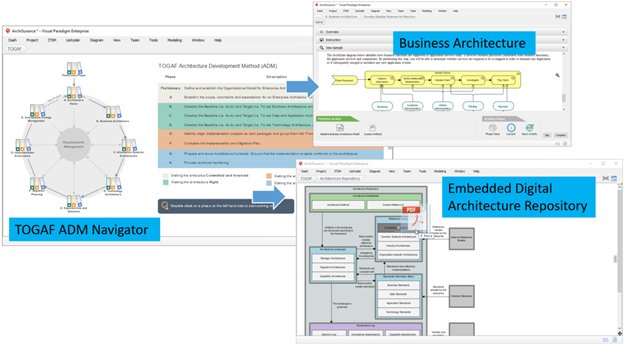
- Seamlessly Integrating ArchiMate into TOGAF’s Architecture Development Method: This resource highlights how to automate the ADM process using a visual Process Navigator and standard diagrams to simplify the enterprise architecture journey.


 English
 Arabic
 Chinese (Simplified)
 Dutch
Dutch French
 German
 Italian
 Japanese
 Korean
 Portuguese
 Russian
 Spanish