


Introduction: The New Era of Enterprise Architecture
In today’s rapidly evolving digital landscape, organizations of all sizes face mounting pressure to modernize operations, enhance customer experiences, and remain competitive. For traditional businesses—especially family-owned enterprises—the journey toward digital transformation can feel overwhelming. Where do you start? How do you ensure alignment between business strategy and technology execution? And how do you manage complexity without sacrificing agility?
Enterprise Architecture (EA) provides the strategic framework to answer these questions. Yet, for many teams, adopting standards like TOGAF® has historically meant navigating steep learning curves, manual documentation burdens, and the dreaded “blank canvas” syndrome.
This case study explores how a family-owned coffee shop chain leveraged Visual Paradigm’s AI-powered TOGAF ADM Guide-Through to architect its digital transformation—from initial vision to executable roadmap. By combining the structured discipline of TOGAF with the intuitive power of artificial intelligence, the organization accelerated planning, reduced errors, and empowered architects at every level to deliver value faster. Whether you lead EA in a multinational corporation or guide technology strategy in a growing SME, this journey offers practical insights you can apply today.
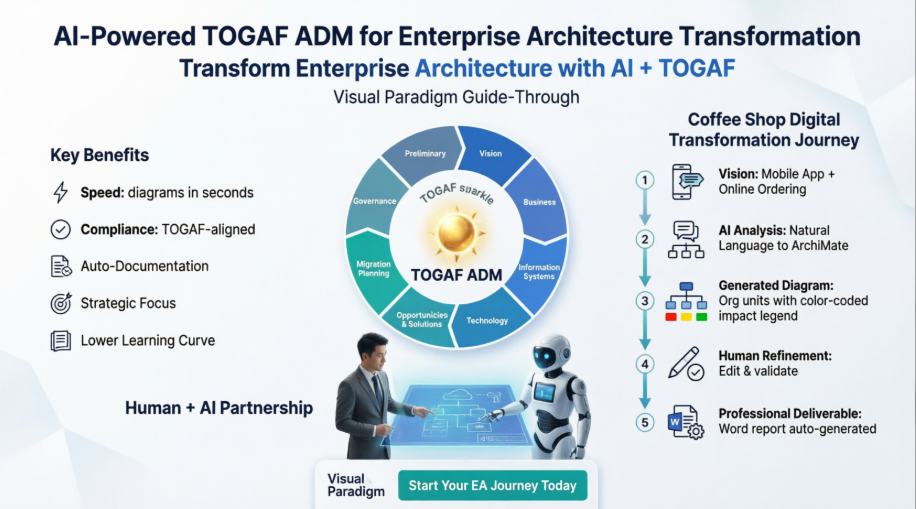
Transforming Enterprise Architecture: An AI-Powered TOGAF ADM Guide-Through with Visual Paradigm
Master Enterprise Architecture with an AI-powered TOGAF ADM guide in Visual Paradigm. Learn to create ArchiMate diagrams and accelerate digital transformation.
Feature note: The feature introduced in this article is an AI-Powered feature available in Visual Paradigm in the product area(s) of AI and Enterprise Architecture. Related diagram type: ArchiMate Diagram and Enterprise Architecture. Related framework / standard: ArchiMate, Enterprise Architecture, and TOGAF
The world of Enterprise Architecture (EA) is undergoing a monumental shift. Gone are the days of staring at a blank canvas, overwhelmed by the sheer complexity of the TOGAF® standard. Imagine a world where your vision translates instantly into structured, compliant blueprints. With the AI-powered TOGAF ADM Guide-Through in Visual Paradigm, that world is here! This revolutionary approach doesn’t just simplify the process; it transforms the way architects think, collaborate, and deliver value to their organizations. Whether you are a seasoned professional or a junior architect finding your feet, the integration of artificial intelligence into the Architecture Development Method (ADM) provides a visionary leap forward in productivity and technical precision.
In this tutorial, we will explore a real-world case study: a family-owned coffee shop chain looking to modernize through digital transformation. We will show you exactly how to leverage this professional AI-powered TOGAF modeling tool to navigate the ADM lifecycle with speed and confidence.
Quick Takeaways: Why Use AI in Your TOGAF Projects?
-
Unprecedented Speed: Generate complex ArchiMate diagrams and business capability maps in seconds rather than hours.
-
Smart Compliance: AI ensures your artifacts align with TOGAF standards, reducing manual errors and “blank canvas anxiety.”
-
Seamless Documentation: Automatically transition from visual models to professional Word-based deliverables.
-
Strategic Focus: Spend less time on syntax and more time on high-value decision-making and innovation.
-
Lower Learning Curve: Junior architects can produce professional-quality models with intelligent suggestions.
Embarking on the Architecture Journey
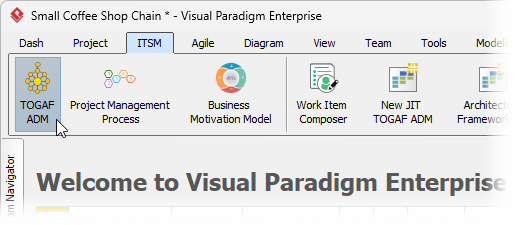
Every great transformation begins with a single step. In Visual Paradigm, launching your enterprise-grade project is as simple as a few clicks. The AI-powered TOGAF ADM Guide-Through is seamlessly integrated into the ITSM menu, acting as your digital co-pilot from the very start. By selecting the TOGAF ADM option, you open the door to a structured environment designed to keep your project on track and aligned with industry best practices.
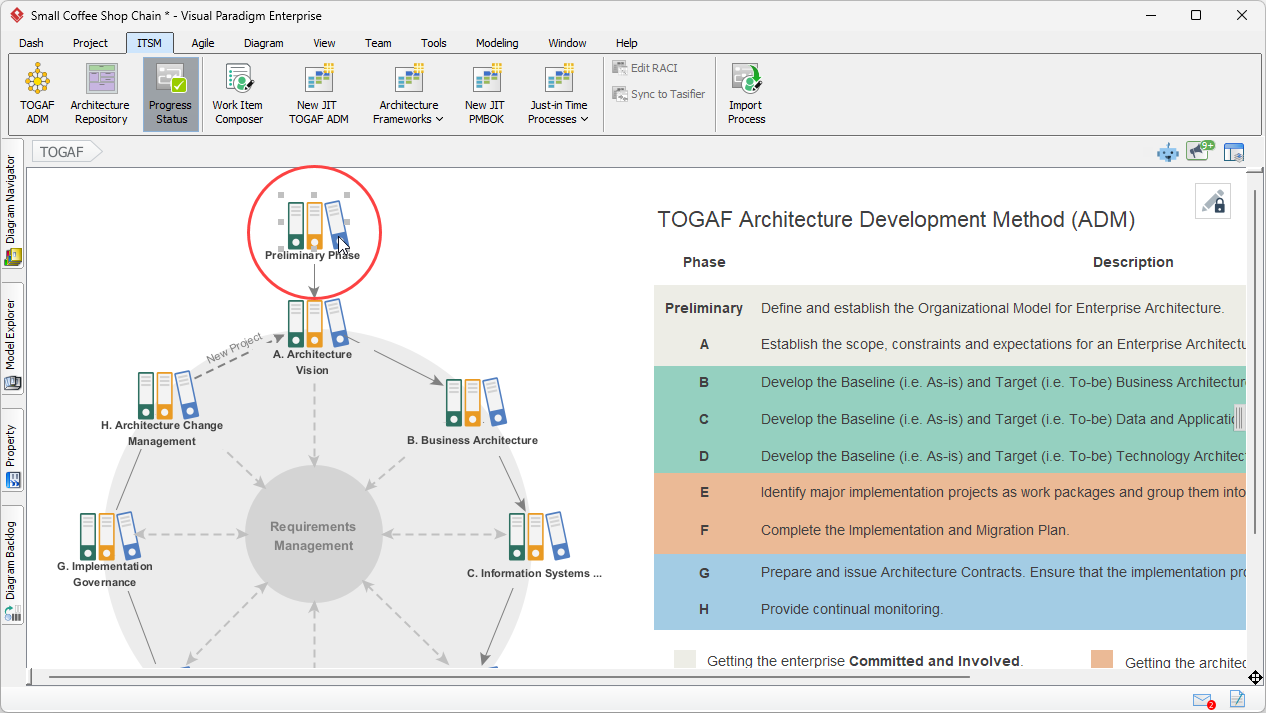
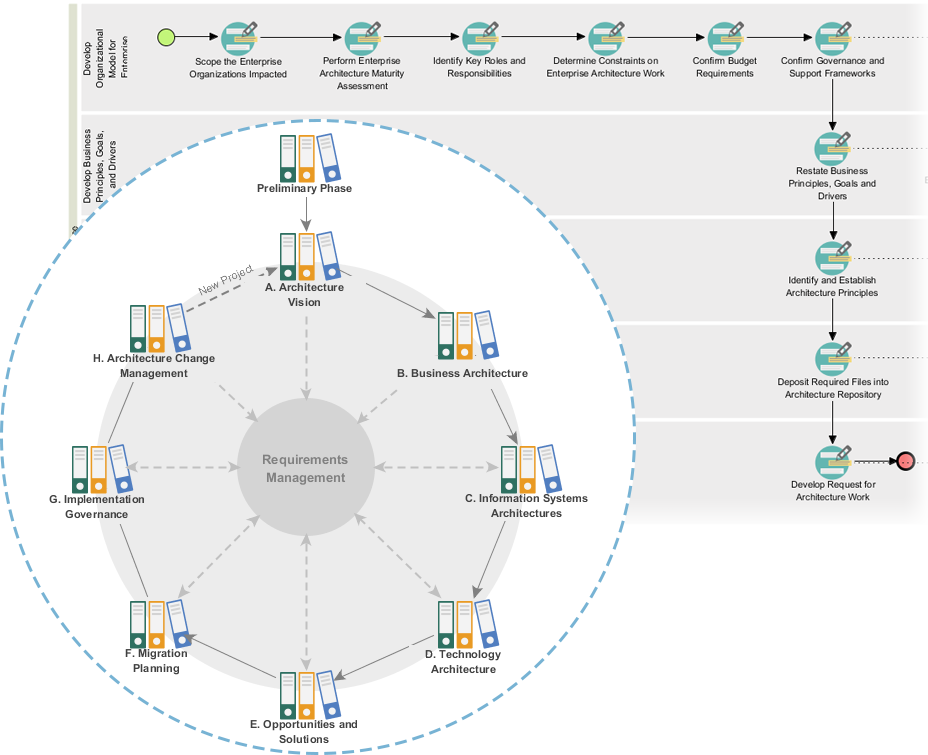
The initial interface presents the iconic ADM “crop circle,” a visual roadmap of the entire architecture lifecycle. From the Preliminary Phase to Requirements Management, every stage is interactive. To begin our coffee shop transformation, we simply click on the “Preliminary Phase” to dive into the foundational work of our enterprise architecture.
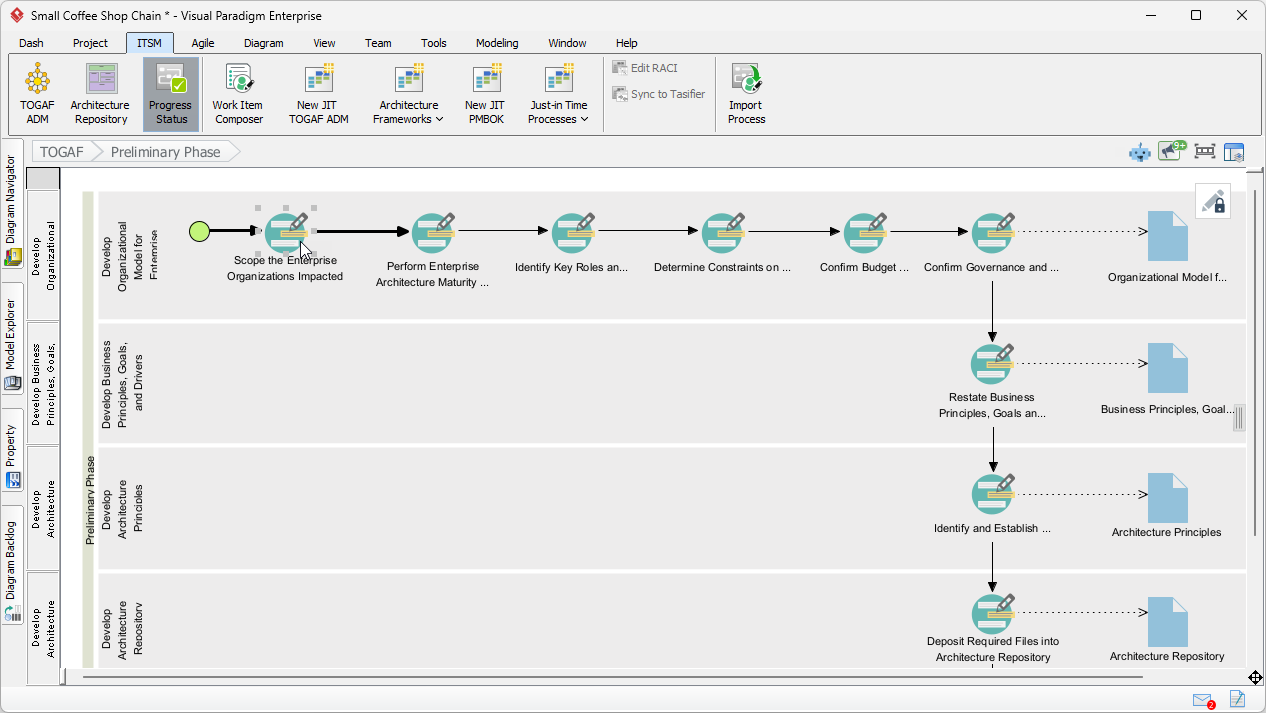
Mastering the Preliminary Phase: Scoping the Impact
Once inside a phase, Visual Paradigm provides a “zoom-in” view of the specific activities involved. These activities are organized logically by lanes of deliverables. To complete a phase, you navigate through these activities (work items), ensuring that every step of the ADM is respected. Our first high-impact task is to “Scope the Enterprise Organizations Impacted.” This is crucial for understanding who will be affected by our move from manual processes to a digital ordering system.
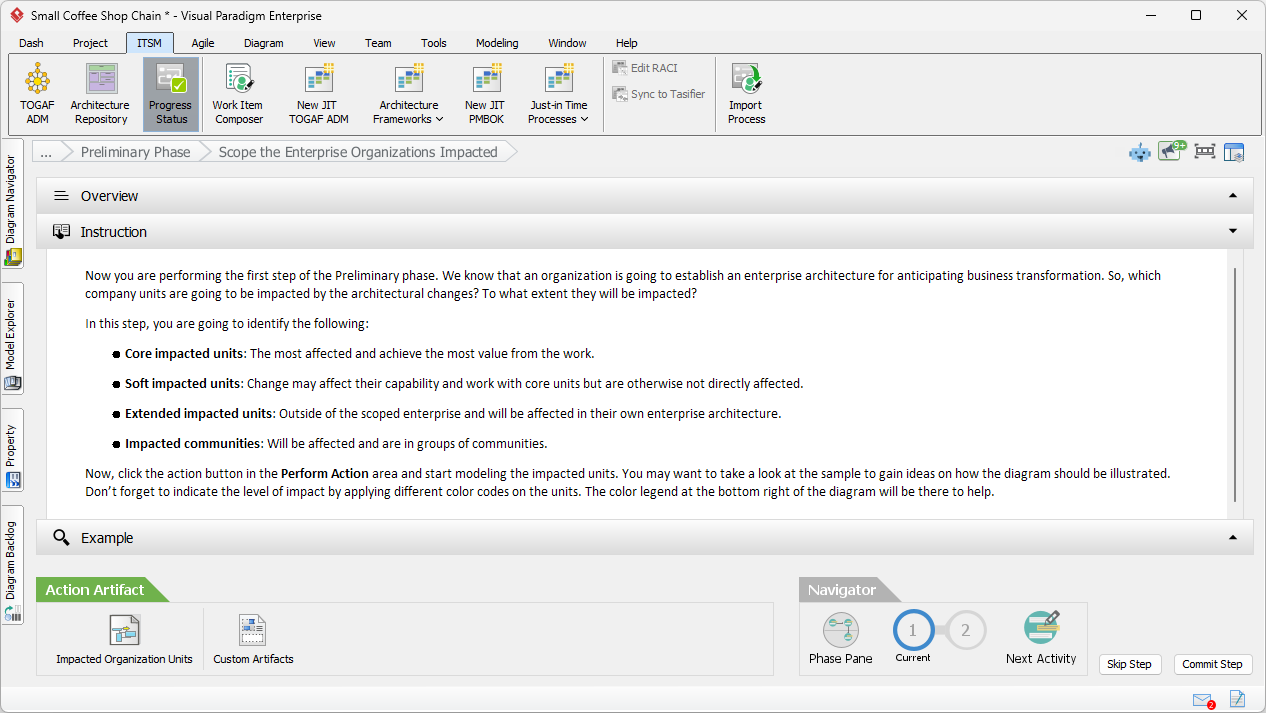
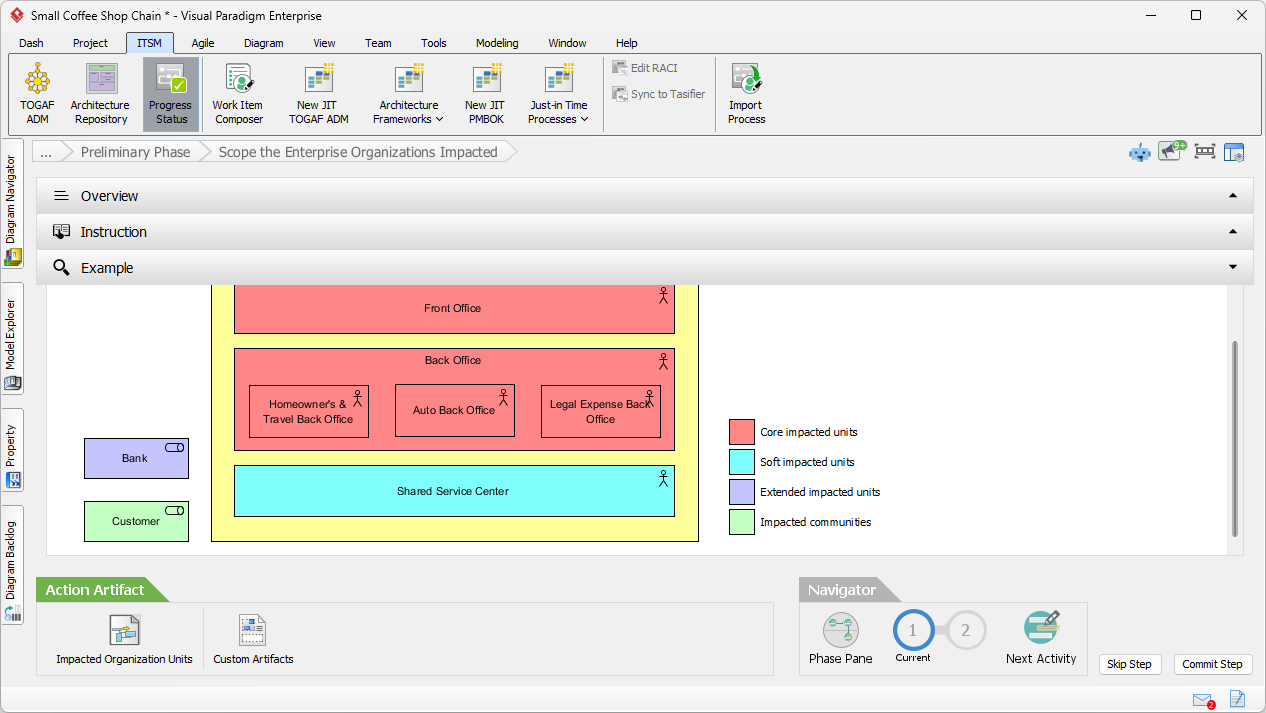
The activity screen is designed for maximum clarity, featuring three vital panes: Overview, Instruction, and Example.
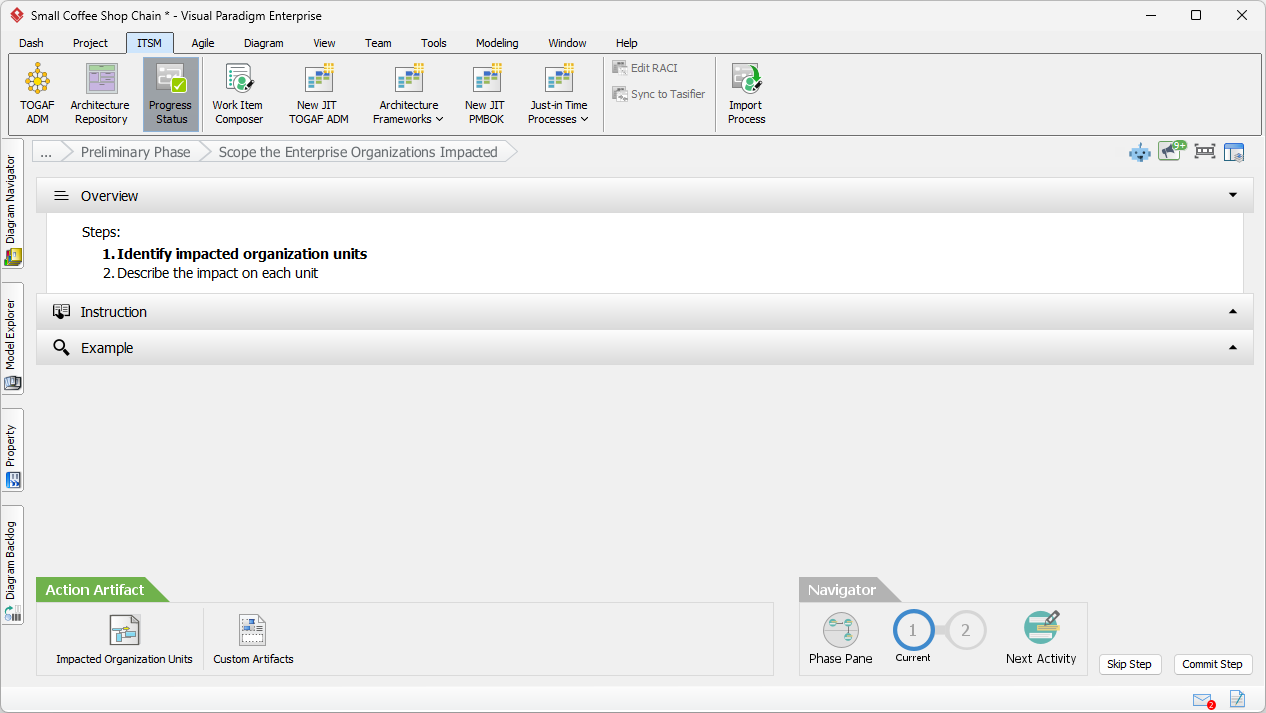
The Instruction pane acts as a mentor, offering tips on identifying core, soft, and extended impacted units.
Meanwhile, the Example pane provides a visual benchmark, showing you what a high-quality artifact should look like before you even start. This ensures that even those new to the framework can produce professional results immediately.
The Magic of AI Diagram Generation
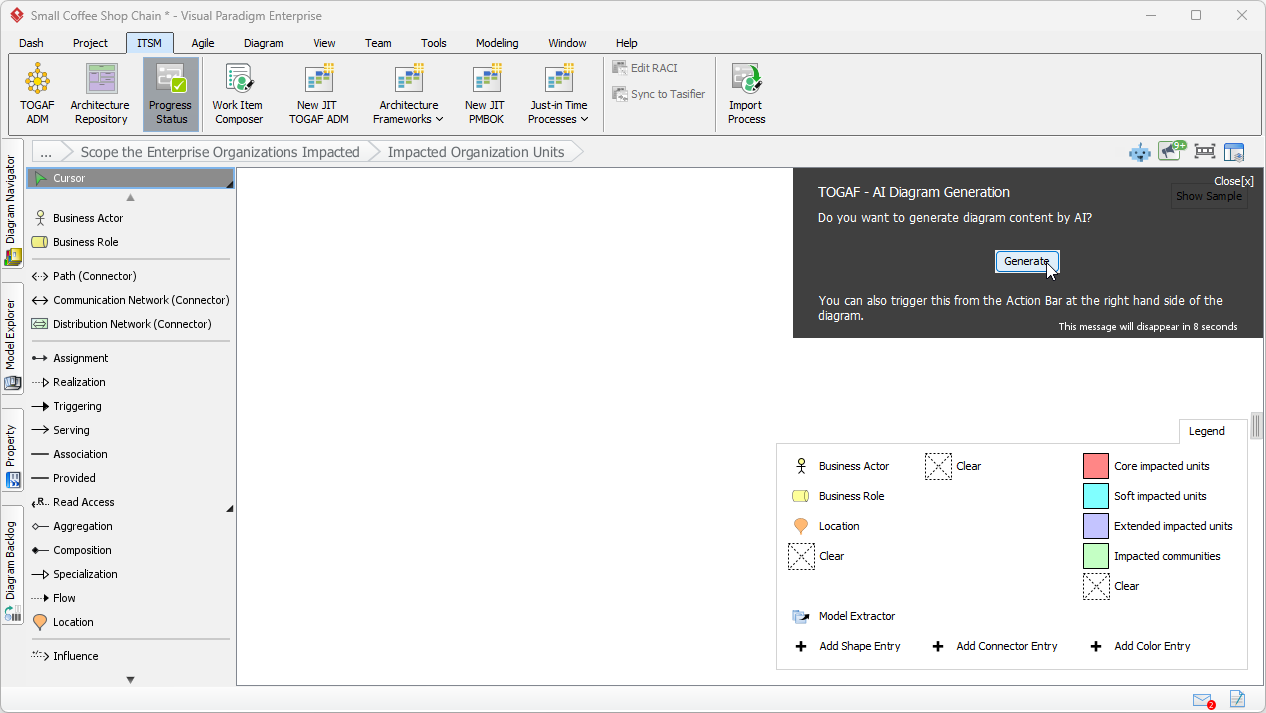
Now, let’s witness the true power of an easy-to-use AI TOGAF software. By opening the “Impacted Organization Units” action, you are presented with a blank ArchiMate diagram.
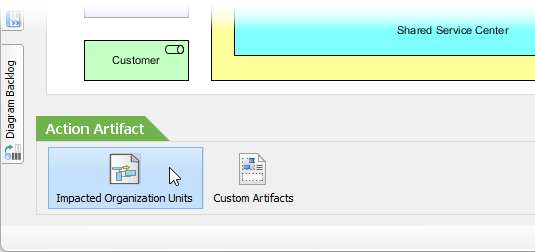
But you aren’t alone! A smart prompt appears, asking if you want to generate the content via AI. This is where the transformation happens. Click Generate.
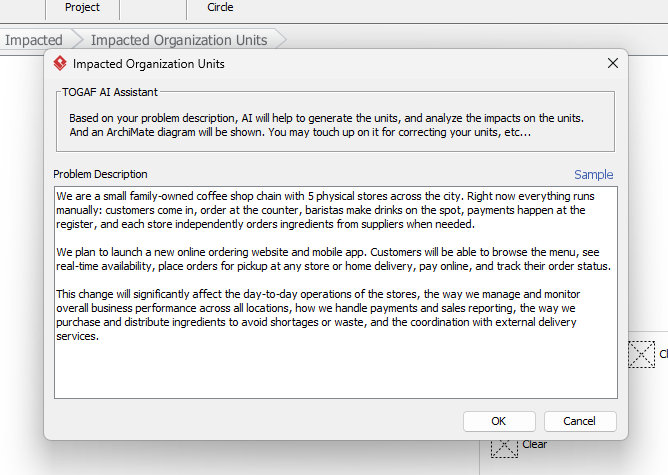
You simply describe the problem—in our case, the coffee shop’s plan to launch a mobile app and online ordering system—and let the engine do the heavy lifting.
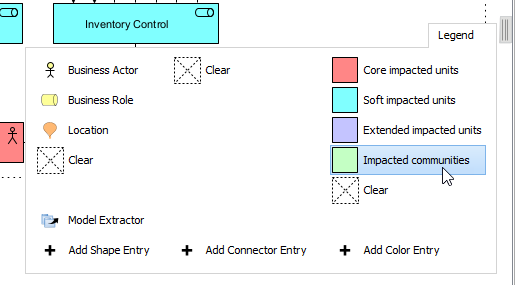
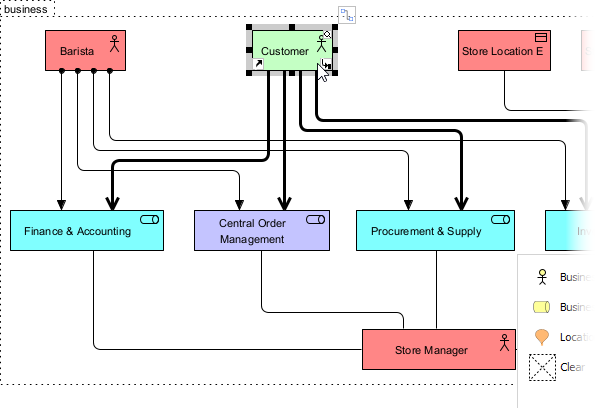
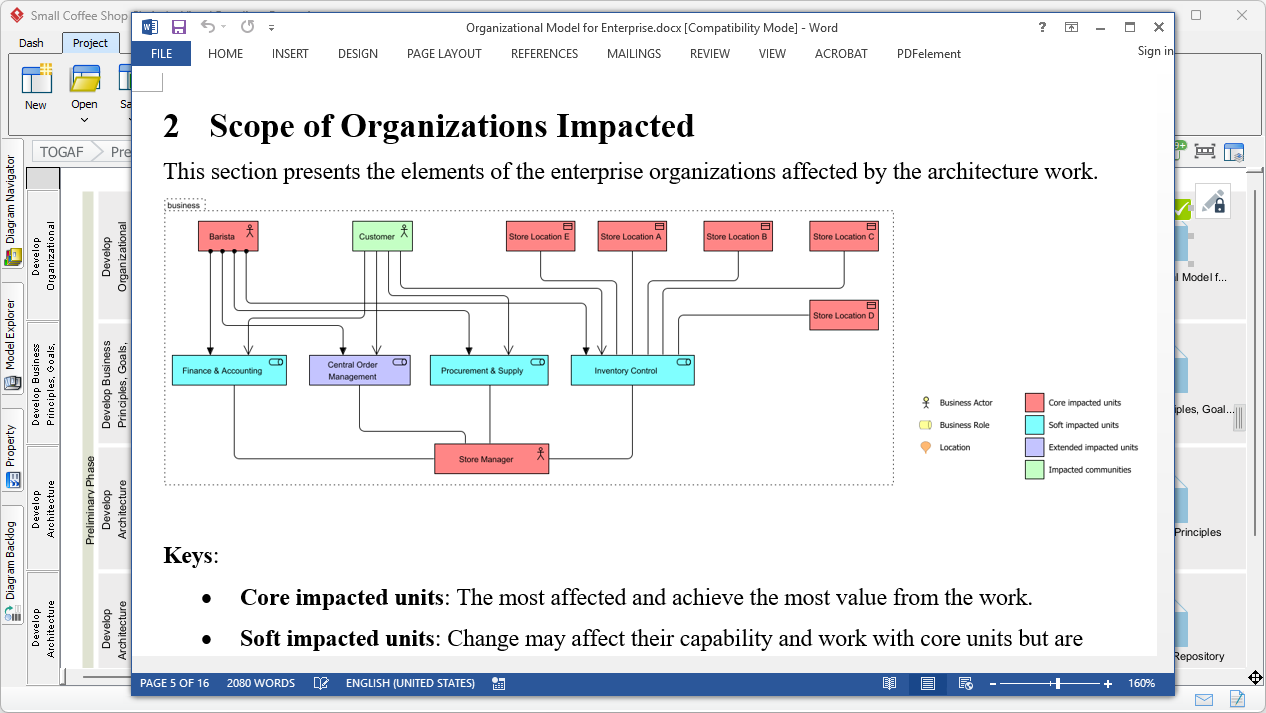
After entering your project description, the AI analyzes the natural language input to identify key actors, roles, and locations. It doesn’t just place shapes; it builds relationships. In seconds, a structured ArchiMate diagram appears, complete with a color legend indicating the type of impact (e.g., Core, Soft, or Extended). This AI-powered TOGAF generator eliminates the tedious manual drafting phase, allowing you to move straight to validation.
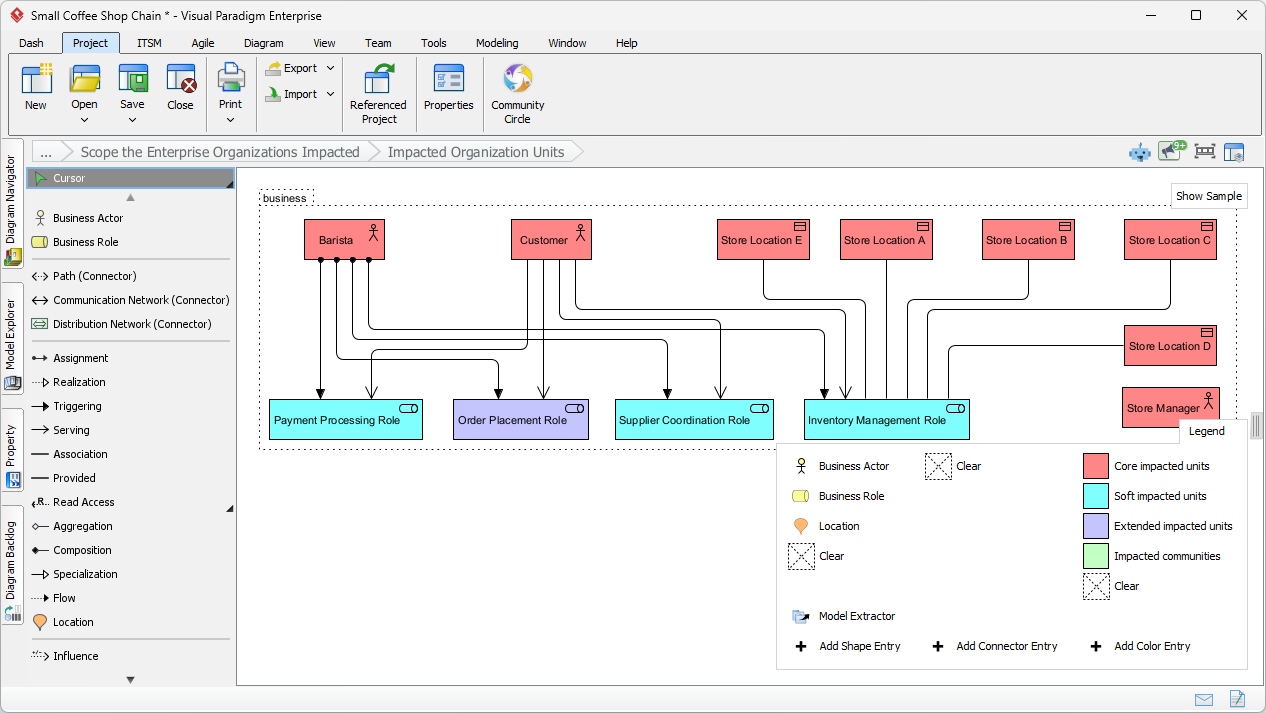
Refining the Blueprint: The Human-AI Partnership
While the AI provides a brilliant foundation, the expert architect provides the finishing touch. Visual Paradigm makes it incredibly simple to “touch up” the generated models. You can rename elements to better fit your internal terminology, such as changing a generic “Payment Processing Role” to “Finance & Accounting.” The interface is highly intuitive, supporting rapid adjustments to associations and element types.
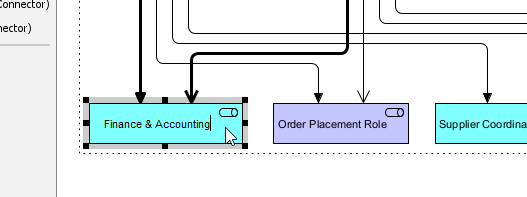
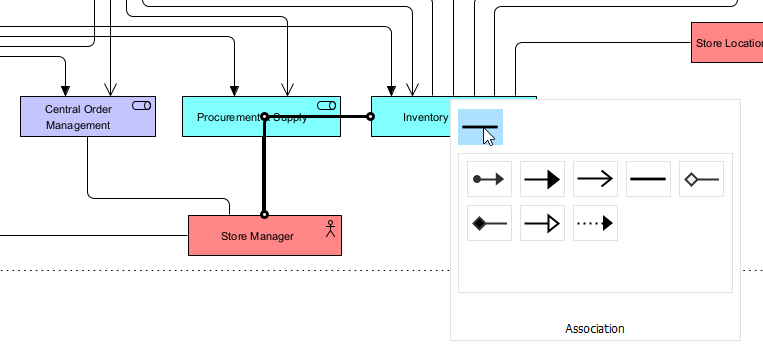
Technical precision is paramount in EA. If the AI miscategorizes an element—perhaps labeling a “Customer” as a core unit when they should be an “Impacted community”—you can correct it instantly using the Color Legend. This collaborative workflow between human intelligence and AI ensures that the final model is both fast to produce and 100% accurate to your specific business context.
From Modeling to Professional Deliverables
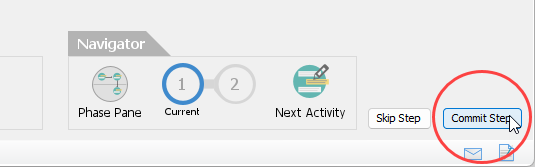
Consistency is the hallmark of a great architect. As you complete each step, you “Commit” your progress. Visual Paradigm tracks your status with satisfying green checkmarks, providing a clear visual indicator of project health. This progress tracking is vital for large architecture teams who need to ensure every deliverable—from the Architecture Vision in Phase A to the Migration Plan in Phase E—is accounted for.
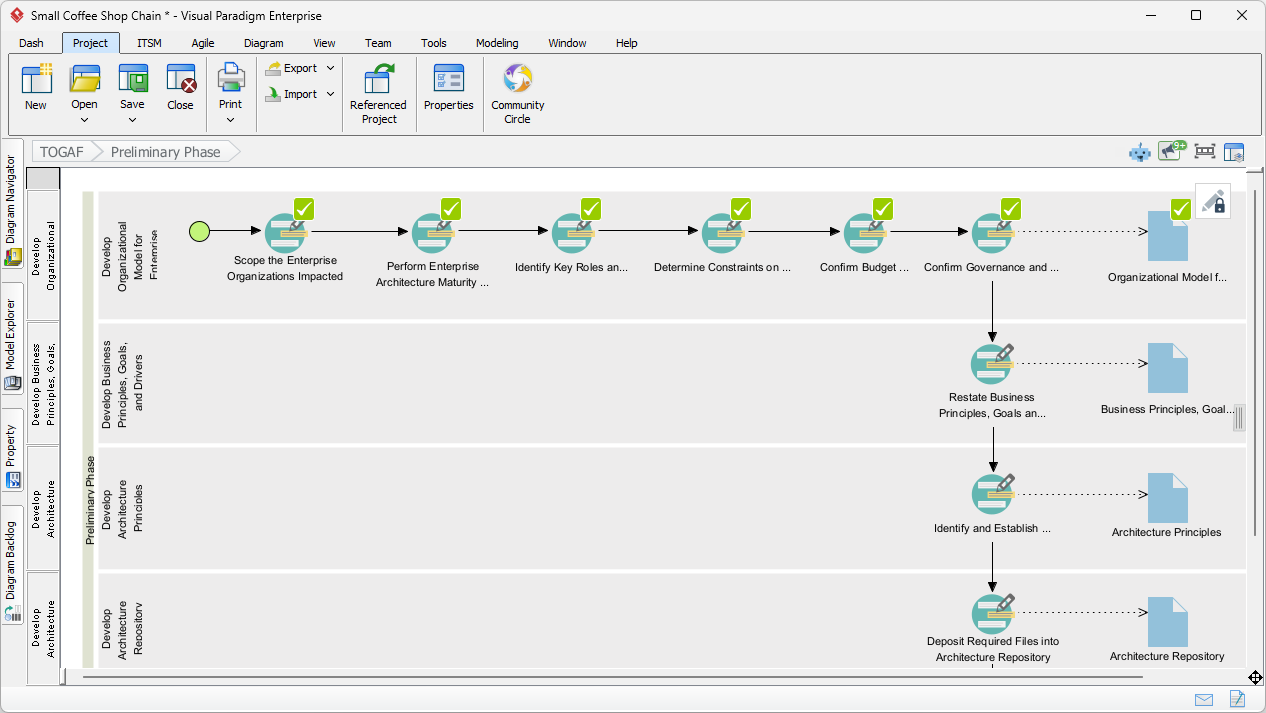
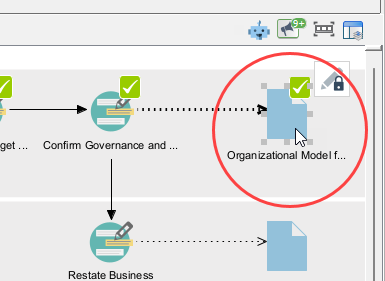
The final “wow” moment comes when it is time to produce the formal documentation. By double-clicking the deliverable icon, Visual Paradigm aggregates all the data, diagrams, and descriptions you’ve developed and generates a professional Word document. This isn’t just a copy-paste job; it is a formatted, TOGAF-compliant report that includes your AI-generated ArchiMate diagrams and their corresponding keys. Your stakeholders will be amazed at the depth and clarity of the output produced in a fraction of the traditional time.
Deep Dive: Visual Paradigm’s TOGAF ADM Capabilities
Visual Paradigm provides an enterprise-grade, certified TOGAF ADM (Architecture Development Method) lifecycle management tool built directly into its enterprise architecture suite. Rather than forcing architects to manage separate text documents, spreadsheets, and drawings, Visual Paradigm integrates the entire TOGAF 9.x / 10 framework into a unified, step-by-step visual workflow engine.
1. The Interactive TOGAF ADM Guide-Through Process
The core of Visual Paradigm’s TOGAF support is its interactive ADM wheel interface. It acts as a structural wizard that walks enterprise architecture teams through every phase of the development method:
-
Step-by-Step Task Checklist: Clicking on any phase of the ADM wheel expands a detailed, sequential checklist of activities required by the TOGAF standard.
-
Pre-Mapped Diagrams: Each task automatically provides the exact modeling canvas required for that step (e.g., ArchiMate, BPMN, UML, or Organization Charts), ensuring architects don’t have to guess which diagram to use.
-
Form-Based Data Entry: For steps requiring qualitative analysis (like risk assessments or principle definitions), the tool provides out-of-the-box form templates to cleanly collect structured text data.
2. Deep Integration with ArchiMate 3.1
While Visual Paradigm supports standard UML and BPMN, its TOGAF ADM framework relies heavily on native ArchiMate compliance, the Open Group’s dedicated enterprise architecture modeling language.
-
Cross-Layer Alignment: It seamlessly maps elements across the core ArchiMate layers: Business (processes/roles), Application (software components/services), and Technology (hardware/networks).
-
Strategy and Motivation Elements: Built-in support for capturing high-level drivers, goals, outcomes, principles, and requirements, ensuring physical systems map directly back to business strategy.
-
Implementation and Migration Layers: Provides explicit ArchiMate shapes to visualize work packages, plateaus, and deliverables directly inside Phases E and F (Opportunities, Solutions, and Migration Planning).
3. Key Features for Enterprise Architects
Gap Analysis Matrix (Phases B, C, and D)
Visual Paradigm features an automated Gap Analysis Matrix tool. Architects place “As-Is” (Baseline) architecture elements on one axis and “To-Be” (Target) elements on the other. The software tracks which systems are being Eliminated, New, Enhanced, or Unchanged, completely eliminating manual cross-referencing.
Architecture Repository & Building Blocks
Every element drawn or documented in any phase of the ADM is stored as a reusable enterprise asset in the central repository. Architects can define Architecture Building Blocks (ABBs) in early phases and instantiate them as Solution Building Blocks (SBBs) during implementation planning.
Capability-Based Planning & Heatmapping
Visualize organizational capabilities using nested matrix charts. Architects can apply color-coded Heatmapping to instantly highlight strategic gaps, high-risk systems, or underfunded business capabilities.
4. Automated Document Generation (Deliverables Tool)
One of the most tedious aspects of a TOGAF audit is writing formal documentation. Visual Paradigm solves this with an automated Just-in-Time (JIT) Document Generation pipeline.
-
Auto-Compiling Deliverables: As you complete the forms and diagrams inside the ADM workflow, the tool automatically injects that data into officially formatted TOGAF templates.
-
Standard Out-of-the-Box Layouts: Instantly generates complex structural documents, including the Architecture Principles, Statement of Architecture Work, Architecture Definition Document (ADD), and the Requirements Impact Assessment.
-
Custom Layout Reporting: If the standard TOGAF templates do not fit your company’s guidelines, you can use a drag-and-drop report developer to design custom enterprise blueprints.
5. Multi-User Collaboration & Governance
Enterprise architecture requires cross-department alignment. Visual Paradigm handles this through its secure cloud repository (VP Server / Teamwork Server).
-
Element-Level Version Control: Multiple architects can work on the same TOGAF project simultaneously. The system manages conflicts down to individual model elements, not just flat files.
-
Architecture Governance Workflows: Set up formal approval gates between ADM phases. For example, Phase A cannot be marked complete until the steering committee digitally reviews and signs off on the auto-generated Statement of Architecture Work.
Conclusion: Empowering Transformation Through Intelligent Architecture
The journey of our family-owned coffee shop chain illustrates a powerful truth: digital transformation doesn’t require a massive team or years of planning to get started. With the right tools and methodology, even traditional businesses can architect their future with confidence, clarity, and speed.
Visual Paradigm’s AI-powered TOGAF ADM Guide-Through represents more than a technological upgrade—it’s a paradigm shift in how enterprise architecture is practiced. By automating routine modeling tasks, enforcing standards compliance, and accelerating documentation, the platform frees architects to focus on what matters most: strategic thinking, stakeholder alignment, and value creation.
For the coffee shop chain, this meant moving from a vision of “digital ordering” to a fully articulated architecture roadmap in days, not months. For your organization, it could mean the difference between reactive IT management and proactive business enablement.
Whether you are performing a Business Capability Assessment, a Data Domain Gap Analysis, or planning a cloud migration, AI-enhanced architecture tools are ready to help you visualize the path forward. The future of enterprise architecture isn’t just about drawing diagrams—it’s about empowering teams to turn strategy into execution, faster and smarter than ever before.
Ready to elevate your architecture? Experience the most professional AI-powered TOGAF modeling tool today. Download a trial of Visual Paradigm and start your journey toward smarter, faster, and more impactful enterprise architecture. Visit the Visual Paradigm Download Page to get started!
References
- TOGAF ADM Software – Visual Paradigm: This resource details industry-specific software that enhances EA productivity by guiding users through the ADM phases and automatically generating required deliverables.
- TOGAF Architecture Development Method (ADM) Guide-Through Process: An overview of the automated tool that simplifies the ADM by providing visual navigation, samples, and project launch support.
- Step-by-Step Enterprise Architecture Tutorial with TOGAF ADM: A practical guide that walks users through each ADM phase, offering clear instructions and templates to initiate architecture projects.
- Comprehensive Guide to Applying Gap Analysis in TOGAF ADM: A technical deep-dive into identifying discrepancies between current and target states within the ADM framework.
- TOGAF ADM and Architecture Content Framework Explained: This article explains the relationship between ADM processes and the Architecture Content Framework for structured outputs.
- Mastering Enterprise Architecture with Visual Paradigm’s TOGAF ADM Guide: A comprehensive guide focused on implementing robust IT frameworks and aligning them with business goals.
- Techniques for Developing TOGAF ADM: An exploration of core methodologies and practical techniques used by architects to develop enterprise structures.
- TOGAF ADM Phase A: Architecture Vision Deliverables: A specialized look at the activities and deliverables required to establish a clear architecture vision during Phase A.
- Comprehensive Guide to Visual Paradigm for TOGAF, ADM, ArchiMate, BPMN, and UML: This article demonstrates how to apply multiple modeling standards in concert to support the TOGAF lifecycle.
- Case Study: Applying TOGAF ADM for a Company: A real-world demonstration showing how ArchiMate integration and TOGAF processes function within the Visual Paradigm platform.

 English
 Arabic
 Chinese (Simplified)
 Dutch
Dutch French
 German
 Italian
 Japanese
 Korean
 Portuguese
 Russian
 Spanish