我们如何才能确保用户故事正确完成并符合客户的需求呢?这就是验收标准发挥作用的地方。验收标准是一份正式的要求列表,可确保完成所有用户故事并考虑所有场景。简而言之,验收标准指定了满足用户故事的条件。简洁的书面标准可帮助开发团队避免对客户需求的含糊不清并防止误解。
Continue reading分类: User Story
敏捷 INVEST — 用户故事的6个优秀指南
敏捷 使用用户故事来表达产品或系统应该解决的问题。Agile INVEST 指南是 Bill Wake 汇总的一组建议,用于测试可以帮助您进行敏捷项目管理的优质用户故事(或更一般的产品待办列表项) 。
Continue reading用户故事和需求之间有什么区别?
虽然大多数新功能都应该从用户的角度来定义,但事实上,当我们定义开发团队需要构建的需求时,我们往往忽略了用户角度的“为什么”。用户故事的重点是体验——使用产品的人希望能够做什么。传统的需求侧重于功能——产品应该做什么。剩下的差异是一个微妙但重要的“谁” “如何” 和 “何时”列表
Continue reading如何在敏捷开发中编写优质用户故事
大约70%的技术项目失败。几十年来,人们普遍认为,项目之所以失败,是因为它们没有遵循最佳实践,也没有团队中所有正确的技能。然而,最佳实践、技能和能力的采用几十年来一直在改进——那么为什么项目仍然失败呢?
Continue reading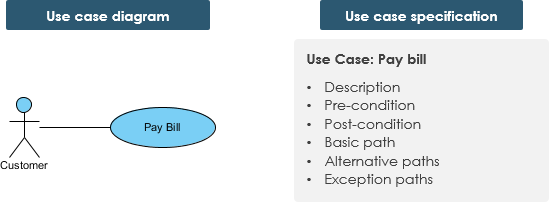
UML中的用例:如何编写有效的用例规范
仅使用UML符号表示是不够的。每个用例都
Continue reading什么是敏捷故事点?如何估算用户故事?
Story points are metrics used in agile project management and development to estimate the difficulty of implementing a given user story, which may be related to the complexity, risk and effort involved. (故事点是敏捷项目管理和开发中使用的度量标准,用于估计实现给定用户故事的难度,困难可能与所涉及的复杂性,风险和努力有关。)
Continue reading什么是敏捷估算?
Agile teams use collective estimation methods to estimate their workload. Group estimation usually uses planning poker as a tool, and teams perform group estimation by playing estimation games. Planning poker is considered to be the most effective and interesting technique for workload estimation in agility. (敏捷团队的估计工作量使用了集体估算方法。集体估算通常使用规划扑克作为工具,团队通过玩估计游戏进行集体估算。规划扑克被认为是在敏捷中进行工作负荷估算的最有效和最有趣的技术。)
Continue readingScrum:谁创建产品待办事项或用户故事?
The Product Owner (PO) “owns” the product backlog on behalf of the stakeholders, and is primarily responsible for creating it. He or she may instruct the development team and/or the Scrum Master to help him/her in defining the backlog items and in estimating them. (产品所有者(PO)代表利益相关者“拥有”产品积压工作,并主要负责创建积压工作。他或她可以指示开发团队和/或Scrum主控来帮助他/她定义积压项和估计它们。)
Continue reading用户故事模板:作为 / 我想要 / 以便于——如何撰写有效的故事
The most common technology is the role-feature-reason template, which is used by teams and product owners to start writing user stories in three parts: (1) As a (role); (2) I want (feature); So that (reason). (最常见的技术是角色 – 特征 – 理由模板,用于团队和产品所有者开始编写用户故事,分为三个部分:(1)作为 As a(角色); (2)I What 我想要(特征); So that(理由)。)
Continue reading如何使用100分法来优先处理你的产品待办事项列表?
Your product backlog items need to be structured, organized and prioritized to identify the most important things for your team. In this article, I will introduce 100-point method for product backlog refining activities. (您的待办事项需要进行结构化,组织和优先排序,以确定您的团队最重要的事情。在本文中,我将介绍100点方法为产品积压细化活动。)
Continue reading
 English
 Arabic
 Chinese (Simplified)
 Dutch
 French
 German
 Italian
 Japanese
 Korean
 Portuguese
 Russian
 Spanish